
On-Page Optimization SEO Tool from Website Auditor
On-Page SEO Checker and Optimization Tips
On-page SEO is aimed to improve web pages, their content and usability, to
get more organic traffic from search engines. Optimize your pages
individually, and your site will perform better overall. The Website
Auditor's on-page SEO checker does this job just right: it helps to find
onpage issues, gives optimization tips, and brings the results of your page
audits with simple and clear reporting tools.
On-page and off-page SEO: what's the difference?
On-page SEO deals with optimization analysis of the site elements contained
directly inside the pages: headlines, tags, URLs, usability, etc. Whereas
off-page SEO focuses on increasing your site authority with external
factors, for example, by gaining more backlinks.

What on-page ranking factors are important for your website?
With Website Auditor onpage SEO tool, you can easily crawl your entire site, record all web pages, and analyze them against a wealth of important SEO factors:
-
Analyze your site structure and internal linking.
Do site audit for — Broken links — Redirects — Canonical URLs -
Monitor your pages' performance.
Check your pages — Load speed — Size — All media resources -
Do keyword optimization.
Add keyword phrases to — Titles — Headings — Meta tags — Alt tags — URLs — Anchors -
Upgrade your page content.
Improve readability — Remove duplicate content — Do image optimization
Need a site auditor tool that handles all in one actionable project? Get the Website Auditor on-page SEO
checker to analyze your page SEO and improve its ranking. Try it free with a 7 days' full feature trial!
Free Download
All-in-one onpage optimization tool
Your website is a single system where every part affects the whole. For top results on Google, you need an SEO audit to optimize your entire website, not just individual webpages. When you take that holistic approach to SEO audit, you'll achieve amazing results.
To optimize your website as one system, check out the powerful functionality of the Website Auditor page checker tool:
- Optimize all pages of your website in one project: get SEO data and analytics for all pages of your domain in one manageable project.
- Analyze Google indexation: check Google (and Bing, Yahoo! et.) cache dates for each page, locate not indexed pages, monitor how many pages of your website were indexed in the major search engines, etc.
- Check your internal linking and PageRank distribution: check the number of internal/external links on each page, evaluate the potential Link Value each page can pass per link, locate pages with no internal links, and see how PageRank is distributed across your website.
- Run a full website health check for technical issues: the SEO spider helps validate and clean up your code, locate and fix broken links, check server response codes to spot 404 and other errors, find duplicated or missing titles, and meta descriptions.
- Create reports for your SEO campaign: gather analytics and rebuild your project, analyze your data, and deliver it to your SEO company clients with simple customizable SEO audit report templates.
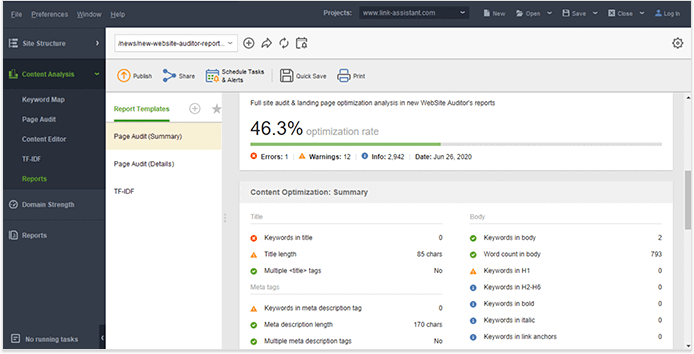
To find out more about pro SEO software functionalities, check out the features page.
On-page optimization tips from the site audit tool
Crafting a good page is a task that will always pay off. To have a page that's destined to rank and convert, you'll need to mix three powerful ingredients of web page optimization:
- Take fresh and original content.
- Serve it with effective UI elements.
- Then season it with proper website SEO.
Sounds easy, however, each of the three has its own components and aspects. Check out our site audit tips and use our on-page SEO checker tool to analyze your webpages.
Improve user experience
User experience is one of the most important Google ranking factors. With Google’s mobile-first indexing, an SEO audit for page speed and usability is a must. So, make sure the elements mentioned in the picture below are in place and working:
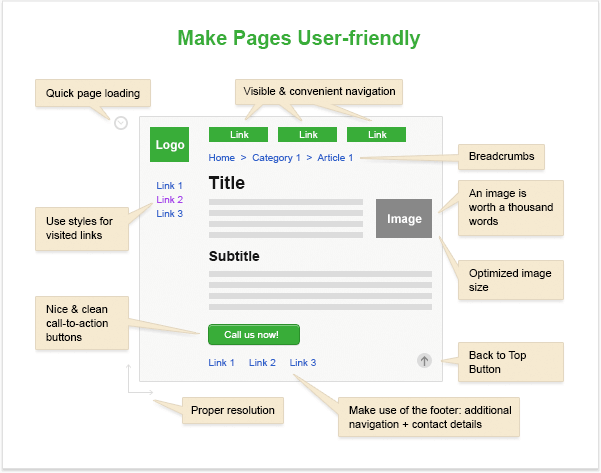
- Minimize the loading time of your pages.
- Make navigation visible and easy to use.
- Use breadcrumbs for easier and quicker content browsing.
- Make sure your pages are logically arranged into folders and have user-friendly URLs.
- Customize your website resolution.
The most widely used screen size is 1024×768, but keep in mind that your pages should work at any resolution, from 800×600 to 1280×1024 and beyond. - Make pages easy to read (divide your page visually into modules and paragraphs with images, headings, and subheadings).
- Put the most prominent content above the fold – put key elements on top to make them noticed without scrolling the page down.
- Make use of the footer – add navigation links, quick contact data, a back-to-top button, etc.
- Use catchy call-to-action buttons. Make them big, clear, and stand out in a web layout, as it's the top marketing element on your page.
- Keep all page elements consistent (body text, font, logo size, page background, link styles, etc.).
How to use the SEO tool to find onpage issues across the site.
Select Site Structure > Site Audit and check mobile-friendliness, CSS and HTML validation errors, duplicate content sitewide, pages with 4xx response, cache dates of your pages.
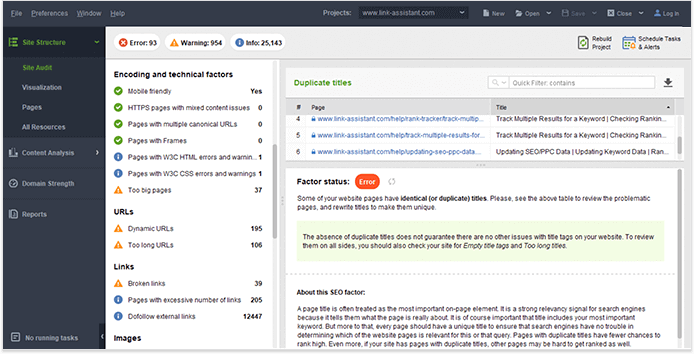
How to use the tool to analyze your website's folder-structure and pages
individually.
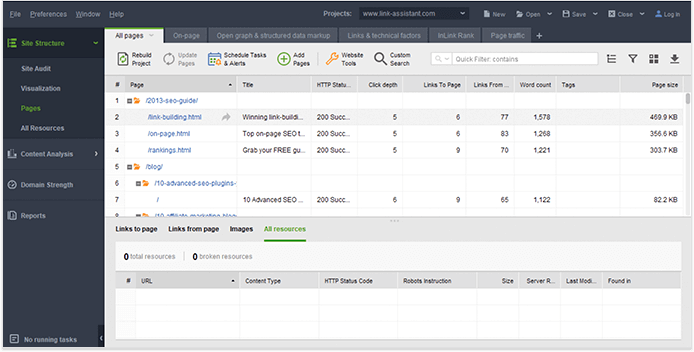
Go to Site Structure > Pages, switch between Folder and Tree View. Analyze your site's folder structure and make sure your site has user-friendly page names. Add the Click Depth, Title, Tags, Word Count, Page Size, Page Authority, Optimization Rate, and many other factors you'd like to analyze.
Feel inspired? Try the page optimization tool absolutely free now!
Download
Optimize pages for search engines
As more and more on-page factors tend to influence the way search engines evaluate your site, so you have to TELL SEARCH ENGINES what your content is about. To be more exact:
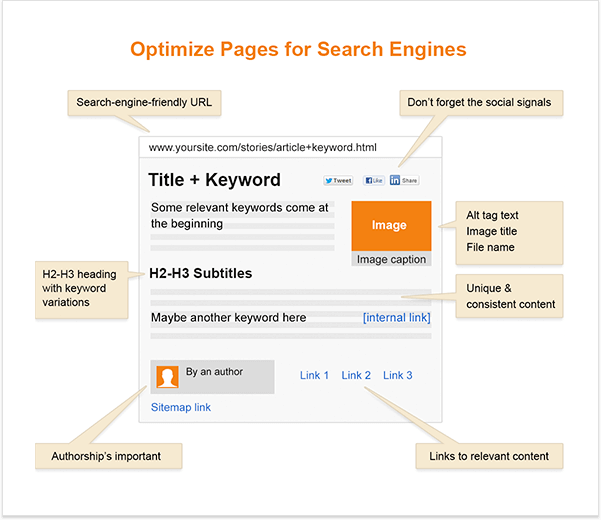
- Search-engine-friendly URLs.
- Optimize page title, description, H1-H3 tags.
- Optimize images: add alt attributes, image file names, text captions.
- Check that internal links point at relevant pages with proper anchor text.
- No duplicate content or duplicate tags.
- Submit all links to your Sitemap to get them indexed.
- Add the canonical tags (Learn more...).
- It's a good practice to have a reputable author contributing to your web pages. So it would be great to mark authorship and present some short info about the author.
- Make socially shareable pages.
- Use Schema.org and other relevant markups.
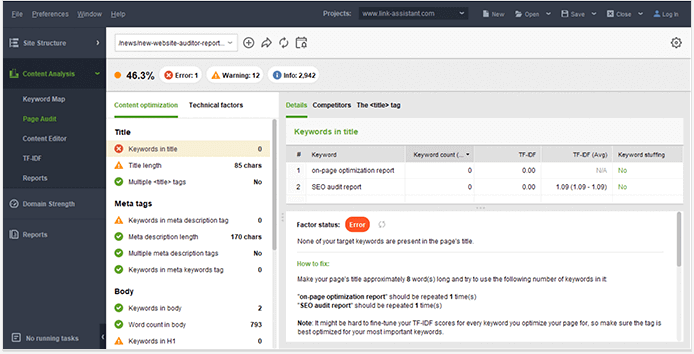
How to use the website SEO tool for onpage keyword optimization.
Calculate the ideal on-page keyword density for your web pages, check keywords in titles, descriptions, h1-h6 headings, ALT attributes, link anchors, and compare it with your top 10 competitors.
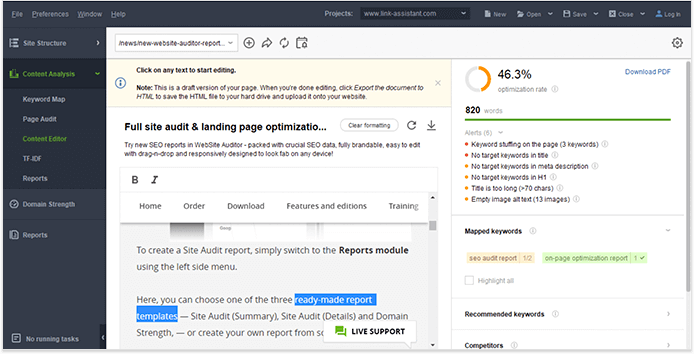
How to use the on-page SEO software to optimize your content.
Go to Content Analysis > Content Editor, and start editing your page right in there, following the optimization suggestions from the on-page SEO checker.
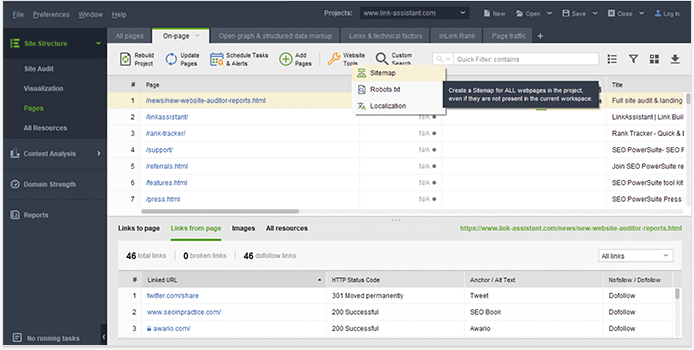
How to use the SEO tool to create XML sitemaps or robot.txt instructions.
WebSite Auditor' Webmaster Tools let you quickly and easily build a neat and comprehensive XML Sitemap for your site. Or write rules for robot.txt, for example, to disallow duplicate pages from indexing.
Create high-quality content
There's more quality content on the Internet than ever, people are now so accustomed to quick social network browsing, they DO NOT read, but rather scan the body text and jump between images. To have your SEO content workable, consider the following:
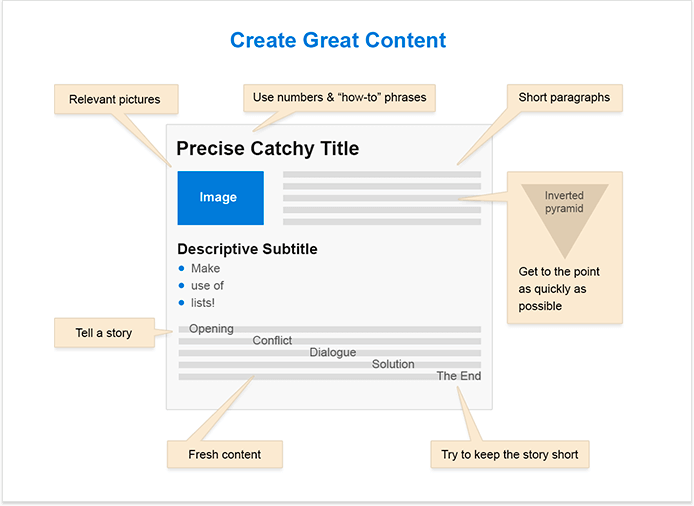
- Make paragraphs short. Really short. Even one sentence can be good enough.
- As people tend to scan texts, make titles, and subtitles 100% informative.
- Tell stories – people love them.
- Use the inverted pyramid writing style (starting with the most exciting facts and gradually adding more details).
- Use simple words instead of complex terms.
- Use relevant pictures with captions.
- Make wide use of lists to make important points more prominent.
Discover the power of onsite optimization
Website Auditor is a powerful software that lets you feel the immense potential of onpage optimization applied to the entire site.
Optimize your page content, and it will help you achieve marketing goals – signups, purchases, etc. Use the full ranking potential of your website and turn it into a 100% SEO-friendly marketing machine.
Do these tasks and see your site perform better. Try it yourself with the Website Auditor on page SEO checker!

Excited to try Website Auditor's On-Page Optimization?
Download the free edition or try 7 days' free trial with full-feature functionality.