28942
•
15-minute read


Internal redirects are the way we can direct traffic from one page to another. They’re easy to implement yet can harm your SEO if implemented improperly. Wrong URL redirection can even cause sudden ranking drops.
So, why not get the matter sorted out today? In this article, you will find out how to find and fix all internal redirect issues on your website.
Here is a quick video guide for those who are always in a hurry. For those who have a couple of minutes, I prepared a whole research on internal redirects.
Redirection can be temporary or permanent. Here is a cheat sheet of all its types:
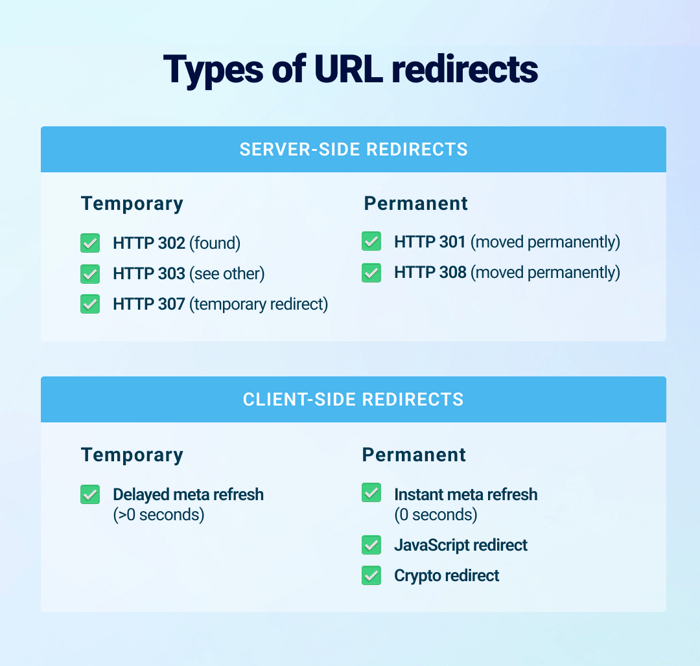
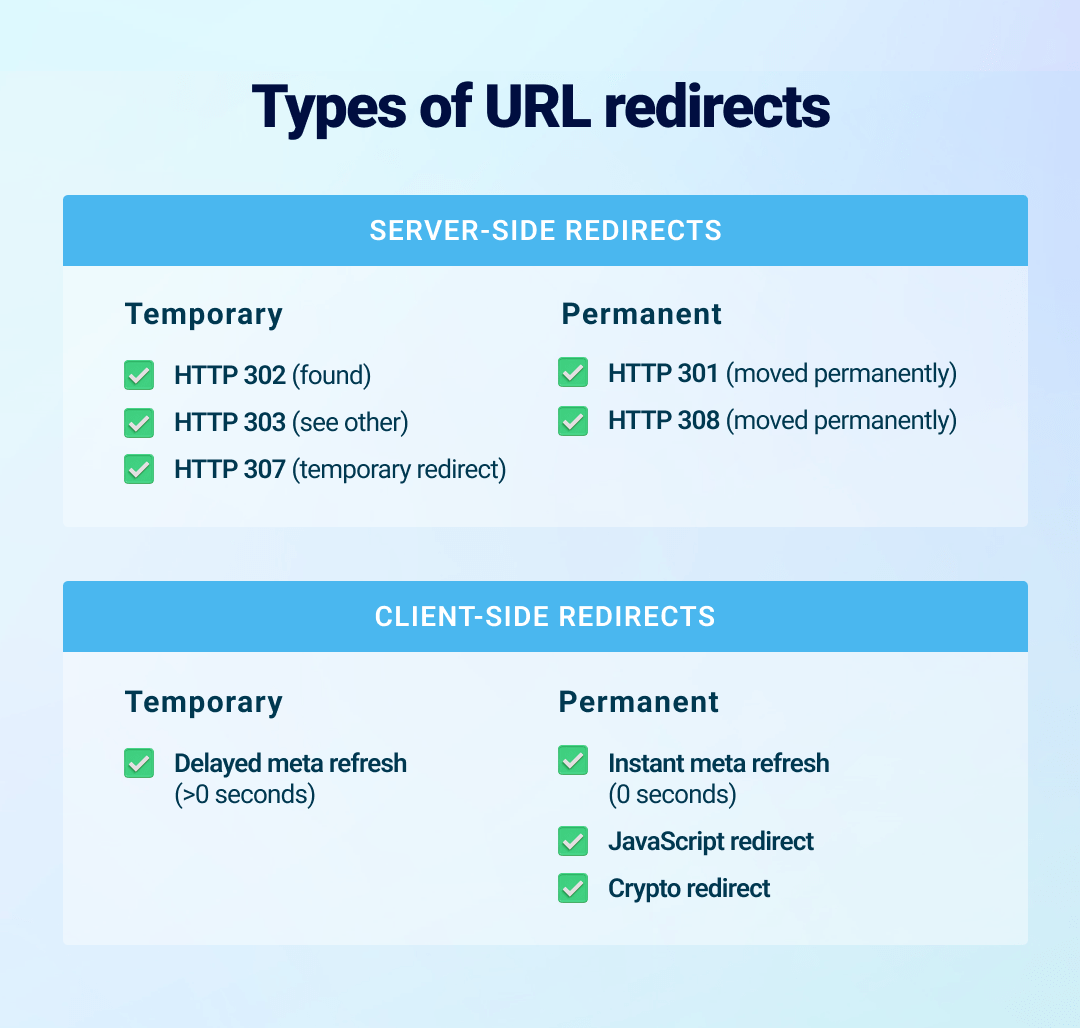
Now, let’s consider all tese types of redirection in detail, going from server-side to client-side redirects.
301 redirect is a server-side redirect indicating that the page is moved permanently.
You should use it when you permanently move a domain or a page, change the website structure, or migrate from HTTP to HTTPS.
With 301 redirect, you tell search engines that you want them to apply all the SEO value of the old page to the new one. Thus, PageRank is passed, and the link juice and organic traffic can be preserved.
PageRank is an algorithm that Google invented to measure the importance of webpages. It’s believed it counts the number and quality of links coming to and from a page to determine how important the website is. Google’s assumption is that authoritative websites are likely to receive more links from other websites. It means the more links a webpage has, the more authority it gets.
PageRank value can be passed from one page of a website to another through links and redirects.
We have an informative post about PageRank, I recommend reading it in case you want to understand how authority and backlinks work on Google.
302 is a server-side redirect indicating that a page is moved temporarily.
It makes sense to use it for marketing aims: geo targeting, device targeting, A/B testing, and website traffic tracking. The reason it’s not used for search engine optimization is that when you set up a 302 redirect, the original page remains indexed and continues to rank.
There is no clear evidence if a temporary redirect passes PageRank or not. You can encounter two opposing opinions on that matter on the web. However, Google claims if you apply 302 and then forget about it for a long time, it will consider it a permanent redirection. Probably, PageRank will be passed then.
303 is a server-side redirect indicating that the server is temporarily redirecting the user agent to a different resource and that the original page should not be requested again.
So, it’s only used when you want to redirect users from a submission or an authorization form to a confirmation page or an upload progress page. Form resubmission becomes impossible. Thus, you can prevent accidental duplicate transactions. Plus, your server won’t be overloaded because of too many requests.
Just like the temporary 302 redirect, 303 redirect does not pass PageRank and is not applied for SEO purposes.
307 is a server-side redirect indicating a temporary redirect. Basically, it’s a newer and technically cleaner alternative to 302.
The thing is that 307 redirects don’t allow you to change the request method (from Post to Get). When you use 307, the client must repeat the exact same request on the target location. That’s why it’s considered more predictable and clear. So, if you aren’t sure what kind of request the website gets, it’s better to use 307. The same is true for 308 redirects.
The use cases for temporary redirects are the same as for HTTP 302 — it’s applied for marketing aims most of all. Use it if you need a client to follow a redirect and search engines to index both old and new pages.
As you may have guessed, such internal redirection is not supposed to pass much or any PageRank.
308 is a server-side redirect indicating that the page is moved permanently. It is almost the same as 301 but, again, technically cleaner.
Permanent redirects can be used for the same purposes as 301 redirect: when moving a domain or a page permanently, changing the website structure or its protocol. Plus, you should use it when moving a very complex website with a lot of submission forms.
When you use permanent redirects, you tell search engines to replace your old page with the new one for good. That means PageRank is passed with this redirect.
Meta refresh is a client-side HTML redirect. Unlike all the redirects described above, meta refresh redirects browsers to a different webpage after a specified timeout.
If it’s 1 second or more, it is called delayed meta refresh. Here is how users see it:


There is also instant meta refresh variation, which is performed without delay (0 sec).
Fun fact: Back in the days of the early web, meta refresh was widely used to create sneaky redirects for doorway pages. It is considered a negative SEO practice. So, both webmasters and search engines may be biased against this type of redirection.
Now, meta refresh is used only if you have no access to your website server configuration files (.htaccess or nginx.conf).
It’s worth saying that meta refresh may lead to issues with usability, which in turn may affect website rankings. Nobody wants to wait, say, 5 seconds till the page is loaded, agree?
According to Google, they can treat meta refresh as a real redirect. However, there is no guarantee that meta refresh will pass PageRank.
JavaScript (JS) redirect is a client-side redirect. With it, you can “advance” the internal redirection, e.g., you can detect the language that is used by a browser and redirect to the right language page based on that.
Use this type if you want to base redirection on user interaction, for cross-browser redirection, and device targeting. Or in urgent cases when you don’t have another choice.
Google says it is now quite good at JavaScript internal redirection processing. However, we can’t say for sure if it passes PageRank like some of the 30x redirects.
Crypto redirect is a client-side redirect, and it should be used only in case you can’t implement all other options.
Don’t be confused by the crypto part — this internal redirection type has nothing to do with cryptocurrency. Google has been using the word crypto for quite a long time. Basically, it means that it’s a soft redirect that is established externally, i.e., right on a page.
This type of redirection is basically a link pointing to a new page accompanied by a short text, e.g., The site/page is moved due to a cyberattack. Go to the new site.
From an SEO point of view, a crypto redirect is useless — it doesn’t pass much authority from an old page to a new one.
Internal redirects are impossible to spot without third party tools.
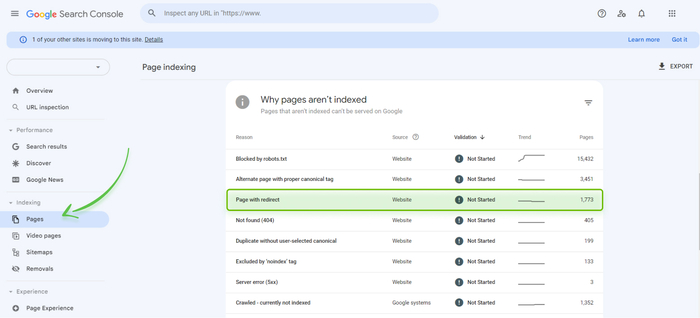
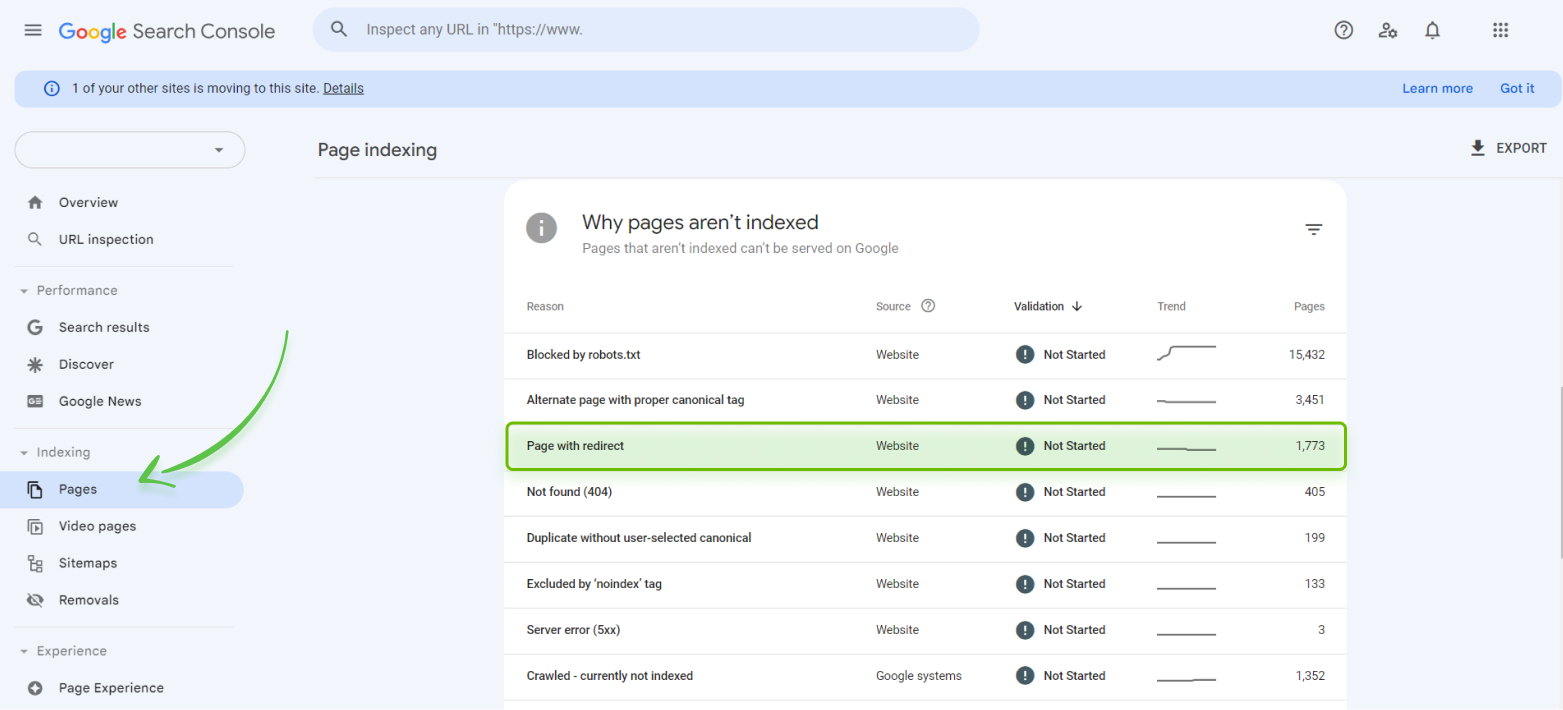
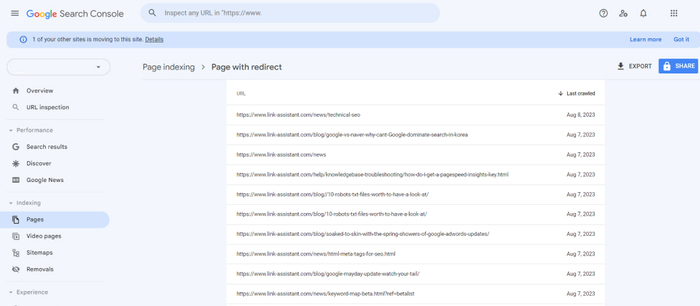
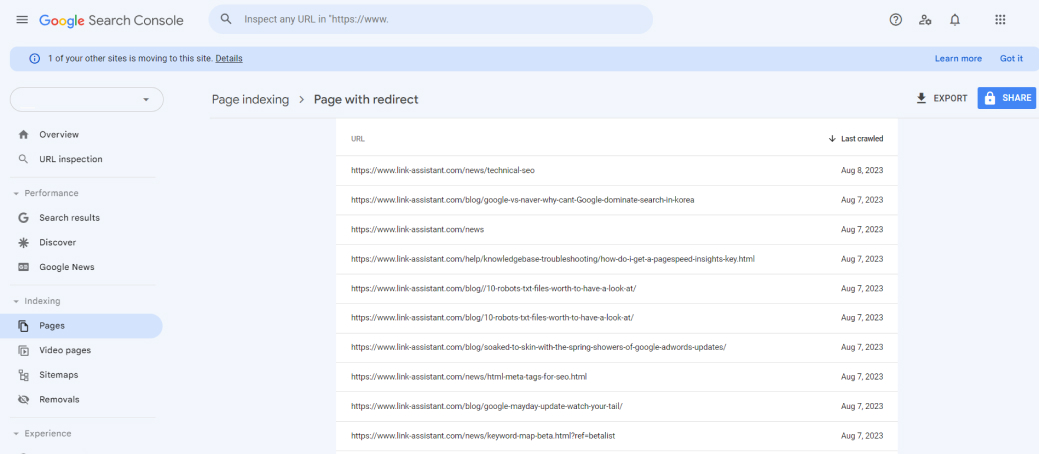
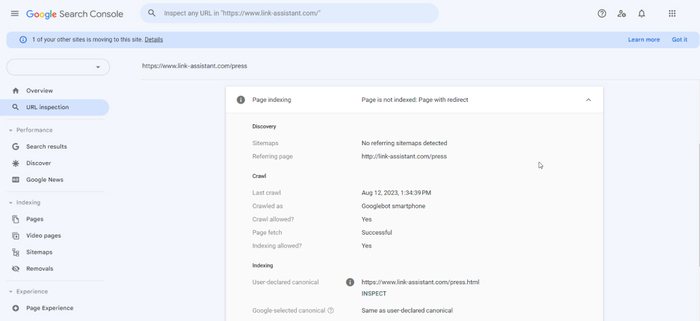
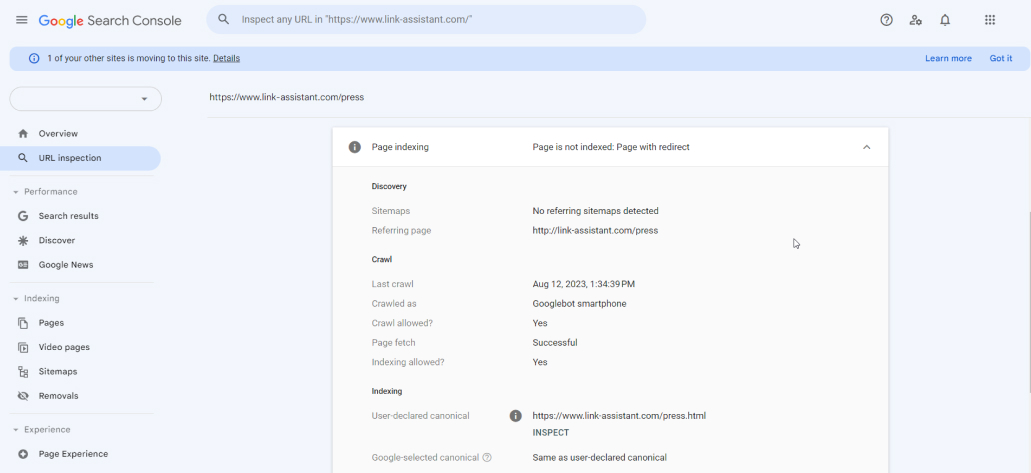
However it’s not convenient to check these pages one by one. To get a whole picture, I suggest you use WebSite Auditor. It’s the most advanced tool for in-depth website audits.
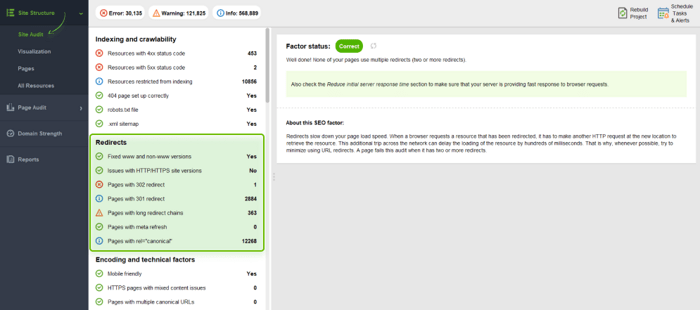
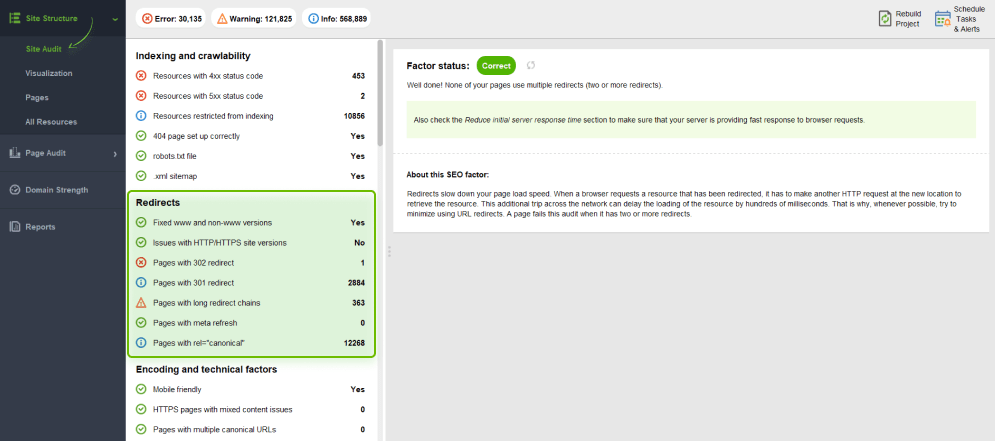
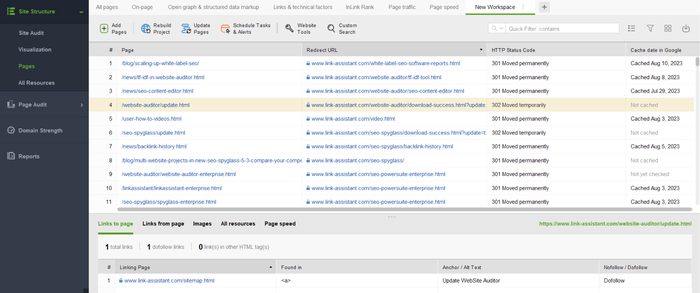
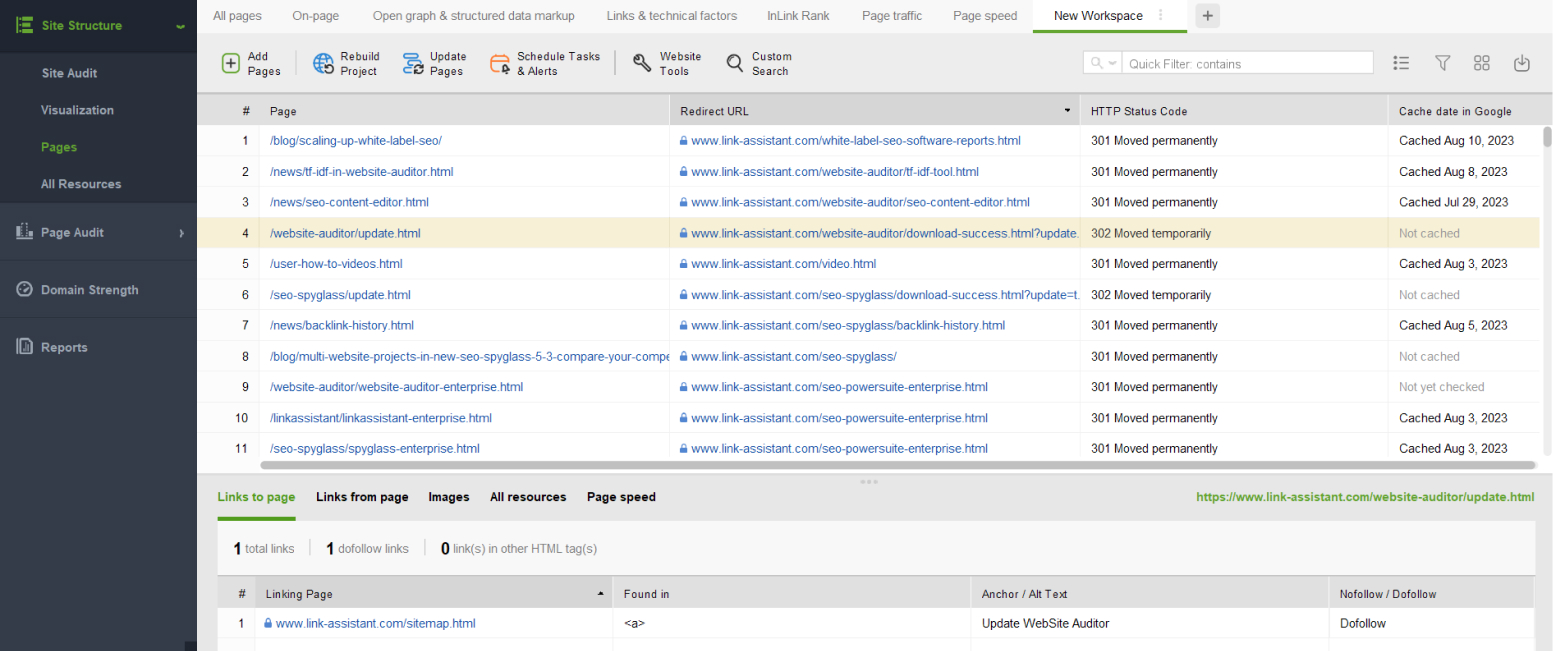
If you see some website pages with 301 or 302 status codes but Google hasn’t indexed them, research what happened to these pages and resolve internal redirection issues.
Now, check out the top 5 URL redirects issues and make sure to avoid them.
When setting up a redirection, you should remember about your visitors. Will they get the answers they expect to get after they are redirected?
You need to make sure that the new content won’t confuse them. If a user clicks a link anchor vegan chocolate and is redirected to a page gluten-free products, that will be upsetting. It may result in increased bounce rates and traffic loss.
How to avoid this mistake: You should always redirect to a page with a similar topic.
Redirect chains appear when there is more than one redirect between the initial page and the destination page. E.g., Page 1 > Page 2 > Page 3 > Page 4 > Page 5.
The problem with redirect chains is that they overburden the crawler. Google claims their crawler follows up to 5 redirect hops and then stops. So, if there are more redirects, the destination page may not be indexed at all. Plus, you may lose all the link juice and slow down the page load time.
Loops are similar to chains, but in this case, the initial page ends up redirecting back to itself. E.g., Page 1 > Page 2 > Page 3 > Page 1. This way, you do not redirect visitors to a new URL at all, which is such a waste of your crawl budget and link equity.
Redirect chains and loops are so vicious because they're super easy to overlook. The only way to avoid them is to consistently keep track of your redirects.
How to avoid redirect chains: You can quickly audit your website for 301 and 302 redirect chains with WebSite Auditor.
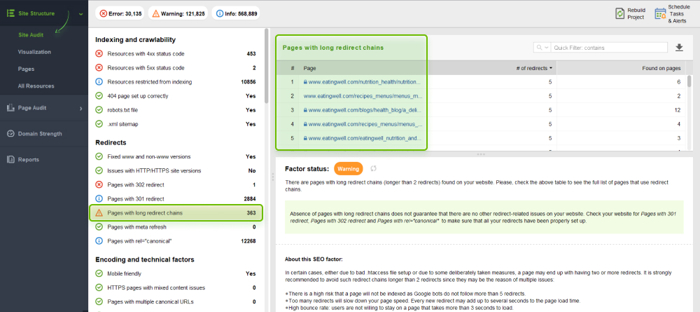
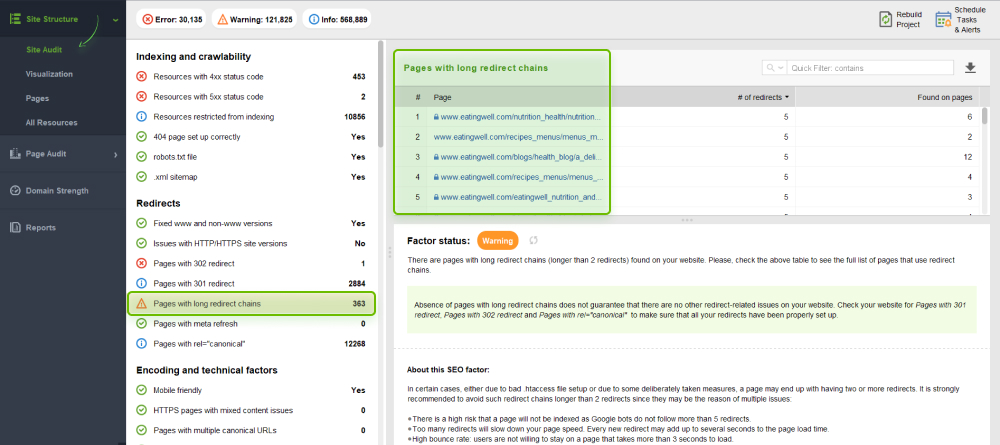
Ideally, there should be none of them. For example, the situation in the screenshot is very sad.
Many webmasters do not understand the difference between 301/308 and 302/307 redirects. They know that the former is permanent, and the latter is temporary. However, they don’t take into account that if you use HTTP 302/307, the old page is still being indexed and almost no link juice is passed to the new internal redirected URL. That’s important.
Though Google understands that you might have used 302 by mistake and can treat it like 301 over some time, you can’t know how much time it will take. And time is money.
How to avoid the misuse of temporary redirects: Use 301 or 308 if you don’t plan to remove the redirect in the near future — if it’s not for a promo campaign or A/B testing.
If you optimize your website correctly, all your pages are interlinked. And if you redirect one of those pages to another one, you’ll end up creating too many redirects on your website. Those redirects are completely unnecessary, as you can totally replace these internal links by pointing to the new page.
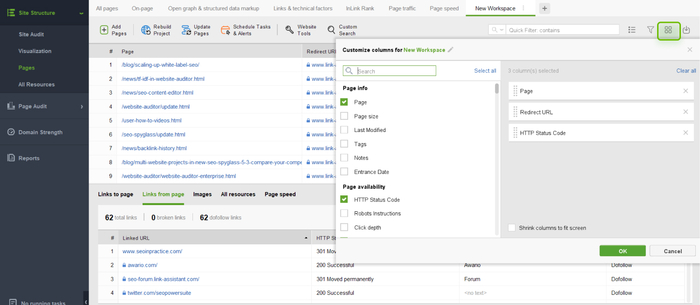
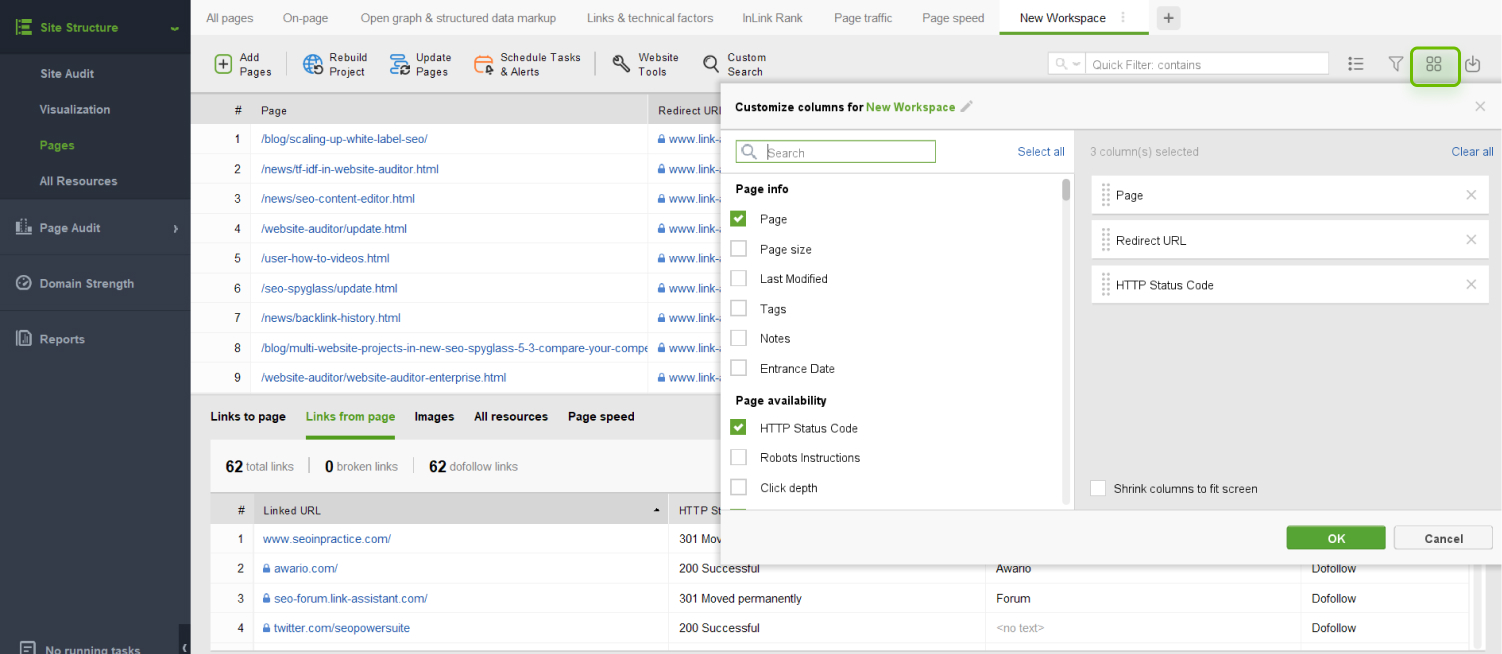
How to avoid creating unnecessary redirects due to internal links: First, you can find the pages that point to the old page (i.e., the one that is redirected to a new page) in WebSite Auditor:
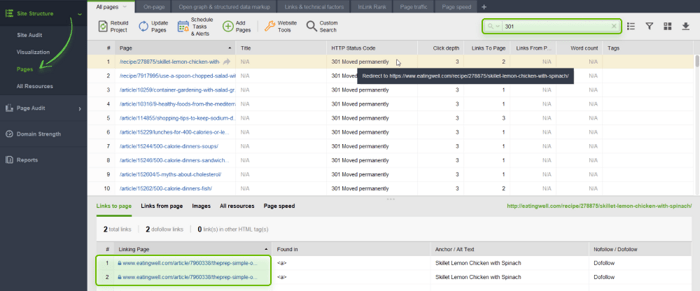
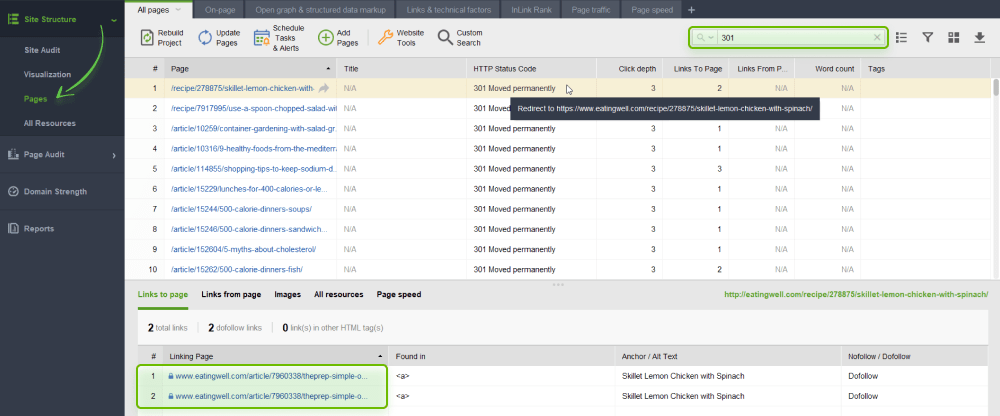
All you have to do now is replace the old internal links with the new destination page.
If you use 301 or 308 (permanent) redirects, you should depict that on your sitemap so as not to confuse the crawler.
As you know, a sitemap instructs search engines to go and index some pages. If you haven’t removed old internal redirected URLs from your sitemap, the crawler will go to this page and will try to index it. But instead of getting 200 (OK) response code, the crawler will be redirected to another page. This can lead to indexability issues.
How to keep your sitemap clean: Keep your sitemap in order — remove the old internal redirected URLs and add the new URLs to your sitemap.
You can quickly generate a sitemap and then upload it to your server via FTP with WebSite Auditor.
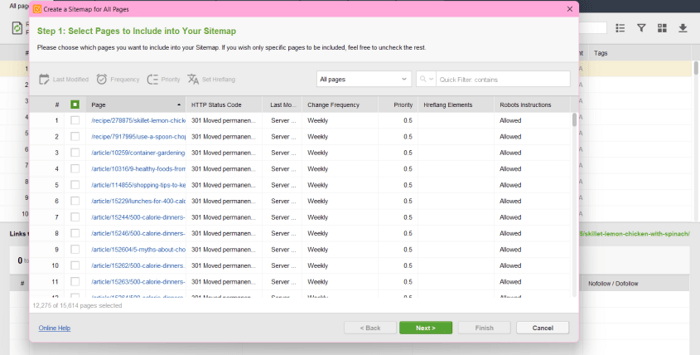
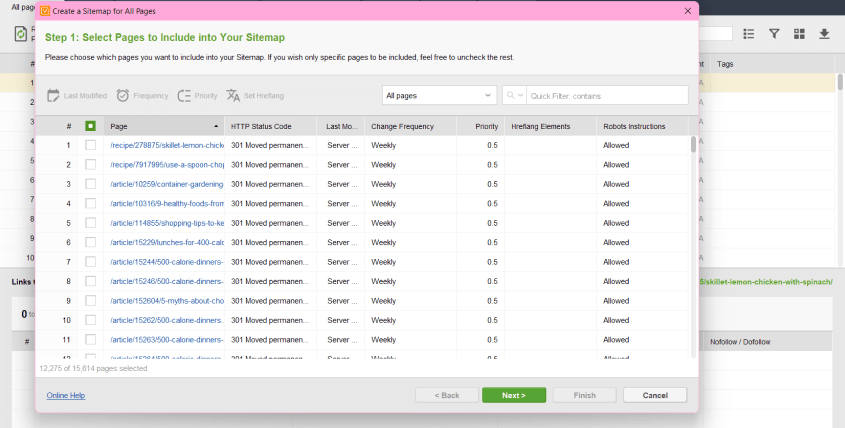
After you implement all necessary redirects, launch the software and go to Site Structure > Pages. Click Website Tools > Sitemap.
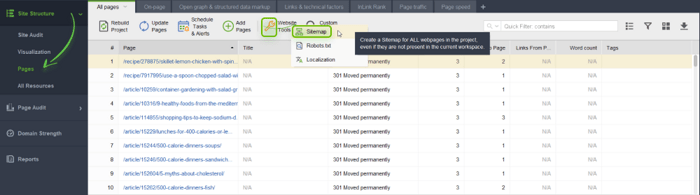
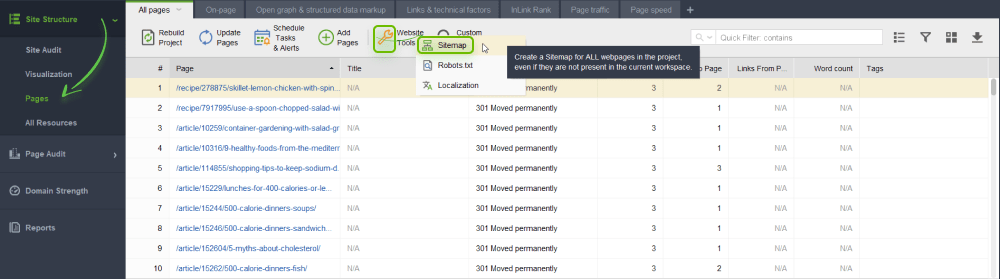
In the Sitemap Generator tool, choose which redirected URLs to add or remove from your sitemap. Once done, click Next to move on to publishing.
In brief, here's what you can take away from this article: