2041
•
7-minute read


You’ve probably noticed that job searching has become much harder lately and digital marketing is no exception.
Every time I open LinkedIn, I see another post from someone with years of experience, strong skills, dozens of tools under their belt, and real achievements still struggling to find a job after months of searching.
So I decided to take a closer look at the SEO job market in 2026 and ask experienced digital marketing professionals for their advice on landing an SEO role today.
I hope this post will be useful, especially if you’re looking for an SEO job right now. Hopefully, you’ll find a few ideas here that can make your search a little clearer and more effective.
If there's one piece of advice almost every experienced SEO gave me, it's this: a portfolio beats a CV. A list of skills only tells an employer what you've heard of, while a portfolio shows them what you can actually do.
The reassuring part is that a portfolio can take almost any form. It might be a presentation, a website, a landing page, or even a simple doc. What matters isn't the format but how clearly it communicates your experience and the results behind it. Evelina Milenova, SEO at Hostinger, put it nicely:

"Have a portfolio of previous projects and the results they delivered. While working on any project, personal or client, document your work and wins as you go. You'll thank yourself later. And if you're starting from scratch, a personal project is a perfectly valid first entry"
That last line is worth holding onto, because it's where a lot of people talk themselves out of applying. You don't need client work to begin. A personal site you grew, a blog you optimized, a small project you tracked from start to finish — all of it counts.
But the strongest portfolios go a step further than showing wins, because what really sets a candidate apart is showing how they think. Lukasz Zelezny, SEO Consultant and founder of SEO.London, framed it this way:

"Build a portfolio of real examples: audits, keyword research, content briefs, internal linking plans, or case studies showing how you think and how you solve problems."
So don't just present the result — walk through the reasoning that got you there. What was the problem you were looking at, what did you try, and why did you make the call you made?
An audit that shows your thought process is far more convincing than a screenshot of a traffic graph with no story attached, because the graph tells an employer what happened while the reasoning tells them you'll be able to do it again on their site.
And a strong portfolio only gets you halfway. Once you're actually in the room, the question quietly shifts from "can you do SEO?" to "can you show why it matters?" — and that second question is the one that tends to decide who gets hired.
One of the most common mistakes you may see is candidates treating SEO as the goal in itself. But no business actually wants SEO — they want search traffic, leads, and sales, and SEO is just the route that gets them there.
The candidates who stand out never lose sight of that, and you can hear it in how they talk. Instead of presenting rankings and backlinks as if those were the prize, they explain what those things do for the business. Lukasz Zelezny put it well:
"The most important skill is no longer just 'knowing SEO,' but knowing how to connect SEO with business outcomes. Candidates need to show that they can prioritise work that actually drives traffic, leads, and revenue."
This should shape how you describe your own work. Compare "I improved the site's technical health" with "I fixed the issues that were keeping our money pages out of search, and traffic to those pages grew over the next three months." Same work, but the second version shows you understand why it was worth doing, which is exactly what an interviewer is listening for.
There's a second half to this, though, and most people skip it: doing good work isn't enough if you can't explain it to someone else. As Lukasz goes on to say:
"One thing many candidates overlook is the ability to communicate SEO clearly. You can have the best audit in the world, but if you cannot explain the impact, urgency, and next steps in a way that stakeholders understand, the work will often not get implemented."
You're rarely the person who decides what gets built — you hand your audit to a developer, a manager, or a client, and if they don't understand it, nothing happens. So whenever you present what you've found, make sure three things come through clearly:
A good way to practice is to explain one of your projects to someone who knows nothing about SEO. If they understand why it mattered, you're ready; if their eyes glaze over, that's the thing to work on before your next interview. It's a real edge in a crowded market, because plenty of candidates know the technical side and far fewer can sit across from a stakeholder and make the case for it.
That gap matters more now than it used to. With the industry changing this fast, the skills that hold their value tend to be the human ones — a point Barry Adams, SEO and Audience Growth Consultant for News Publishers, made better than I could:

"With the state of flux the SEO industry is currently in, foundational skills like problem solving, communication, and leadership are more important than ever. It's not just about knowing what to do, it's also about communicating this effectively to stakeholders, and building relationships that can enable positive change in an organisation. So for a career in SEO, I wouldn't focus too heavily on technical skills and more on people skills."
That might sound surprising for a field this technical, but it makes sense: tools come and go, algorithms shift every few months, and what keeps you valuable through all of it is your ability to solve problems and bring people along with you. So learn the technical craft — just don't stop there, because the people who get hired are usually the ones others actually want to work with.
If you needed a reason to take AI seriously in your job search, here's a good one from Kevin Indig:

"SEO jobs with AI in the title carried a 27% higher median salary ($113,625 vs. $89,438). But applying AI effectively, in a way that you become 25% faster and can do 12% more, means you need to know what it's good and bad at. In other words, judgment. My advice for someone breaking into SEO: get good at using AI for your work, but hold yourself to a high bar."
That last part is the part most candidates miss. Almost every SEO job description in 2026 asks for AI skills, and almost everyone answers it the same weak way: "familiar with ChatGPT."
That tells a hiring manager nothing, because everyone has typed a prompt into a chatbot. What sets you apart is exactly Kevin's point, judgment: showing you've built a real workflow where AI handles part of the job and you direct it, check it, and refine it, because you know where it's strong and where it falls over. And it's worth stating the obvious, since plenty of people don't: actually list those AI skills and tools on your resume.
The bigger opportunity, though, is on the search side. More and more roles want someone who can get a brand cited inside AI answers, the ChatGPT, Perplexity, and Gemini results that increasingly sit between your content and the reader. Very few candidates can prove they've done it, which means even a small, honest experiment puts you ahead of the pack. Evelina Milenova's advice on how to start is refreshingly concrete:
"A growing number of SEO roles now expect some experience in optimizing for LLMs. AI visibility is a hot and growing market. Make a hypothesis, run a test, measure the results, and document the process. Then add top-level insights to your resume, portfolio, and LinkedIn profile."
It's less work than it sounds. Pick a handful of questions in a niche you care about, note how AI tools answer them today, change something on a page you control, and check whether the answers shift. Write down what you tried and what happened. A clean negative result is fine, because "this didn't move the needle, and here's my theory why" still shows you can think like an experimenter, which is the posture employers are hiring for.
The part people get stuck on is knowing what to test, since you can't optimize for an AI answer without knowing which topics it's drawing from. So here's a version concrete enough to start today:
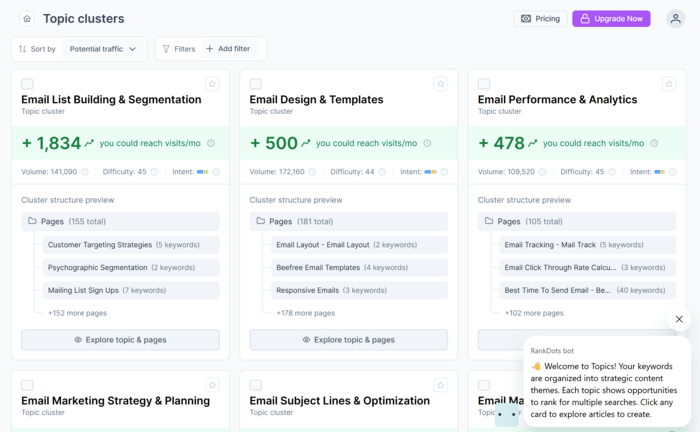
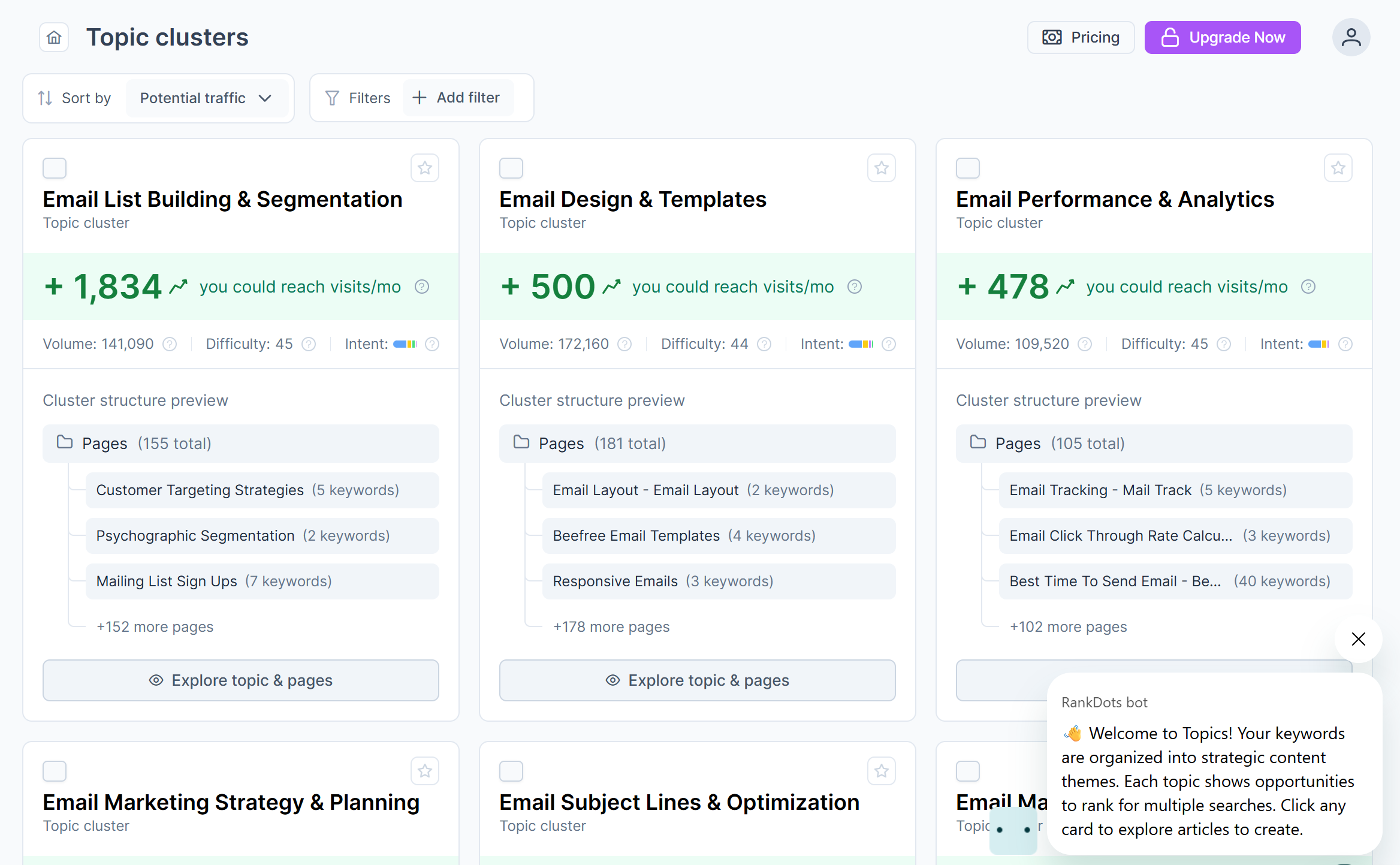
That's the whole thing. You can start step one in the next ten minutes, and by the end you have something concrete for your resume, your portfolio, and your next interview answer.
Everything so far has been about getting ready to apply. But the best position to job-hunt from is the one where you barely have to, where roles find you instead. That's what a personal brand does, and in SEO it's more achievable than in almost any other field, because the work is public by nature and practitioners love watching how other people think.
You don't need a huge following or a content calendar. You need to share what you're actually doing — a teardown of a site that's ranking well, the results of the AI-search experiment from the last section, a take on whatever Google just changed.
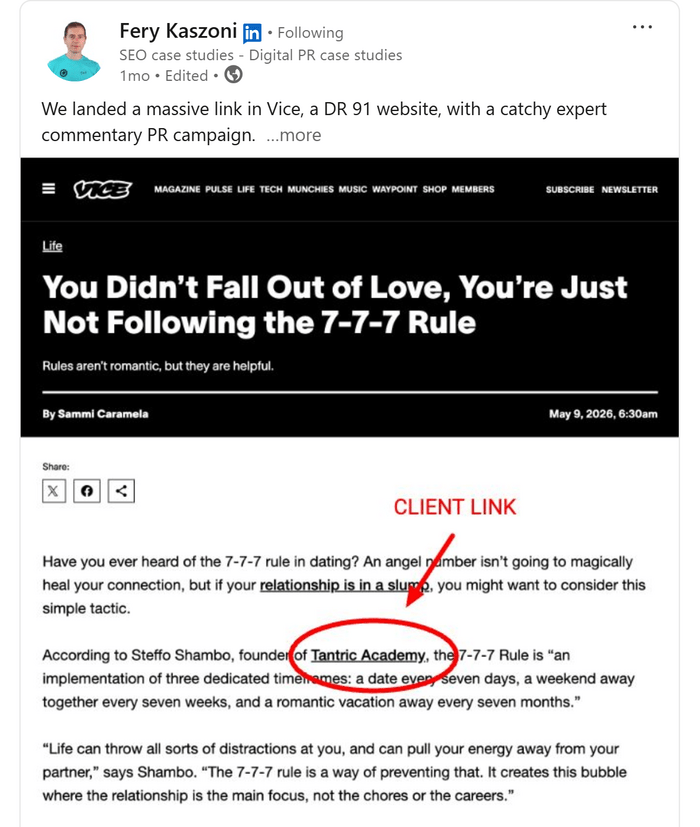
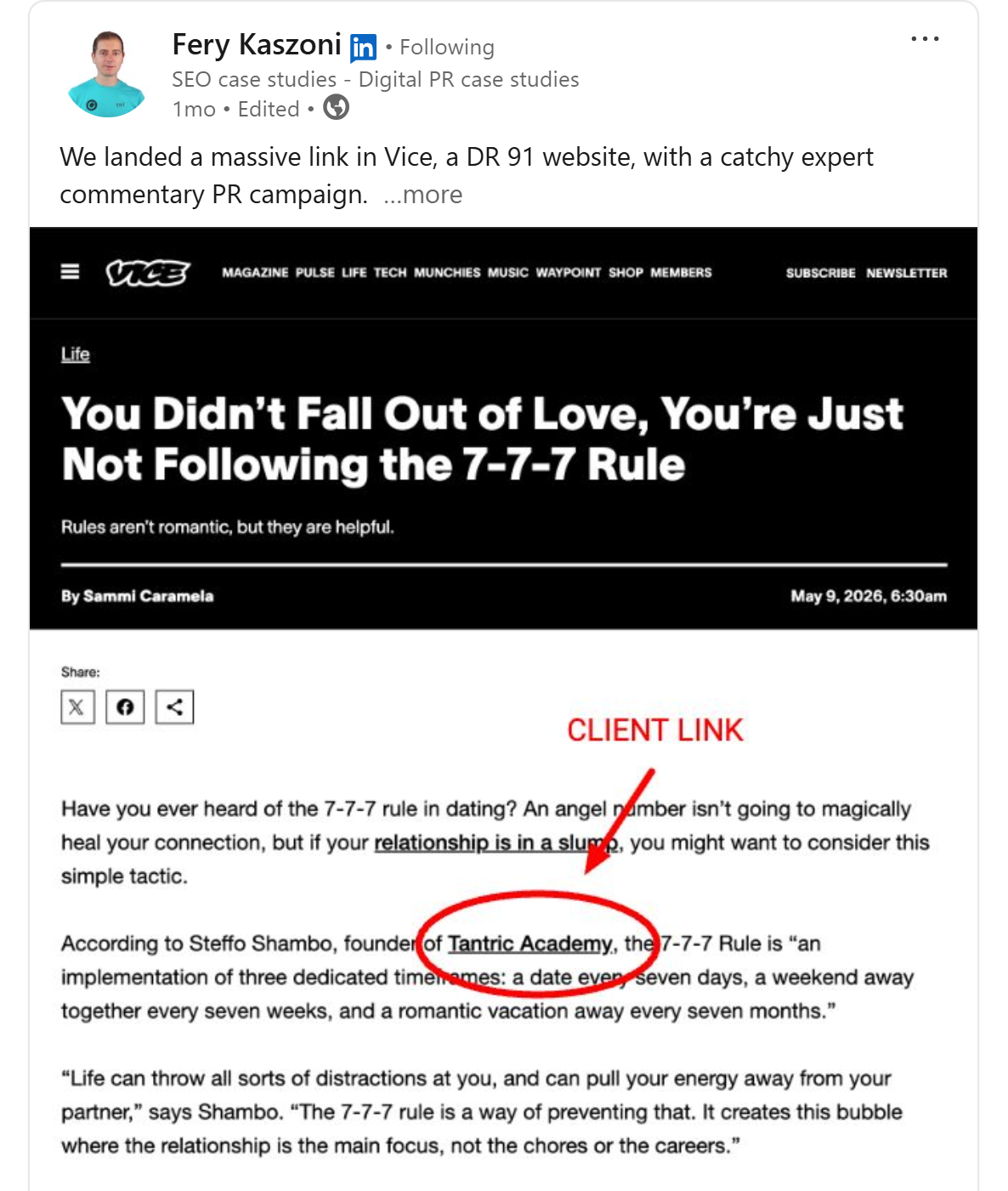
Post it where SEOs gather, mostly LinkedIn and X, and do it consistently enough that your name starts to feel familiar. Over time you stop being a stranger sending applications and become a person hiring managers already half-recognize. Evelina Milenova has seen exactly that play out:
"Building a personal brand isn't a must, but it helps more than most people expect. I share my workflows and know-how on LinkedIn and get contacted about open roles weekly. You can build your brand through multiple channels, including podcasts, videos, Substack, guest writing, speaking at industry events, and more."
A word of reassurance, since this is the step people resist hardest: you don't have to be loud, clever, or an expert to start. Sharing what you're learning as you learn it works fine, and often better, because it's relatable. The goal isn't to perform authority. It's to be visible and useful in the places where the people doing the hiring already spend their time.
Before you fire off another fifty applications, it's worth knowing that most jobs aren't filled through the front door. By the time a role hits a public board, it's often already half-promised to someone a hiring manager met, worked with, or got a recommendation about.
Surveys keep landing on the same conclusion — more than half of hires trace back to a connection of some kind, while cold applications convert at a rate low enough to make you wonder why you bothered. So it's worth spending at least some of your energy where the roles actually circulate first.
For SEO, that means communities, and a few are genuinely worth your time:
The SEO Community is a free Slack group of around 5,000 search and AI-optimization practitioners, started in 2021 and known for being unusually friendly by SEO-forum standards. It has dedicated channels for jobs and discussion, and the culture rewards people who show up and contribute.
Online Geniuses is the big one — a free, vetted community of 50,000+ digital marketers with active #seo and #hiring channels. The scale is the appeal and also the catch: you'll get an answer to almost anything within the hour, but you'll wade through some noise and self-promotion to find it.
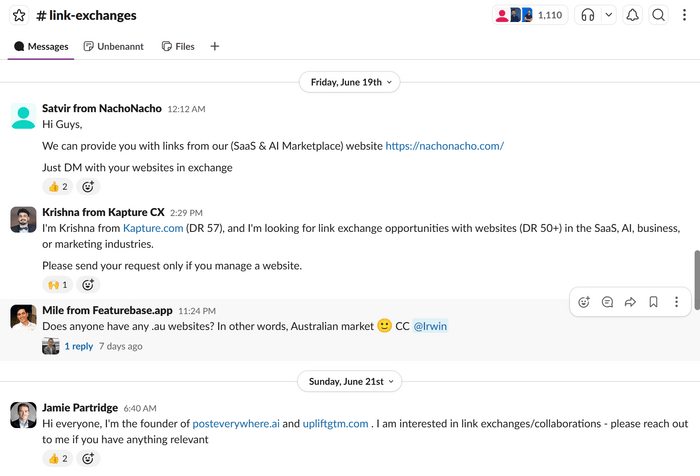
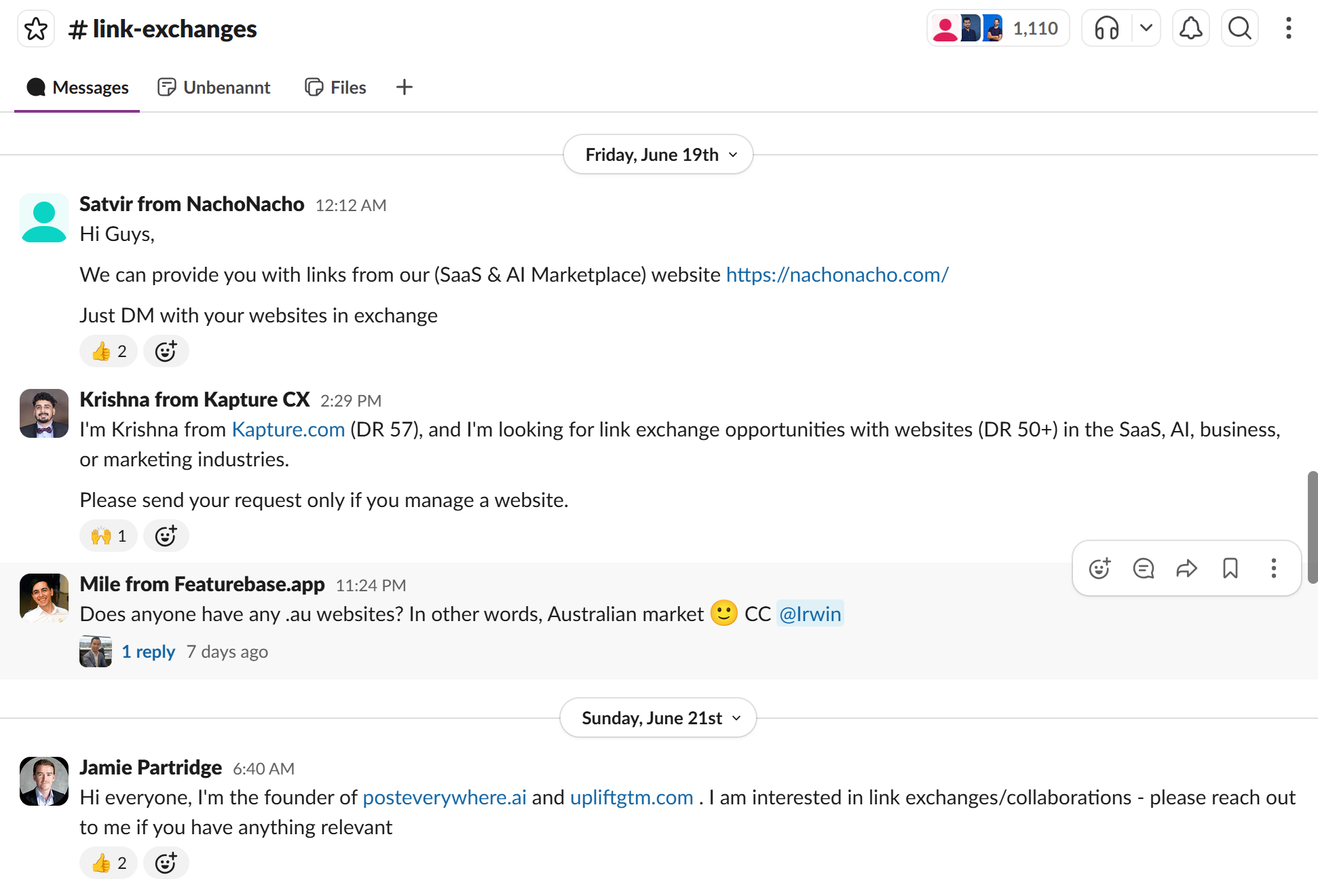
Reddit is still worth a tab open. r/SEO and r/bigseo carry constant discussion, and r/forhire is where freelance and contract gigs actually get posted.
The mistake almost everyone makes is showing up only when they need something. You join, you post "hi, I'm looking for SEO work, please DM me," and you hear nothing — because you're a stranger asking a favor. The version that works is slower: turn up before you need anything, answer questions when you can, share something useful now and then, and let people get a feel for how you think.
Do that for a few weeks and you're no longer a stranger, so when someone mentions they're hiring, or gets asked "do you know anyone good?", your name is one of the ones that comes up.
It's slower than mass-applying, which is exactly why most people skip it. But it points you at the part of the market where roles are actually decided, instead of the part where a thousand resumes stack up against a single opening. A few real relationships in the right rooms will usually beat another batch of applications disappearing into the void.
Once you're ready to actually apply, two things will save you a lot of wasted effort.
The first is searching for the right words. The same job gets posted under a confusing pile of labels right now, and if you only search "SEO," you'll miss a chunk of the market. A lot of roles that are basically SEO are listed under newer names, so run your search across all of these:
These are mostly the industry arguing about what to call the same work, but employers genuinely use all of them. The job you want may be sitting under a name you didn't think to look for.
It's also worth being picky about where you look. The big general boards bury SEO roles under thousands of unrelated listings, while niche boards like SEOjobs.com and the #jobs channels in the communities from the last section are all relevant.
And don't overlook contract or freelance work as a way in. It's a lower barrier than a full-time hire, it builds the very portfolio we talked about in section one, and it has a habit of turning into a permanent role once a company sees what you can do. If you've been stuck in the full-time grind for months, a few contract projects can break the logjam.
The second thing is the move most people never try: skip the queue entirely. Instead of waiting for a role to be posted and then competing with two hundred other applicants, pick a few companies you'd actually like to work for and do something useful for them before you ever apply:
Here's a version of that note you can adapt:
Subject: noticed a couple of things on [Company]'s site
Hi [Name],
I've been following [Company] for a while and was looking through your site over the weekend. I noticed a few things that might be worth a quick look:
1. [One specific, real observation. e.g. "your pricing page isn't showing up in ChatGPT when I ask for tools in your category, while two competitors are."]
2. [One more, if you have it. Keep it concrete and useful, not a list of everything wrong.]
Happy to share what I found in more detail if it's useful, no strings. Either way, keep up the great work on [something genuine you actually like].
[Your name]
The whole point is the specificity. Personalize every bracket: a generic "I can help with your SEO" gets deleted, while "your pricing page is invisible in ChatGPT and here's who's beating you" gets a reply, because you've already done a piece of the work and shown you understand their problem. Keep it short, make the observation real, and don't ask for a job in the first email. You're starting a conversation, not applying.
Most people won't reply. Some will. And the ones who do are now talking to you as someone who already understands their problem, rather than as resume number 201 in a stack. It takes far more effort than clicking "apply," which is exactly why it works: almost nobody does it. In a market where everyone is firing off identical applications, the person who showed up with something real is the one who gets remembered.
The SEO job market has quietly stopped rewarding what people assume it rewards. Knowing the most ranking factors, listing the most tools, memorizing every algorithm update: none of that is what's getting people hired in 2026. Plenty of the people stuck six months into a search have all of it.
What actually moves the needle is narrower, and more human. It comes down to four questions:
You don't need to fix all four at once. Pick two, and start this week. The point isn't to do everything. It's to stop firing applications into the void and put that energy somewhere it compounds.


 Article stats:
| Linking websites | N/A |
| Backlinks | N/A |
| InLink Rank | N/A |