2700
•
11-minute read

Guest posting still works—but not as a volume game.
If your process is “find a site → write something decent → drop a link,” you’re competing with thousands of lookalike pitches. Editors are tired, audiences are numb, and Google has been explicit for years that large-scale guest-post/link campaigns with optimized anchors can become link spam.


A SERP Insight Guest Post flips the logic. Instead of forcing a topic (or a link) into the world and hoping it pays off, you start with what Google is already rewarding: the formats, angles, and intent patterns that show up on page one. Then you publish a guest post that fits the SERP, fills a real content gap, and earns a link that looks like it belongs.
In this guide, you’ll get a practical, repeatable workflow: how to choose topics with SERP evidence, build a guest-post blueprint that matches ranking intent, place links naturally (without risky signals), pitch editors with a “yes-ready” outline, and measure results beyond “we got a backlink.” If you want a SERP Insight Guest Post to be a long-term asset—this is the playbook.
A SERP Insight Guest Post is a guest article designed after you analyze the current top results for the target query (or the topic cluster behind it). Instead of relying on intuition (“this sounds interesting”), you use the SERP as your brief:
What angle is Google rewarding right now?
What content format dominates (guide, list, comparison, tutorial)?
What subtopics appear in multiple top results (a sign of “must-cover”)?
Where are the explanations thin, outdated, or missing?
This is the core difference between “guest posting” and a SERP Insight Guest Post: data influences the angle and structure, not just the keyword. That’s why the Serpprize piece ranks: it frames SERP-driven writing as an editorial approach, not a link drop.
SERP-driven campaigns often combine two tactics:
Guest post: you control topic, structure, and narrative—but you wait for indexing/ranking.
Link insertion (niche edit): you insert into a page that already ranks—often faster impact, less content control.
A SERP Insight Guest Post is the “control” option: it’s how you build new assets on relevant publications that can rank, attract referral traffic, and support topical authority over time.
Most competing pages mention intent and gaps, but stop short of operationalizing it. Here’s the practical rule:
If your draft could be pasted into any marketing blog without changing a sentence, it’s not SERP-fit.
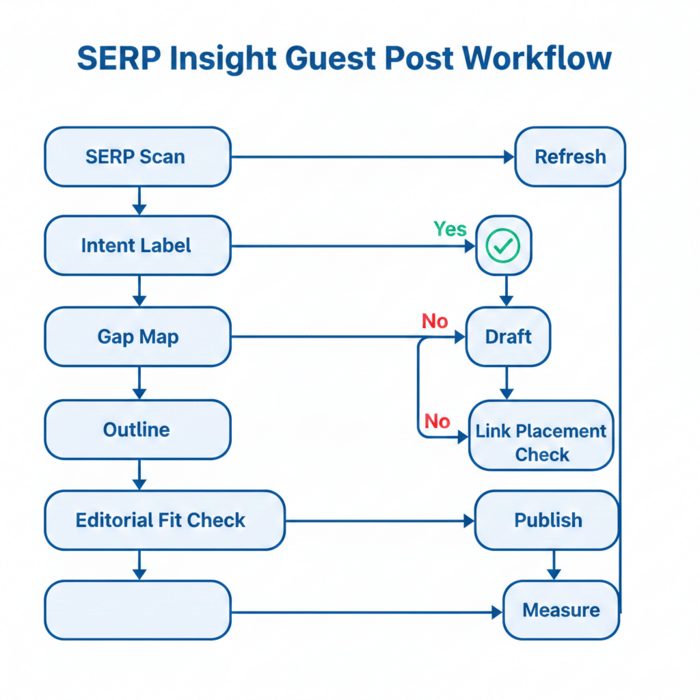
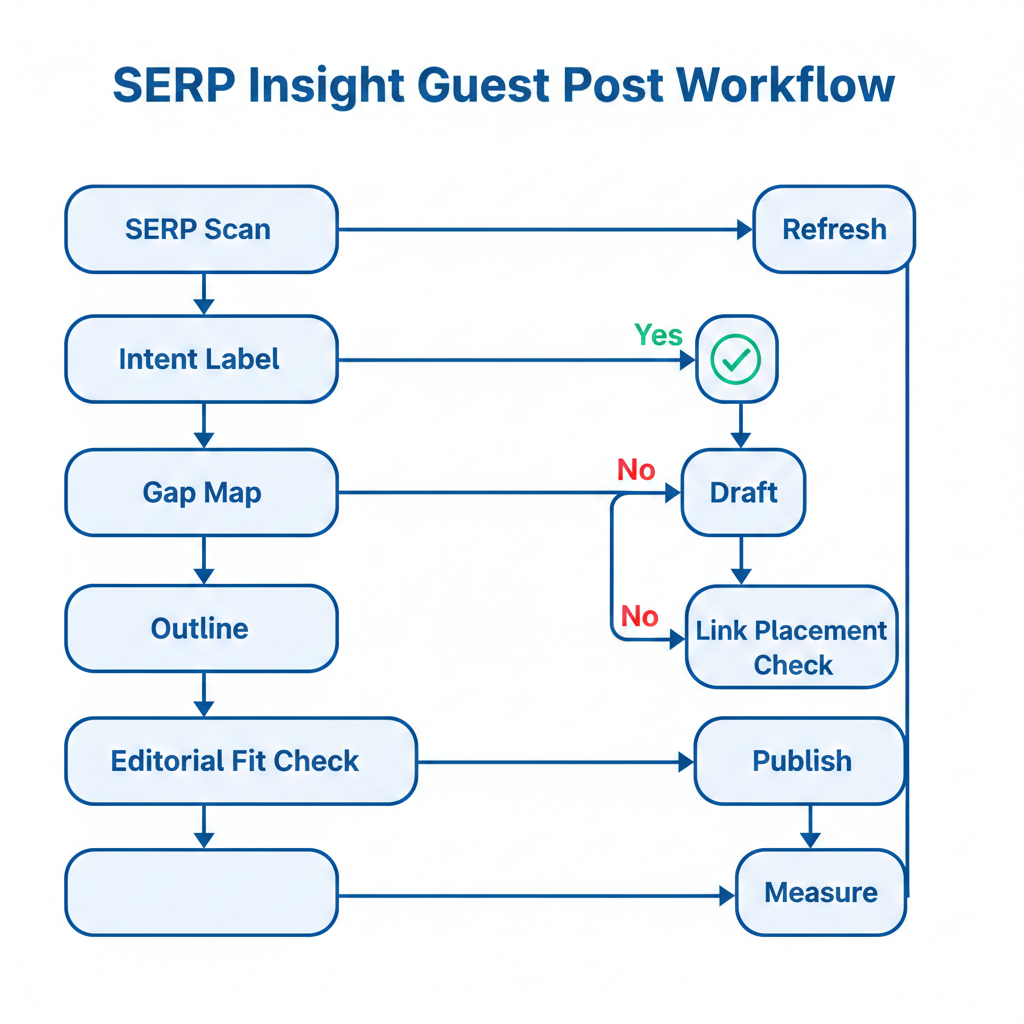
SERP-fit means your post visibly matches:
the dominant intent (what the searcher is trying to accomplish)
the expected structure (how page-one results present the answer)
the level of specificity (examples, definitions, steps, caveats)
That’s what makes a SERP Insight Guest Post feel “native” on the host site—and believable to readers.
A link is only “powerful” if it looks earned.
The big risk with guest posting in 2026 isn’t “guest posts don’t work.” It’s that scaled, repetitive, link-first guest posting produces footprints that are easy to discount—and sometimes risky if you’re clearly manipulating anchors at scale. Google has explicitly called out “articles, guest posts… distributed on other sites” with spammy link patterns in its guidance.
A SERP Insight Guest Post helps you avoid that trap because it naturally pushes you toward:
real editorial value (you must improve on what’s ranking)
contextual relevance (the link supports the reader’s next step)
varied language (because you’re matching the host’s style and intent)
Two simple lines keep you out of trouble:
Don’t treat guest posting as a link distribution system.
Don’t build links primarily to manipulate rankings (that’s the definition of link spam).
So what’s the safe path? Use guest posts as publishing, not placement. Your link should behave like a citation or a helpful next step, not the reason the article exists.
Google’s “helpful, reliable, people-first content” guidance aligns perfectly with what good editors want: clear purpose, original contribution, and satisfying answers.
This is where a SERP Insight Guest Post earns better links:
Editors accept it because it’s useful and on-brand.
Readers trust it because it answers the query without fluff.
Search systems can reward it because it matches intent and doesn’t scream manipulation.
Unique insight you can use immediately: If you want editors to say yes faster, stop pitching “a guest post.” Pitch a SERP-backed upgrade to an existing topic their readers already search for. That frames you as a contributor, not a requester.
Most guest-post advice starts with “find websites.” That’s backwards.
For a SERP Insight Guest Post you first find a topic where:
the SERP shows stable demand (it’s not a one-week trend), and
page one reveals obvious gaps you can fill, and
the angle fits the publication’s audience.
The Serpprize page hints at this logic (“write what’s missing”), but it doesn’t give you a repeatable method. Here’s one.
Open the top 5–10 results and label the dominant intent:
Informational: definitions, tutorials, “how it works”
Commercial investigation: comparisons, “best tools,” alternatives
Transactional: pricing, demos, product pages
Navigational: brand/site-specific
If 7/10 results are “how-to,” don’t pitch a thought-leadership essay. Your SERP Insight Guest Post should look like the thing Google is already rewarding.
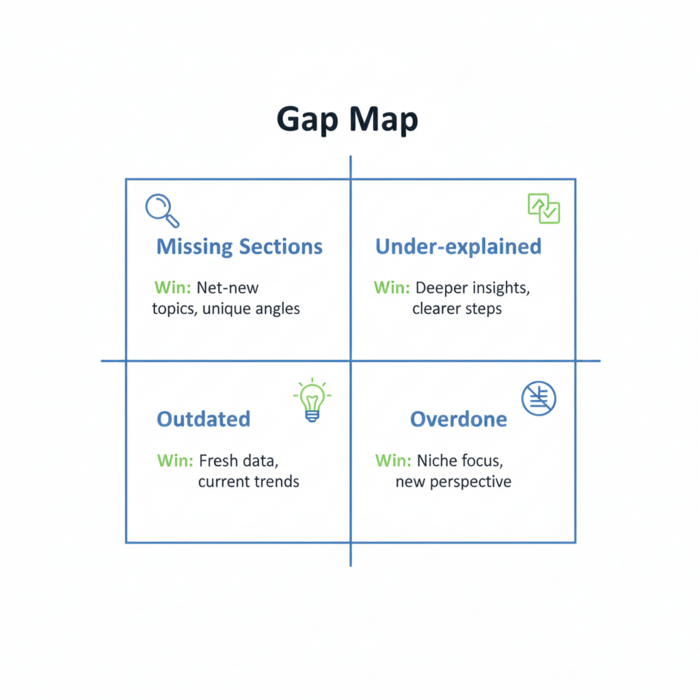
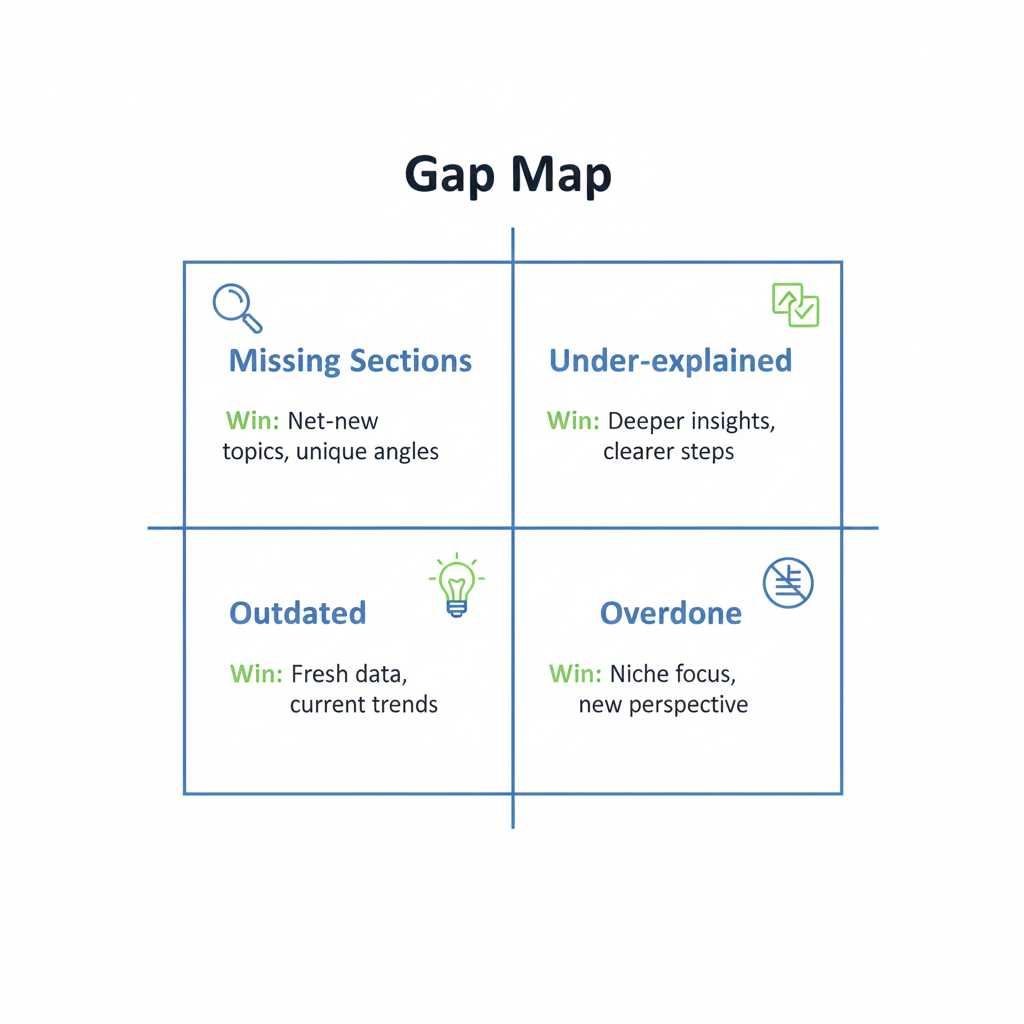
Create a simple grid with three buckets:
Missing sections: important subtopics not covered at all
Under-explained parts: mentioned, but vague (no steps, no examples)
Outdated assumptions: advice that ignores current realities (AI overuse, editorial fatigue, link spam enforcement)
Your post wins by owning one bucket clearly. Example: if every result says “align with intent” but nobody shows how to translate SERP patterns into an outline, that’s your gap.
Before you pitch, score the idea 1–5 across:
Audience fit: does their readership actually care?
SERP fit: does it match page-one patterns?
Original contribution: can you add a framework, checklist, or data point?
Link naturalness: would the link be a helpful citation, not a pitch?
Internal link opportunities: can you naturally reference 2–3 of their existing posts?
Pick topics scoring 18+ / 25. That single filter prevents wasted outreach—and makes your SERP Insight Guest Post strategy feel intentional instead of opportunistic.
Here’s the easiest way to write a SERP Insight Guest Post that looks native on a quality site:
Copy the structure patterns from the SERP
Replace the content with your original contribution (framework + examples)
Make it easy for an editor to publish (clean formatting, sources, visuals)
When multiple ranking pages share the same section order, that’s not coincidence—it’s user expectation.
Common patterns you’ll see in this SERP cluster:
definition → why it matters → process/steps → mistakes → conclusion
pros/cons + how to pitch + example email
guest post vs link insertion comparison
Use those as your scaffolding. Then upgrade with specifics competitors don’t include: scoring, templates, measurement, and risk checks.
A SERP Insight Guest Post improves when you include:
an explicit checklist (editors love it)
a repeatable method (readers remember it)
credible policy references (keeps you safe)
For policy grounding, cite Google directly:
Google’s reminder about links in large-scale article campaigns
Google Search spam policies (link spam definition and scope)
People-first content guidance
Link best practices (anchor clarity, crawlable links)
And for practical guest blogging context, Ahrefs’ guide is a credible industry reference.
If you publish across markets, don’t translate your English guest post and call it “localized.” SERPs vary by language: what ranks in one locale might be too long, too short, or framed around different examples. The Serpprize piece touches this idea, but the operational rule is:
Run SERP analysis per language, then rebuild the outline to match that market’s expectations.
That’s how a multilingual SERP Insight Guest Post stops being “translated content” and becomes “native content.”
This is where most guest posts fail. Not because the content is bad—but because the link feels like it has an agenda.
A SERP Insight Guest Post treats links as one of four reader-first functions:
Citation link: supports a claim (policy, data, definition)
Tool link: helps the reader do the next step
Example link: shows a real implementation
Deeper dive link: expands a point without bloating the article
If your link doesn’t fit one of those roles, it will read as “inserted.”
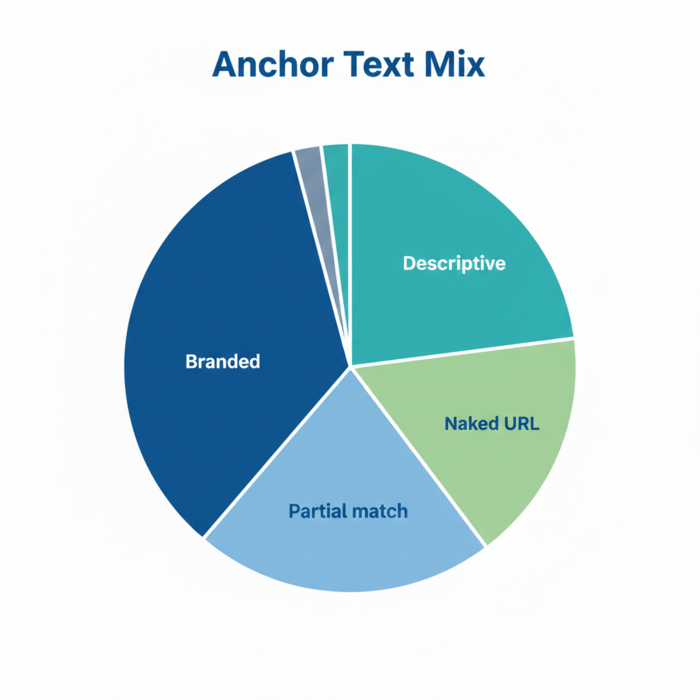
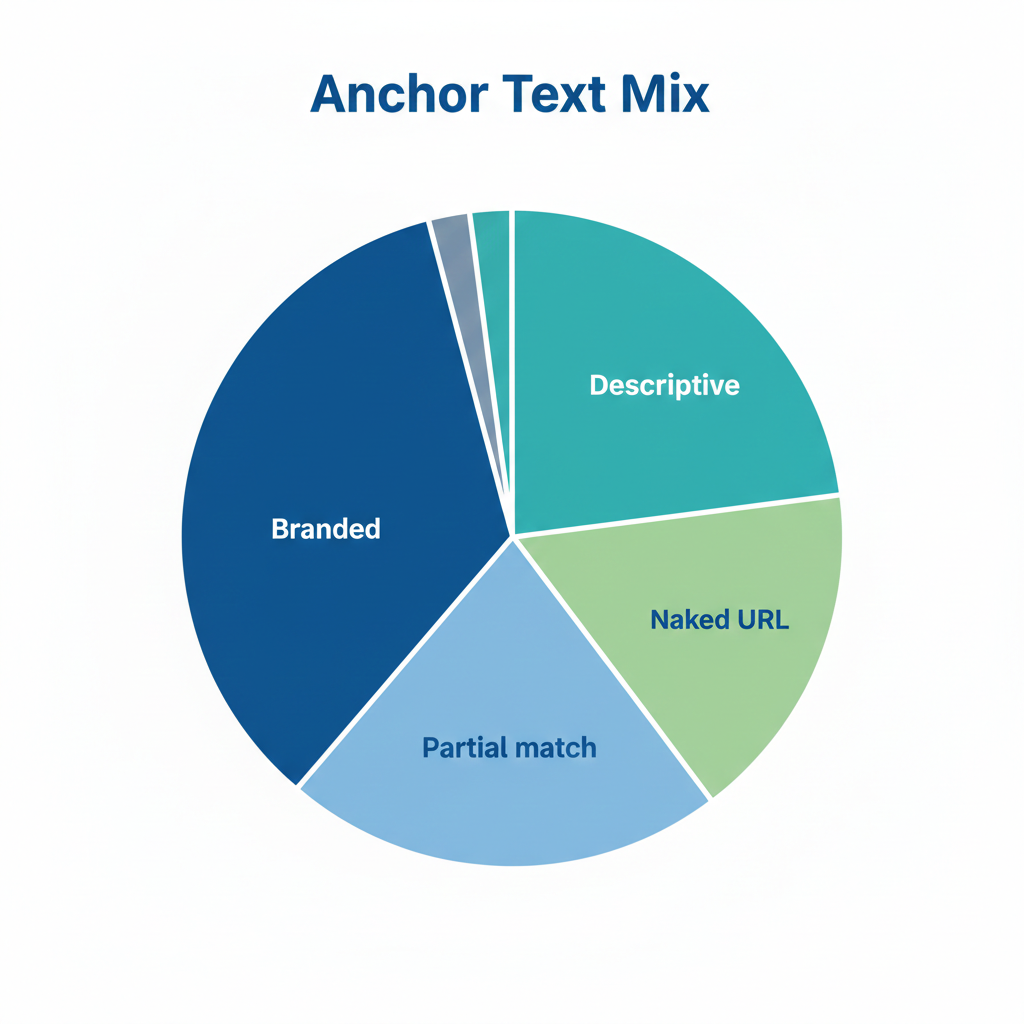
Natural anchor text is usually unremarkable. That aligns with two things:
human writing patterns
Google’s preference for clear, descriptive linking that helps understanding
Practical anchor guidelines for a SERP Insight Guest Post:
Use mostly branded, partial match, and descriptive anchors
Use exact-match anchors sparingly (and only when they read naturally)
Don’t repeat the same anchor across multiple placements (pattern = footprint)
This matches the “anchors should sound human” argument in the Serpprize article, but adds the operational rule: avoid repeatable templates that look scaled.
If you want your SERP Insight Guest Post to be durable, avoid:
stuffing keyword-rich anchors in multiple guest posts (classic link-spam signal)
publishing the same structure repeatedly across unrelated sites
writing for links first, readers second (fails people-first expectations)
Unique insight: The safest guest-post link is the one an editor would keep even if it passed zero SEO value. Write and place links like that, and you’ll naturally stay on the right side of policy.
A SERP Insight Guest Postis only “practical” if you can repeat it without reinventing everything.
Here’s the system:
pick SERP-backed topic + gap
build a one-page outline (with “must-cover” sections)
pitch with a publish-ready angle
write to match the host’s style guide
track outcomes beyond “link acquired”
Your outreach should read like you already understand their editorial goals.
Use this format:
1 sentence: why you’re reaching out (reference a specific post)
2 bullets: the SERP-backed opportunity (what readers search for + what’s missing)
3-bullet outline: publish-ready structure
1 sentence: why you’re qualified (one proof point)
1 sentence: what you’ll include (original examples, visuals, sources)
This matches the best parts of “step-by-step pitching” advice floating in the SERP, but positions your pitch around editorial benefit, not “I want a backlink.”
Use LinkAssistant – it will help you make the proess faster.
Track three layers:
Visibility: does the guest post rank or get impressions for relevant queries?
Behavior: referral traffic quality (time on site, pages/session)
Business: assisted conversions (newsletter signups, demo assists)
If you want clean attribution, use UTM parameters (especially for tool links) and keep a simple “guest post ledger” per placement. (This is widely recommended in guest-post measurement practices.)
Your job isn’t done when the post goes live.
To extend the lifespan of a SERP Insight Guest Post:
ask the editor to add 1–2 internal links to newer related posts (keeps it current)
refresh examples quarterly if the topic changes quickly
monitor the SERP: if the dominant format shifts, update sections accordingly
That’s how guest posts become assets instead of one-off placements.
A SERP Insight Guest Post starts with what already ranks, then improves what’s missing.
Match the SERP’s dominant intent and format before you write a word.
Use a Gap Map + Editorial Fit Score to choose topics editors actually accept.
Keep links reader-first and avoid scaled, optimized-anchor patterns Google warns about.
Write people-first, evidence-backed content that’s worth publishing on its own.
Measure outcomes beyond “backlink acquired”: rankings, referral quality, assisted conversions.
A SERP Insight Guest Post is not a new “type of guest post.” It’s a higher standard for how guest posts should be planned and executed in 2026: start with real SERP evidence, match ranking intent, fill a meaningful gap, and place links like a helpful citation—not a transaction.
That’s also why this approach tends to earn better links. Editors don’t publish link-first content forever. Readers don’t trust it. And Google has been clear that large-scale guest posting designed primarily to manipulate rankings is a problem—especially when anchor patterns and distribution look engineered.
If you take one thing from this guide, make it this: the best link-building guest post is the one that would still be valuable even if the link were removed. Build your SERP Insight Guest Post strategy around that principle, and you’ll end up with placements that look natural, perform longer, and create compounding credibility—rather than short-lived SEO noise.
If you’re ready to apply it, pick one topic, build a Gap Map, draft a publish-ready outline, and send five pitches that lead with editorial value. Then measure results and iterate. That’s how a single SERP Insight Guest Post becomes a repeatable system for earning links that stick.
A SERP Insight Guest Post is a guest article planned using SERP analysis first—so the topic angle, structure, and coverage match what currently ranks, while improving on gaps and missing details.
Guest posting itself isn’t “bad,” but scaled guest-post link campaigns with manipulative patterns can fall under link spam. The safe approach is to publish genuinely helpful content and keep links contextual and reader-first.
Use SERP intent mapping and a Gap Map: pick a query where demand is proven and top results have obvious missing sections or under-explained parts. Then score it with an Editorial Fit Score to ensure it’s a realistic placement.
Prioritize branded, descriptive, and partial-match anchors that read naturally. Avoid repeating the same keyword-rich anchor across multiple guest posts, and follow link best practices for clarity.
Track rankings/impressions for the guest post, referral traffic quality, and assisted conversions (e.g., newsletter signups, demo assists). Use UTMs where appropriate to keep attribution clean.
Have you tried building a SERP Insight Guest Post from SERP patterns (instead of writing first and optimizing later)? What part is hardest for you right now: picking the topic, finding the gap, getting editors to reply, or placing links naturally?
If this guide helped, share it with someone who’s still doing guest posting the “spray-and-pray” way—and tell them to try the Gap Map method once.
If you're looking for an 80%-off coupon for serpinsight.com services, here it is: SERP8795


 Article stats:
| Linking websites | N/A |
| Backlinks | N/A |
| InLink Rank | N/A |