125
•
8-minute read


The standard framing of AI search optimization goes something like this: AI systems are changing how people find information, so you need to optimize for them differently than you optimize for traditional search.
That is broadly true. It is also not specific enough to be useful.
After working through content restructuring projects with service businesses across Canada, I have found a more practical way to think about the shift. AI systems and search engine ranking algorithms appear to evaluate some of the same signals, but they often weight them differently and respond better to different content formats. Knowing where those differences sit is what separates a GEO strategy that produces measurable changes from one that is just traditional SEO with a new name attached to it.
This article shares what we have observed across client engagements: which content decisions consistently affected AI citation visibility, which traditional SEO foundations still matter, and what the data appeared to show before and after restructuring content for the AI answer layer.


Search engine ranking algorithms are largely built around relevance signals: keyword presence, topical authority, backlink profile, page experience, structured data, and user engagement. Those signals help determine where a document appears in a results list.
AI answer systems, including Google AI Overviews, ChatGPT search, Gemini, Perplexity, and Claude, are doing something different. They are not simply ranking pages. They are generating answers. That process involves identifying sources that appear credible, extracting relevant information from those sources, and synthesizing a response.
The criteria for “credible and citable” overlap with traditional SEO signals in some places, but they differ in important ways.
Three content characteristics appear to matter more in AI answer systems than they do in traditional ranking contexts:
Content that leads with a clear, specific answer to the query before expanding is easier to extract than content that buries the answer after several paragraphs of context. AI systems appear to favor accurate and extractable answers, not the most elegant content journey.
A page that answers one question with genuine depth and precision is often more useful than a page that covers fifteen topics at surface level. Topical depth on a specific question signals expertise in a way that broad coverage often does not.
AI systems appear to evaluate how consistently a business, person, or topic is referenced across the web. An entity with consistent name, address, contact information, and factual claims across multiple web properties is easier to treat as credible than one with fragmented or contradictory signals.
A 2024 study published in arXiv, “GEO: Generative Engine Optimization” by Aggarwal et al., found that certain content modifications, including adding citations, statistics, and clearer authoritative language, improved visibility in generative engine responses under tested conditions. Some methods produced gains of up to 40%.
Google’s own guidance also points in a similar direction from a content quality perspective. Its helpful content documentation emphasizes creating content for people, demonstrating experience and expertise, and providing substantive answers rather than content designed primarily to attract search traffic. While that guidance was written for Google Search broadly, it reinforces the same practical point: content that clearly helps a user solve a real question is more durable than content built around superficial optimization.
Across client work involving content restructuring for AI search readiness, four decisions have produced the most consistent and measurable effects.
The single most impactful structural change in most content audits is moving the direct answer to the top of each section.
Traditional long-form content often uses the opening of a section to set context, introduce the problem, or build toward a conclusion. AI systems extract the answer, not the narrative arc.
A section that opens with “Dental checkups in Calgary typically cost between $100 and $250 for a standard examination and cleaning, based on current clinic pricing” is more citable than one that opens with “Dental health is an important part of overall wellbeing.”
This is the content equivalent of the inverted pyramid structure from journalism: the most important information comes first, supporting detail follows. It is also better for human readers, who usually want a direct answer before deciding whether to keep reading.
H2 and H3 headings structured as questions mirror the query format that AI systems receive.
“How much does kitchen remodeling cost in San Francisco?” as a heading creates a direct structural match between the query and the answer. “Kitchen Remodeling Costs” does not do that as clearly.
The difference can affect both traditional featured snippet eligibility and AI citation likelihood because the heading signals exactly which question the following content answers.
AI systems appear to evaluate credibility partly through how claims are made.
Unqualified absolutes, such as “our service saves clients 40% on energy costs,” are less credible than qualified, attributed statements, such as “clients typically see energy cost reductions of 25 to 40%, based on system size and usage profile, consistent with Clean Energy Council estimates for commercial solar installations.”
The qualification does not weaken the claim. It makes it more trustworthy to both AI systems and human readers. It also reduces the legal and reputational risk of overpromising.
FAQ sections built around the actual questions people type or speak into search interfaces provide a structured library of direct answer matches.
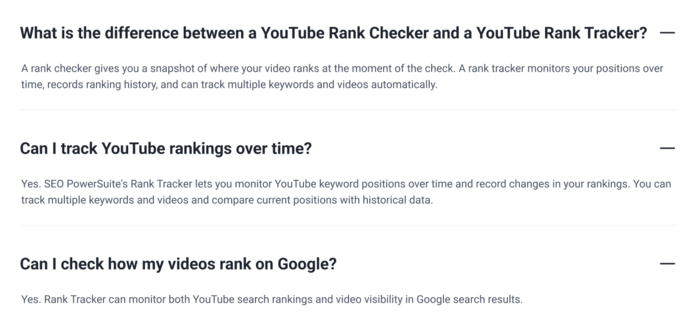
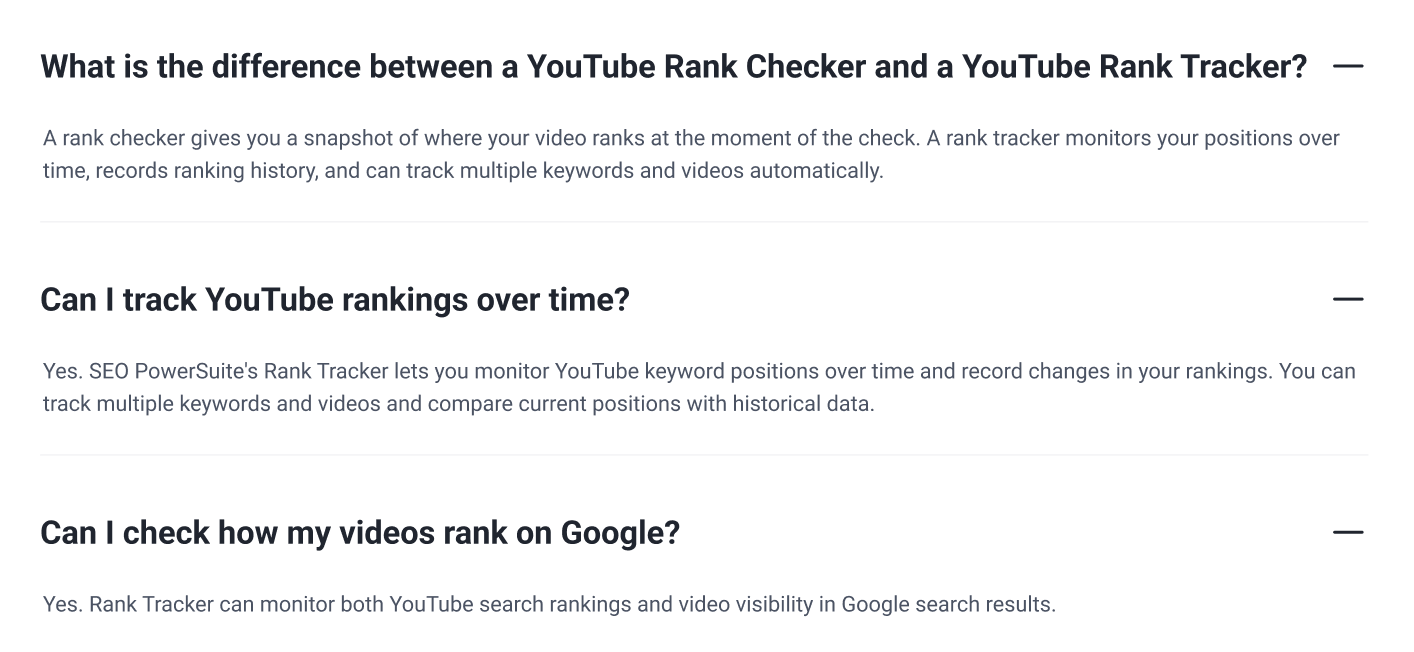
The value is not in simply having an FAQ section. The value is in using research tools to identify the specific question formats appearing in AI platform suggestions, People Also Ask boxes, and search autocomplete, then building answers to those specific questions.
Generic FAQ sections with self-serving questions, such as “Why should I choose your company?”, provide little AI citation value. Specific FAQ sections addressing real questions in the market do.
This is where the conversation often gets muddled. Some practitioners treat GEO as a replacement for traditional SEO. Others dismiss it as rebranded content marketing.
Neither position is accurate.
Traditional SEO signals that appear to transfer directly to AI search visibility include:
AI systems appear to use the web’s existing authority graph as a credibility signal. A site with strong backlinks from relevant, trusted domains is usually easier to treat as credible than a new site with no external citations.
AI systems depend on being able to access and process web content, either through their own crawlers, licensed datasets, or search indexes. Pages blocked by robots.txt, slow to load, or returning errors may have reduced visibility in the pool of citable sources.



Schema markup for business information, FAQs, how-to content, and articles helps search systems understand what the content is and how to categorize it. This is a signal traditional SEO has used for years, and it maps directly to machine comprehension.
NAP consistency, meaning name, address, and phone number, along with consistent factual assertions across the web, is both a local SEO foundation and an AI credibility signal.
Where traditional SEO approaches often fall short for AI citation:
Writing content to hit a keyword frequency target may produce content that ranks, but it does not necessarily produce content that answers. AI systems appear to evaluate answer quality more than keyword repetition.
Word count as a proxy for authority produces content that AI systems may not be able to extract useful answers from. Specificity and directness often outperform length.
Click-through rate matters for traditional rankings. AI systems do not click in the same way users do. They evaluate the content itself. A compelling meta description that misrepresents the content’s actual answer quality is counterproductive.
Across local service businesses, a common pattern is emerging.
Many businesses rank reasonably well in traditional search for branded and near-me queries, but they are often absent from AI-generated answers to category and comparison queries.
When someone searches “best HVAC company in Calgary” on Google, a local business with decent SEO may appear in the organic results. When someone asks the same question in ChatGPT or Gemini, the answer is generated from sources those platforms treat as credible and citable. That usually means sites with substantive content, authority signals, and structured answers.
A one-page HVAC website with a phone number and a service list is unlikely to appear.
The observations below are based on client engagements where traditional organic performance, AI answer visibility, content structure, and commercially relevant query coverage were reviewed before and after content restructuring. These are not controlled academic experiments, and AI answer outputs can vary by platform, location, prompt phrasing, and time. The results are best understood as practitioner observations rather than universal benchmarks.
In one Calgary restaurant project, a full website redesign restructured content around direct answers, question-based headings, location-specific pages, and clearer entity signals. Organic traffic increased by approximately 200% within six months.
The content changes were not primarily keyword-driven. They were structural. Content answered specific questions about menu, locations, ordering, and local availability directly, rather than describing the brand in general terms. That shift appeared to improve both traditional search performance and AI citation presence for local food-related search queries.
Traffic outcomes may reflect multiple factors, including redesign, technical cleanup, local SEO work, content restructuring, and changes in branded or local search demand.
In another project, a Montreal precious metals buyer increased website leads by approximately 315% within six months following a content and SEO overhaul.
The primary changes involved building out category-specific content pages that answered the specific questions buyers and sellers have about gold valuation, selling timelines, appraisal expectations, and what to bring to an appointment. That content had been largely absent from the site before.
Adding that content layer created both traditional ranking improvements and additional entry points for AI citation on gold-selling and precious-metals queries in the Montreal market.
Lead outcomes may reflect multiple factors, including search demand, technical improvements, content restructuring, conversion optimization, and market conditions.
The pattern across both cases, and across the broader client portfolio, is consistent. The AI visibility gap is not primarily a technical problem. It is a content problem.
Businesses have websites that describe what they do without answering the questions their prospective customers are actually asking. Closing that gap requires both a content audit that maps current gaps against real search and AI query data, and a structured rebuild that prioritizes direct, qualified, specific answers over general brand description.
A practical AI search audit typically covers five areas. These are useful as a self-assessment framework for SEO practitioners evaluating a site’s AI search readiness.
For each major page, read the first two sentences of each section.
Do they answer a specific question directly?
If yes, the section is likely citable. If they provide context, history, or brand description instead, they are not. This is the fastest way to identify restructuring priorities.
Use Google Search Console, Google’s People Also Ask results, and AI platform suggestion features to map the questions being asked in the target market.
Compare those questions against the site’s current content.
Every question that does not have a direct, well-structured answer on the site is an AI citation gap.
Audit the business’s name, address, phone number, and key factual claims across the website, Google Business Profile, directory listings, and third-party citations.
Inconsistencies reduce AI system confidence in the business as a credible entity.
Tools that aggregate citation data make this audit faster than manual checking.
Check for Schema markup on key page types: LocalBusiness, FAQPage, Article, HowTo, and Service schemas are the most relevant for local service businesses.
Missing or misconfigured structured data reduces the machine-readability of content for both traditional crawlers and AI systems.
Google’s structured data documentation remains a useful reference here because it shows how search systems classify page types and understand page-level meaning. Structured data is not a substitute for strong content, but it helps make strong content easier for machines to interpret.
Run the 10 to 15 most commercially important queries for the business in ChatGPT, Gemini, and Perplexity.
Note which competitors appear in generated answers and what content characteristics those sources share.
This provides a direct benchmark against which to evaluate the site’s current content.
The practical implication for anyone advising clients on search strategy is this: the skill of structuring content for extractability is becoming as important as the skill of optimizing content for rankings.
Those two things overlap significantly, but they are not identical.
Businesses that depend on local search visibility face a specific challenge in the current transition. Traditional local SEO built around Google Business Profile, review management, technical performance, and near-me ranking is still producing results. The AI layer sits above that and is increasingly being used for category discovery and comparison queries where the traditional results page is being partially displaced.
The businesses building durable digital visibility in this environment are the ones doing both: maintaining traditional SEO foundations while restructuring content for the direct-answer format that AI systems can cite.
Neither in isolation is sufficient.
A site that ranks well but cannot be cited by AI systems may lose ground in discovery. A site optimized for AI citation but without the authority signals traditional SEO builds is likely to have limited presence in either layer.
The practical starting point, for both practitioners and business owners evaluating their current position, is an honest answer audit:
Does each section of each important page lead with a direct, specific, qualified answer to a question a real customer is asking?
In most cases, the answer is no. That is where the opportunity sits.
The next generation of search visibility will belong to businesses that combine strong SEO fundamentals with content that is easy for AI systems to understand, extract, and cite. Rankings still matter, but increasingly, so does being the source behind the answer.
The AI visibility gap is not primarily a technical problem. It is a content problem. Businesses have websites that describe what they do without answering the questions their prospective customers are actually asking.
Anuj Dagar is the founder of Luminary Software, a Calgary-based web design and SEO agency specializing in AI search optimization, also known as GEO, local SEO, and conversion-focused web design for service businesses across Canada.
Luminary Software works with dental clinics, contractors, legal firms, HVAC companies, restaurants, and other local service operators to improve search visibility, generate qualified leads, and optimize content for both traditional and AI-powered search platforms.
Anuj can be reached at https://luminary.software/ or by phone at (587) 848-3745.


 Article stats:
| Linking websites | N/A |
| Backlinks | N/A |
| InLink Rank | N/A |