1
•
8-minute read

Open an analytics dashboard and you can see which pages attract organic traffic, which queries generate clicks, and which visits lead to conversions. What you can't easily see is how many people encountered your brand in an AI-generated answer, discussed it with colleagues, and made a decision without opening your website.
That missing part of the customer journey is becoming an increasingly relevant problem for SEO. A recent Google Careers listing offers an interesting clue about why it deserves closer attention.


A couple of days ago, I came across a Google Careers listing for a Product Manager that got me thinking about where Google Search might be heading.
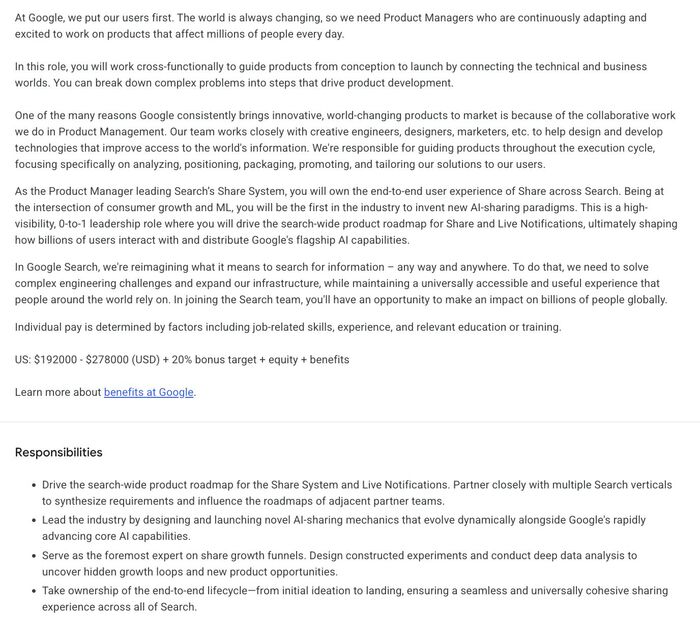
Two responsibilities caught my eye in particular: the “Share System” and “Live Notifications.”
The listing describes work on sharing experiences across Google Search, new ways to share AI-generated content, and experiments designed to drive growth. It also mentions share growth funnels.
While a job listing doesn't tell us what Google will actually launch, it offers a glimpse into the areas the company is exploring — and raises some interesting questions about how people might use Search in the future.
Traditionally, sharing something you find through search means passing along a link to the original source. The recipient visits the same page, reads the same information, and follows their own path from there. The website remains the destination, even when the discovery starts elsewhere.
AI search makes a different kind of interaction possible. Instead of sharing a link to an article, you can share an entire conversation: a set of recommendations, a product comparison, or a travel itinerary built through several follow-up questions. Someone else can pick up where you left off, explore the suggestions, and continue asking questions of their own.
This isn't a hypothetical future. Google already lets users share responses from AI Overviews and AI Mode, and recipients can use those shared responses as a starting point for further exploration.
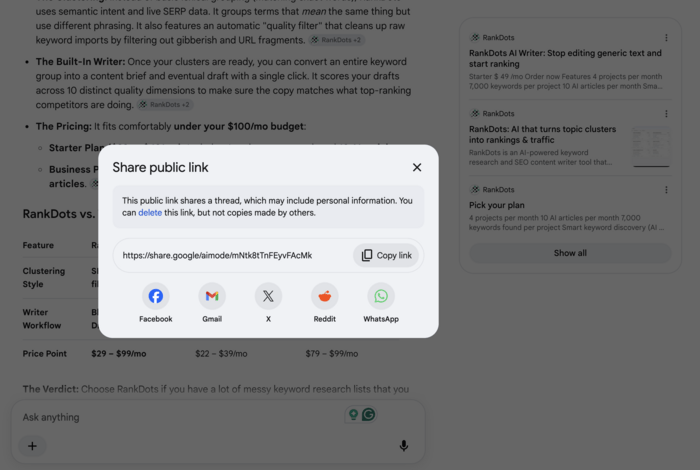
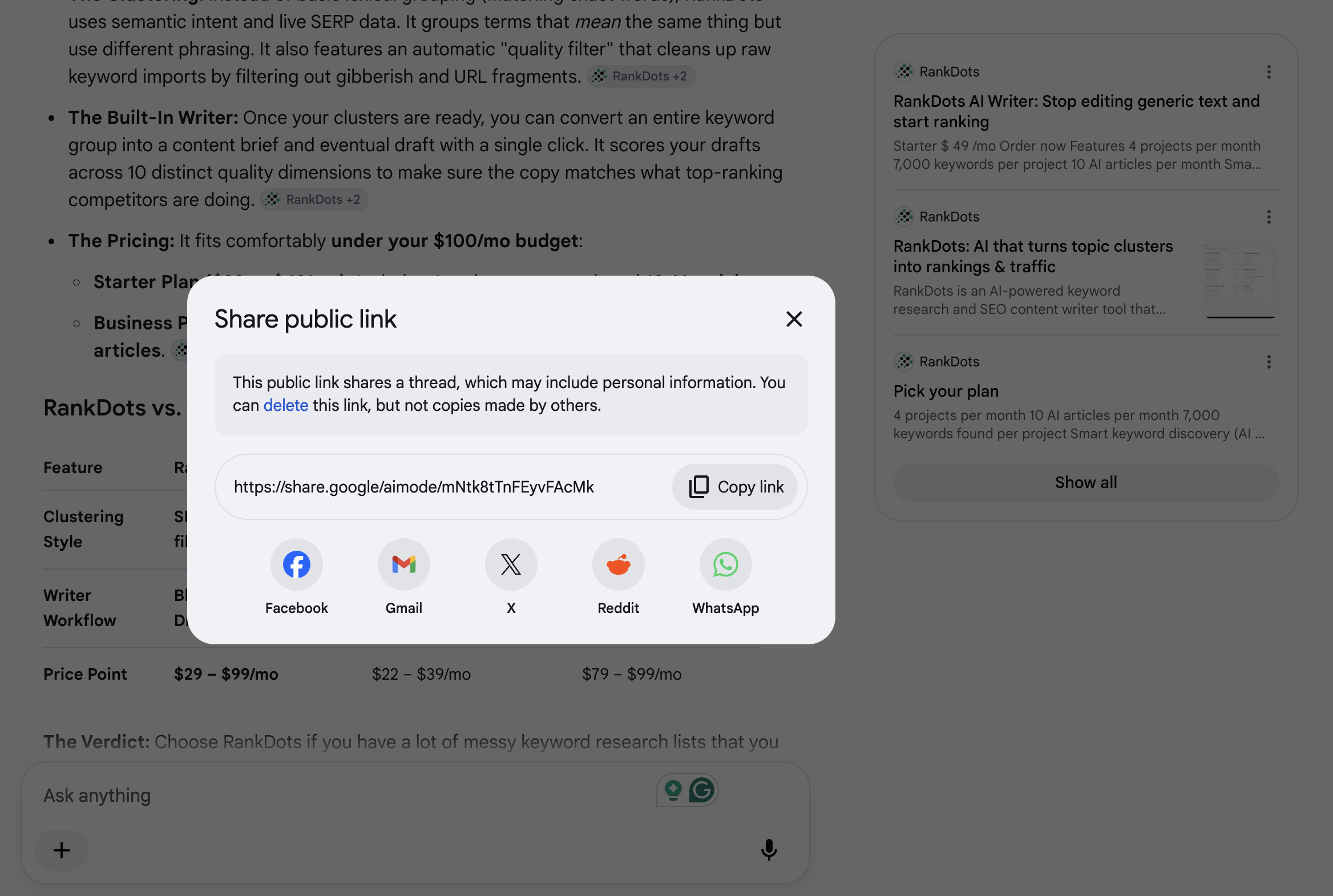
What makes the job listing interesting is the possibility that Google wants to develop these sharing experiences further, making them part of a broader growth strategy for Search.
And that raises a question for anyone working in SEO: what happens when people can discover information, share it, and make decisions based on it without ever visiting the websites that supplied it?
In fact, this shift is already visible in Google's search results.
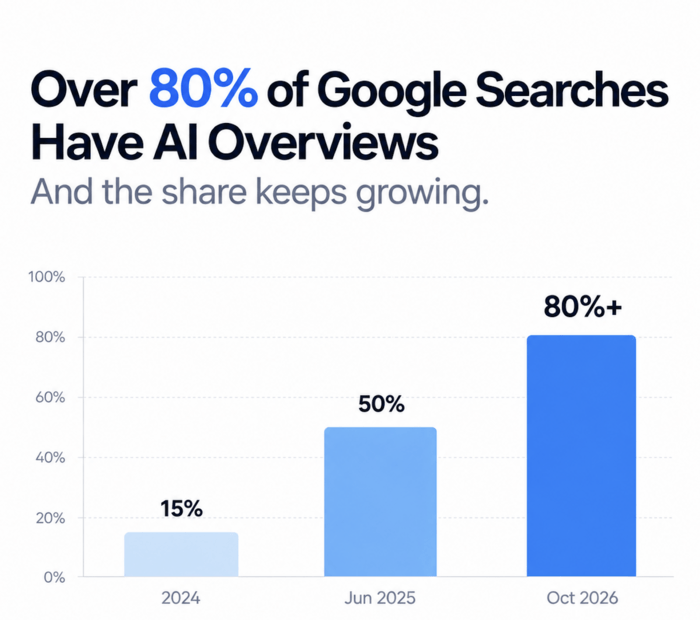
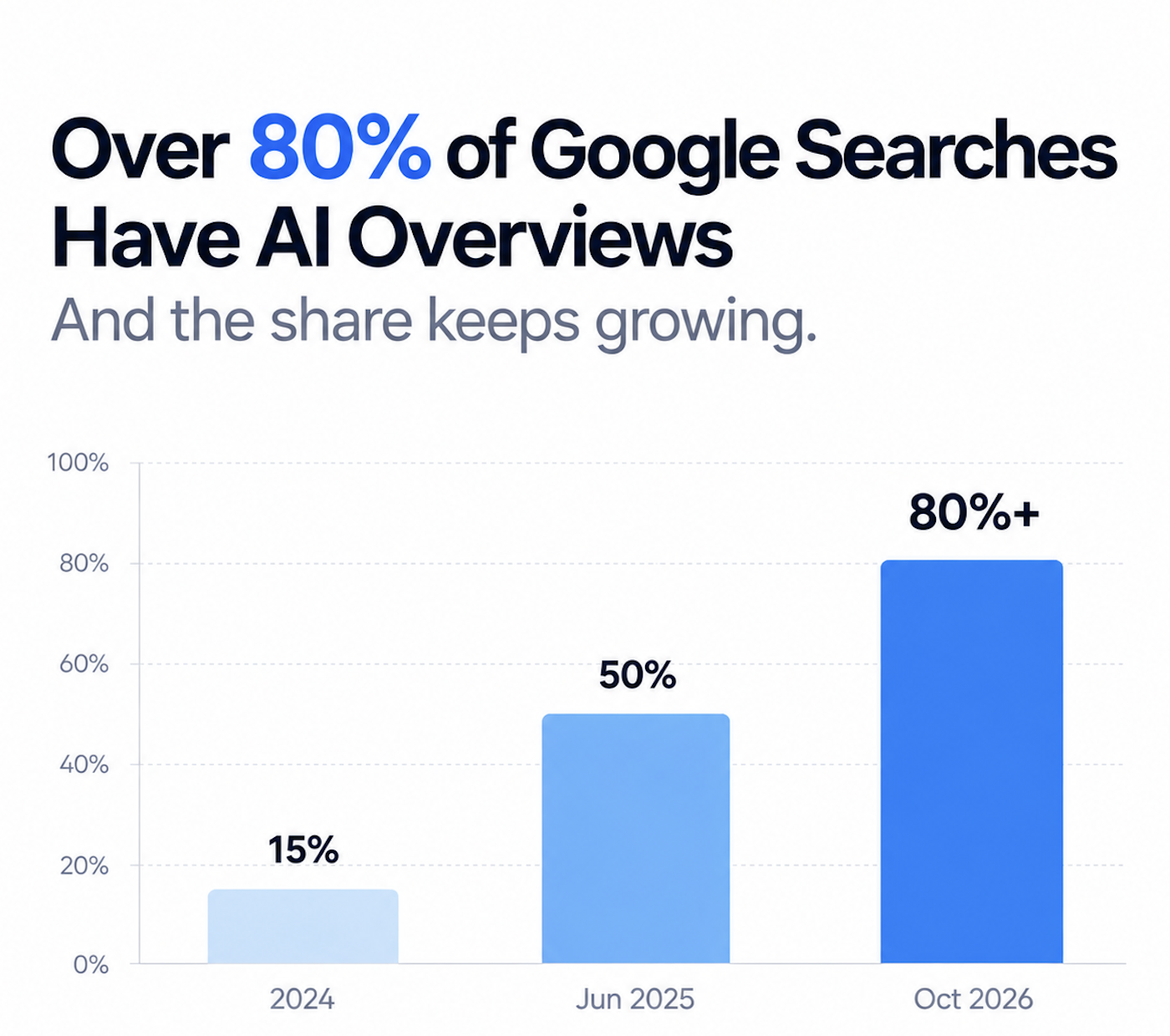
AI Overviews are appearing across an increasing share of searches. Industry data shows their prevalence rising from around 15% of tracked searches in 2024 to more than 80% by October 2026. The exact figures vary by dataset and methodology, but the trend points to a growing role for AI-generated answers in Search.
For SEO, the implications go beyond a change in how search results look. When Google answers a query directly, users may have less reason to visit the websites behind that answer. And when those responses can be shared, the information can reach people who never conducted the original search — let alone visited the sources themselves.
Consider a familiar scenario. You're planning a trip to Lisbon, find a useful travel guide, and send it to a friend. Your friend opens the article, reads it, and perhaps visits a hotel or restaurant website mentioned in the guide.
The publisher can measure at least part of this journey. Depending on the sharing channel and tracking setup, the visit may appear as referral, social, or direct traffic.
Now imagine a different experience.
You ask an AI search engine to compare Lisbon's neighborhoods, estimate transport costs, suggest hotels, and build a three-day itinerary. After several follow-up questions, you share the conversation with your friend.
Your friend opens the shared link, reviews the recommendations, and asks additional questions. Google creates a separate private thread for those follow-ups, so the new conversation doesn't automatically become part of the original shared link. But your friend can still use the shared response as a starting point.
The distinction is important: the shared conversation can become the starting point for a decision, even when the websites supplying the information never receive a visit from the second person.
A hotel may inform a recommendation. A travel publisher may supply background information. A local business may provide the details that make an itinerary useful.
Yet the person making the decision may never visit any of those websites.
The same pattern could apply to software comparisons, major purchases, home renovations, university choices, or financial products. Information can influence a decision without every person involved visiting the original source.
For content businesses, that creates a distribution challenge. Their information may reach a wider audience, but the resulting engagement won't necessarily appear in their traffic reports.
Sharing isn't the only opportunity suggested by the Google listing. Live Notifications could also point to a broader role for Search in helping users manage ongoing tasks.
Traditional search is often organized around individual queries. A person asks a question, reviews the results, and returns later with another question.
An AI conversation can connect those moments into a single task.
Someone researching a laptop might establish their requirements, compare models, investigate battery life, check prices, and revisit the same conversation before buying. Notifications could make this experience more useful by bringing the user back when relevant information changes.
The listing mentions Live Notifications, but it doesn't confirm that price tracking or any particular notification feature is planned. Those are possible applications, not announced product capabilities.
The broader opportunity is easier to understand. If a search engine helps people make progress on an ongoing task, it has more reasons to bring them back. If users can share that task with others, the experience may also reach new people through existing users.
In product-growth terms, sharing can support acquisition, while notifications can support retention. Together, they could connect discovery, engagement, and repeat usage within Search.
That's an interpretation of the listing, not a confirmed description of Google's strategy. Still, it's a useful direction to watch given Google's existing investment in AI Mode.
For SEO teams, the important implication isn't the specific interface Google eventually develops. It's that more of the research and decision-making process may take place before a user visits a website.
We don't need to wait for new sharing features to understand why this matters. Research already shows that AI-generated summaries can change how people interact with search results.
A recent Pew Research Center study, published in August 2026, examined browsing activity from a representative panel of 900 U.S. adults. The researchers found that users clicked links cited in AI Overviews in only about 1% of visits to pages displaying them. They also found that users clicked traditional search results in 8% of visits when an AI Overview appeared, compared with 15% when it didn't. Browsing sessions were also more likely to end on pages with an AI Overview: 26% of visits, compared with 16% on pages without one.
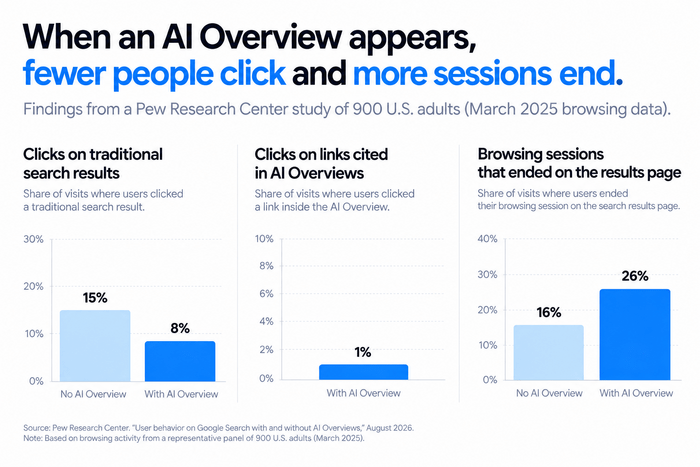
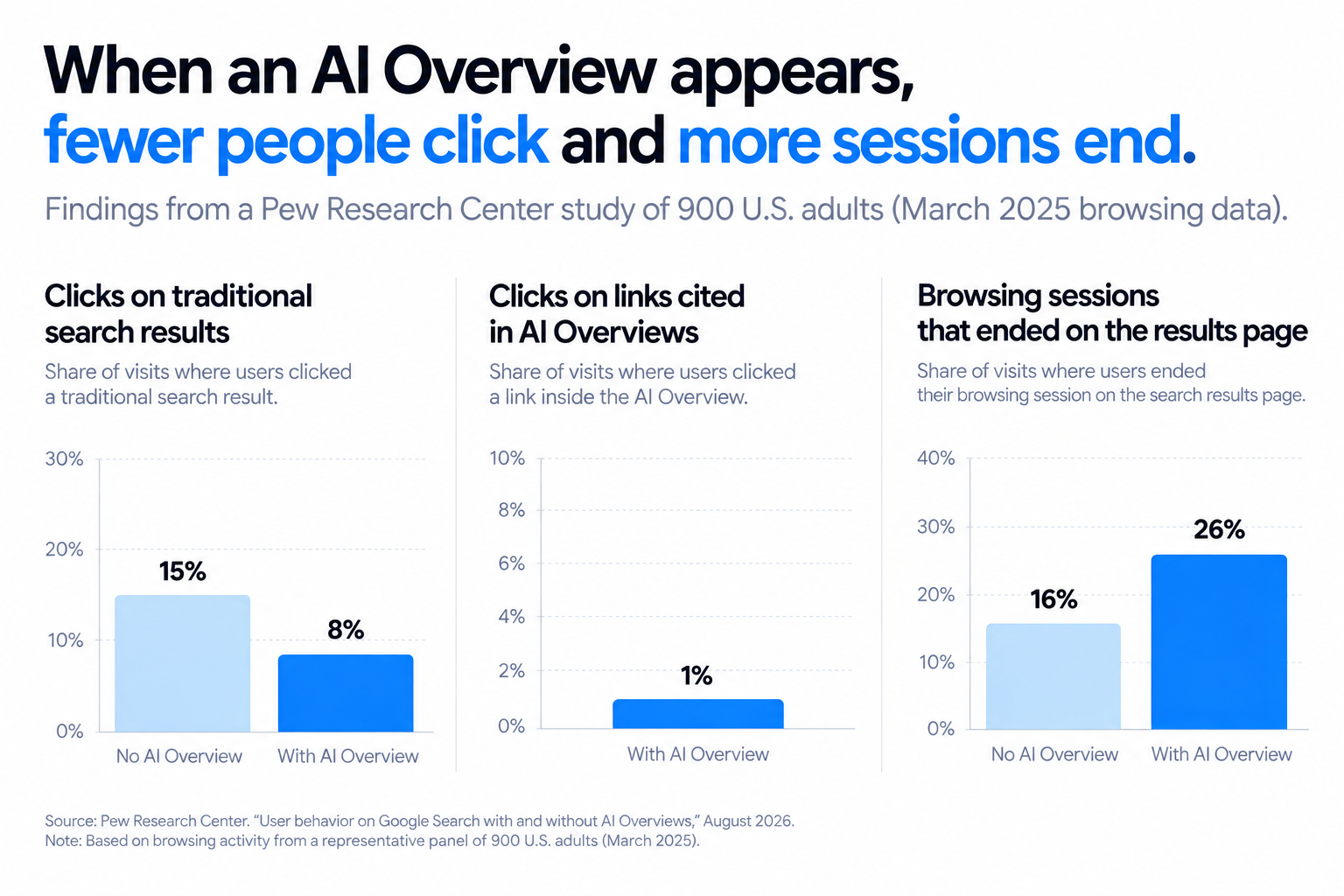
The findings suggest that AI Overviews are associated not only with fewer clicks to external websites, but also with a greater likelihood that users stop browsing after seeing the search results. However, the study is observational, so it cannot establish that AI Overviews alone caused these differences.
For publishers, the measurement problem is straightforward: a page can contribute information to an answer without receiving the visit that would normally appear in analytics.
The effect also depends on search intent. Someone looking for a simple definition may be satisfied with a short answer. Someone comparing expensive products or evaluating business software may still need detailed specifications, independent reviews, pricing, or a demonstration.
AI answers don't always eliminate the need to visit a website. In some cases, they may encourage further exploration.
The challenge is to understand which searches lead to visits, which may satisfy users without a visit, and how those patterns vary across a site's audience and business model.
Zero-click search is only part of the attribution problem.
Imagine that a potential customer asks an AI search engine to compare project-management tools. The answer discusses three vendors, drawing on information from product pages, reviews, and third-party publications.
The customer shares the conversation with two colleagues. They discuss the recommendations and choose one of the vendors.
Only one person may visit the selected vendor's website. The others can influence the decision without generating any measurable sessions.
The vendors that were considered but rejected may never see a visit from any of the participants. Yet their product information may have helped shape the comparison.
Now look at the analytics reports. One vendor records a conversion. Another sees a small increase in direct traffic a few days later. The third sees nothing unusual.
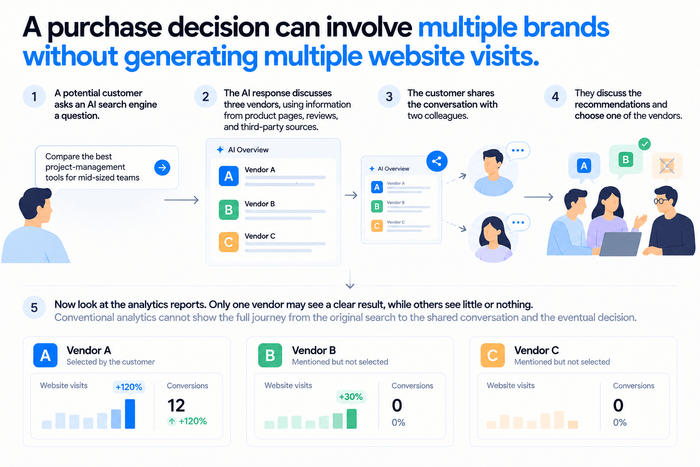
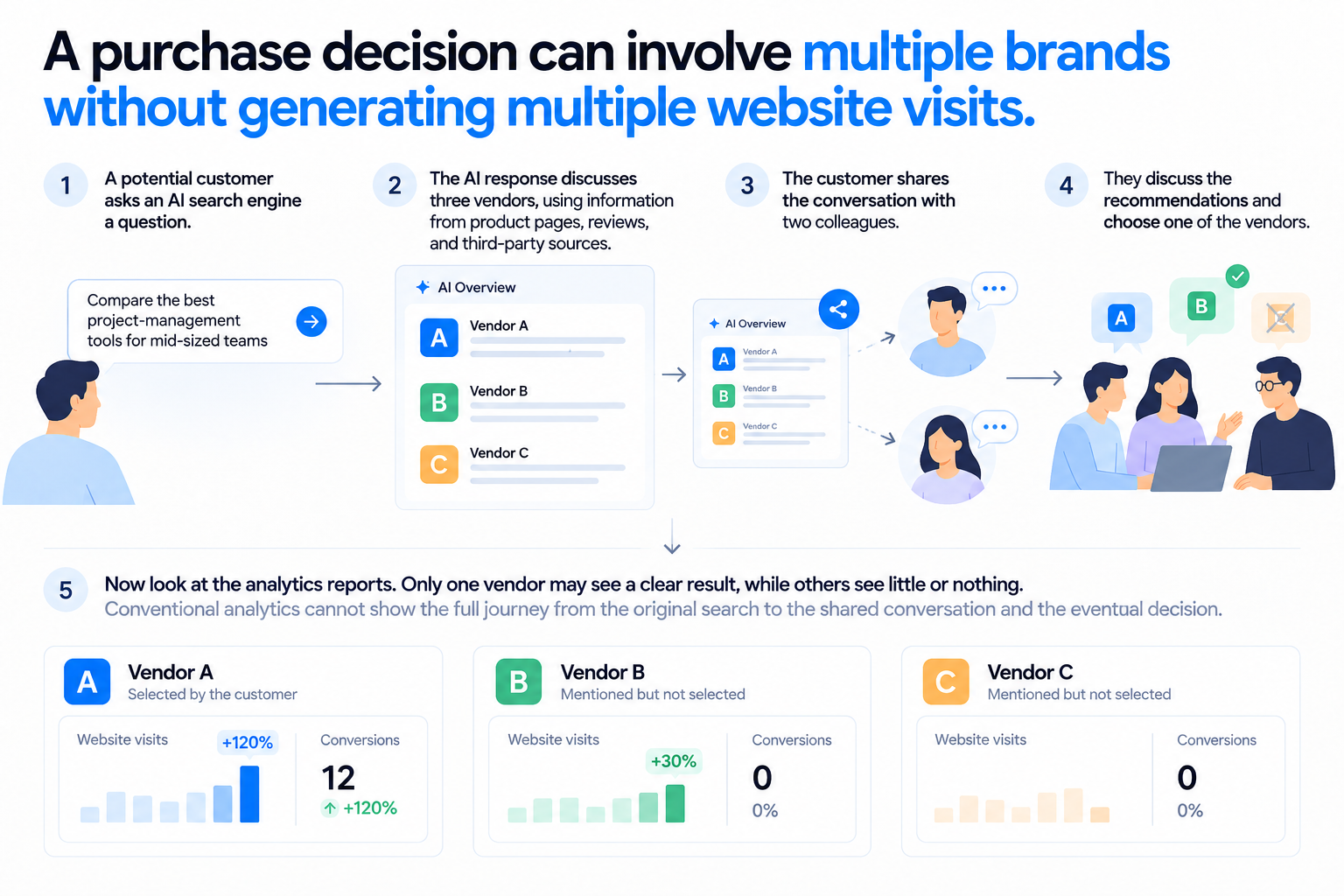
None can reliably reconstruct the full journey from the original search to the shared conversation and the eventual decision using traffic data alone.
This doesn't prove that AI search caused a conversion or that a search engine deserves credit for it. It illustrates a more general limitation: standard analytics cannot capture every interaction that influences a purchase.
Attribution assigns credit to measurable interactions or touchpoints. Influence describes a contribution to an outcome, whether or not that contribution can be observed directly.
Digital marketing has always faced this distinction. Private messages, conversations between colleagues, recommendations from friends, screenshots, copied text, and offline discussions can all spread information beyond the channels analytics platforms can reliably identify.
Google Analytics, for example, explains that direct traffic can include visits without clear referral information. That doesn't mean direct traffic comes from AI or private sharing. It illustrates why the source recorded in analytics isn't always the same as the source that originally influenced a user.
AI-generated answers and shareable conversations could make this gap more pronounced.
That doesn't justify labeling every unexplained visit “dark SEO” or attributing every increase in branded search to AI recommendations. Those conclusions go beyond the available evidence.
The more defensible conclusion is that some information shaping customer demand travels through channels that don't generate a traceable referral.
Rankings, impressions, clicks, sessions, and conversions remain useful. They show whether pages are visible, whether people visit them, and whether those visits produce results.
The problem is treating these metrics as a complete account of SEO's contribution.
If a brand's content informs an AI-generated response that influences someone who never visits the site, traffic analytics won't capture that influence. The size of the gap will vary by industry, search intent, and customer journey, and it may be difficult to quantify precisely.
The answer isn't to abandon conventional metrics. It's to combine them with other ways of evaluating visibility and business impact.
Monitor whether your brand and important pages appear in relevant AI search experiences. Record which products or services are mentioned, which competitors appear alongside you, and whether the information is accurate.
SEO PowerSuite's Rank Tracker includes Google AI Overviews tracking, so you can see which tracked keywords trigger AI Overviews, check whether your site is mentioned or cited as a source, and monitor competitor visibility over time. This helps you spot gaps between your traditional rankings and your visibility in AI-generated answers.
Changes in branded search impressions, direct visits, and returning users can help identify shifts in awareness. Compare these trends with organic visibility, paid campaigns, product launches, PR activity, and other marketing initiatives.
Don't treat an increase in branded searches as proof that AI mentions caused it. These are indirect signals, and several factors can affect them at the same time.
Look for patterns across multiple data sources rather than trying to explain every movement with a single cause.
Continue reporting organic sessions and conversions, but evaluate SEO alongside broader business indicators, such as qualified leads, assisted conversions, branded demand, and customer acquisition.
Where possible, use experiments and customer research to understand how people discover and evaluate your brand. Ask customers which sources helped them make their decisions instead of relying exclusively on the last recorded click.
Customer surveys have limitations, too: people may forget where they encountered a brand or misremember what influenced them. Experiments can provide stronger evidence of causality when they're feasible, while qualitative research can help explain behavior that analytics alone cannot.
No single method will reveal the entire journey. Combining behavioral data with customer evidence gives you a more complete picture.
If an AI response can summarize generic information, publishing another article that repeats the same points may do little to persuade someone to click through.
Original research, first-hand experience, product demonstrations, detailed comparisons, specialist analysis, and useful tools can provide value that a short answer cannot fully replace.
This also makes the choice of what to publish more important.
Rather than producing more content for the sake of coverage, identify the topics where your audience needs deeper information, a more specific answer, or practical guidance they can act on.
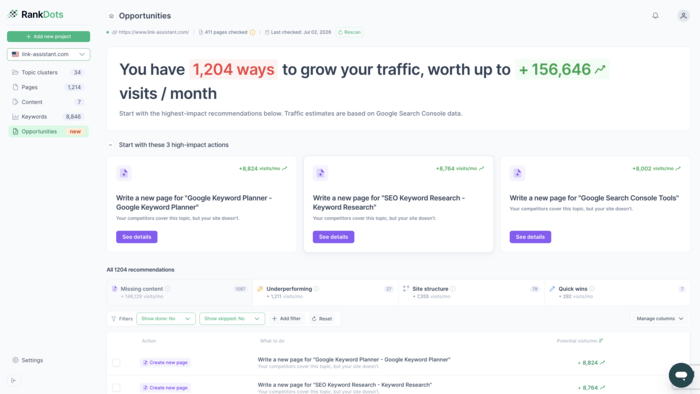
Tools like RankDots can help with this by grouping related keywords into topic clusters and using Google Search Console data to identify content gaps and opportunities to improve existing pages.
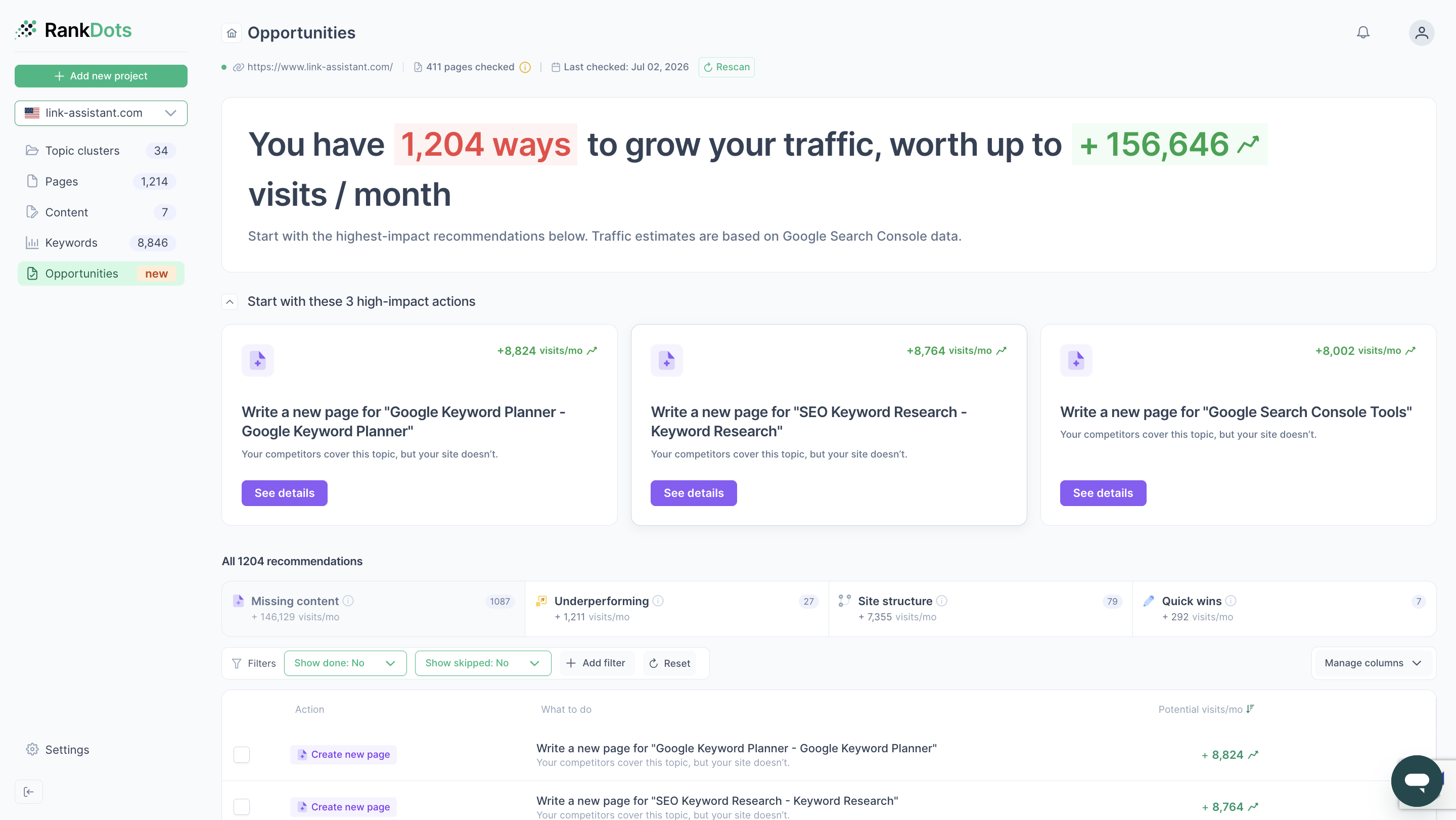
None of these formats guarantees higher rankings or AI citations. Their purpose is to give your audience something useful and a stronger reason to engage directly with your business.
The goal isn't to make every page impossible to summarize. It's to create content that works in search results while offering additional value to people who want to explore further.
It's tempting to frame AI search as a contest between traditional SEO and an entirely new discipline. That misses the practical issue.
Search engines still need information to answer questions. Google's documentation confirms that established SEO practices remain relevant to AI Overviews and AI Mode. Technical accessibility, useful content, and a clear understanding of the audience still matter.
What may change is the relationship between visibility and website traffic.
A brand can appear in an AI answer, have its information shared with other people, and influence a decision long before anyone visits its website. The eventual visit may come through another channel — or never happen at all.
The Google Careers listing doesn't prove that sharing and notifications will become major growth drivers for Search. It does provide a reason to watch how Google develops these experiences.
For SEO professionals, the practical response is to keep improving organic performance while broadening how they evaluate visibility, brand demand, and contribution to business outcomes.
The next attribution challenge may not be identifying which search sent a visitor to your website. It may be understanding how your brand influenced the decisions of people who never visited at all.


 Article stats:
| Linking websites | N/A |
| Backlinks | N/A |
| InLink Rank | N/A |