Alesia Krush
Alesia Krush is a word-juggler and an SEO enthusiast at Link-Assistant.Com. She writes about all aspects of search, taking particular interest in things viral, trendy and cutting-edge. Alesia is also a contributing author and Link-Assistant.Com’s brand ambassador in SEO industry blogs and publications.


January 25th, 2012 | Alesia - Link-Assistant.Com
Name:
When Search plus Your World got rolled out, it looked pretty bizarre to me. My first question was, 'What the heck is this?' But, well, that could be just me.
Anyhow, SPYW is here. And, moving beyond the initial reaction like 'Gosh, I hate it' or 'Wow, I love it', I would like to try and analyze what this new feature holds for different parties in the game.

Google
The blessing
There are over 2 billion people using the Internet on the globe. Out of these 2 billion, 90 million users have G+ accounts as of January 2012. This means that about every 20th Internet user will be exposed to the new feature IN FULL. Besides, signed-out users will be exposed to it to some extent, too (think of People and Pages). Read more »

View Comments
January 16th, 2012 | Alesia - Link-Assistant.Com
Name:

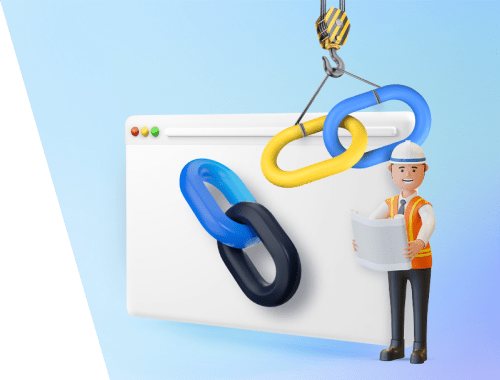
Today, let us speak a little hotlinking. Let us see what hotlinking is and whether the phenomenon is completely negative as many white-hat SEO-optimizers believe.
So, first thing first, what is hotlinking? This is, technically, linking to a piece of content that's located on another site in such a way that people can actually view it from YOUR site, WITHOUT having to go to the site where it is physically situated. Think of a Vimeo video that you embed on your blog: it would be hosted on Vimeo's server, while being available for viewing on your very resource.
Hotlinking is also referred to as direct linking, leeching or inline linking.
Hotlinking Images
Images get hotlinked a lot. It's not that often that one would want to have a snippet of text from another site sitting on their resource. However, with images, things are different. A lot of people just perform a basic Google search, see an image they can use to illustrate their article with and - voila – put a direct link to it. Read more »
View Comments
December 8th, 2011 | Alesia - Link-Assistant.Com
Name:
Would you like to be able to check rankings as if you were in another country? It's no secret that Google nowadays biases the search results based on your IP or GSM (this is what they call "geolocation"), which sometimes hampers your rankings check.
Now, here is the deal. There is an unassuming yet powerful parameter in Google that you can leverage to disguise your queries as if coming from another country. I'm talking about Google's "gl" parameter that you can simply add to your search query URL and hence beat Google's geolocation.
To learn how to make use of the "gl" parameter, please, read our recent post on StayOnSearch.Com. Besides, the parameter is now supported in our keyword tracking tool, Rank Tracker.
P.S. Stay tuned for the launch of the huge new backlink source for SEO SpyGlass! We are running final in-house tests .
View Comments
November 28th, 2011 | Alesia - Link-Assistant.Com
Name:
What's vertical search? This is, basically, search within certain outlined categories. Some vertical search engines specialize in just one field, while others focus on several (normally related) topics.
To visualize the concept, please, take a look at the following infographic:
Read more »
View Comments
November 9th, 2011 | Alesia - Link-Assistant.Com
Name:
Every savvy SEO knows that the overall success of an SEO campaign is not measured by PageRank or site rankings, and neither is it measured by conversions. It is estimated according to the ROI, which is Return on Investment.
About the last stage of the sales cycle, that precedes ROI, is CONVERSION. Conversion means getting the prospect to perform a certain action on your website, for example, to download a whitepaper, request a free quote or place an order.
Therefore, it's critical that the visitors who come to your site actually convert. In other words, even if you drive hoards of traffic to your website, but those people do not turn into customers - consider your SEO campaign a failure. Read more »
View Comments
October 27th, 2011 | Alesia - Link-Assistant.Com
Name:
Article submission is dead - long live article submission
Some say that article submission is dead. Google's Panda has killed it. Hmm. That depends on what you mean by article submission. Submitting spun articles to hundreds of article directories may be as well half way to its grave. But not white-hat guest article posting!
Today, with Google's Panda at large and content farms suffering PR and traffic loss, it appears to be wiser to focus more on submitting 1-2 quality articles to reputable sources, rather than spamming the already over-spammed Web with more spam. Read more »
Tags: guest blogging, link building, SEO software
View Comments
October 14th, 2011 | Alesia - Link-Assistant.Com
Name:
If you say "panda" to an SEO professional, he/she will probably think NOT of the cute black-&-white animal munching on a piece of bamboo, but of the latest series of Google algorithm updates known as Panda.
The Panda update did shake the minds of SEOs and webmasters worldwide, with many voices raised: "Gosh, I got hit by Panda, why did this happen?" However, if you look at the websites complaining, most of them got slammed by Panda for a reason.
So, if your site got affected, instead of whining and calling Google names, it's best to try to understand what Panda is about and how to outrank your competitors in the new, post-Panda SERPs. This may take a heck of work, though.
Ok, the intent of this post is NOT to tell you yet another Panda story. What we'd like to provide is actionable tips on how to use Panda to your advantage and actually profit from it. Read more »
View Comments
September 26th, 2011 | Alesia - Link-Assistant.Com
Name:
They say that, deep in their hearts, all SEOs are geeks. This is probably true, because, to be able to do SEO, one should be at least a bit of a geek, since SEO is indeed a unique field of knowledge - it requires perpetual, pretty much lifelong study.
This is because search engine algorithms change all the time - and so do the rules by which SEOs play. So, it’s essential to always stay on top of things.
Also, there is a wide range of SEO methods, techniques and approaches invented and perfected by different SEO specialists around the world.
How does one stay informed about the latest SEO news and updates? What are the useful resources to replenish one's SEO knowledge and learn new SEO techniques? Let's see. Read more »
View Comments
August 31st, 2011 | Alesia - Link-Assistant.Com
Name:

First off, let me explain what canonicalization is. According to Matt Cutts:
"Canonicalization is the process of picking the best url when there are several choices, and it usually refers to home pages."
What are these "several choices"? Sometimes Google has more than one version of one and the same page indexed:
www.example.com
example.com
www.example.com/
example.com/
www.example.com/index.html
www.example.com/?icf=blahblahblah
etc.
Google treats them as separate URLs, but intelligently assumes that they lead to one and the same webpage. In which case it normally picks and returns just one URL out of the group in the search results. Read more »
View Comments
August 10th, 2011 | Alesia - Link-Assistant.Com
Name:
Search engines evolve fast. In fact, they evolve incredibly fast. Every now and then rankings algorithms change, and good old search engine optimization practices stop working. However, some folks manage to lag behind. As a rule, these are SEO newbies who stumble upon outdated SEO advice and cannot tell it's outdated, or amateur SEOs who know very little SEO and are going half-blind with their optimization practices.
Are you sure your SEO is not stone-age? Hurry up and check this list of antique and, for the most part, useless SEO techniques that some people still practice nowadays.
1. Using meta keywords
This one deserves the first place. There are still a lot of SEO "experts" who think high of meta data and meta keywords in particular. So, here is the deal - meta keywords don't help your site rank higher AT ALL! Neither do meta descriptions. And, even though catchy meta descriptions do make your site stand out among other websites in the search results, they do not do anything for your SEO. The only piece of meta data that should be paid attention to is title tags, that's it. Read more »
View Comments
|