3550
•
14-minute read


There is little point in pretending that marketers do not use AI to create content anymore. Most of us do. The important question is not whether AI was involved, but how it was used.
The same model can produce a generic article that disappears among hundreds of similar pages, or help create a useful piece of content that ranks, attracts links, and brings consistent organic traffic. The difference is rarely the model itself. It is the research, context, instructions, examples, editorial decisions, and fact-checking that surround it.
The article below was created with the help of AI. Since publication, it has generated almost 70K clicks from Google Search over 16 months and continues to attract traffic consistently.
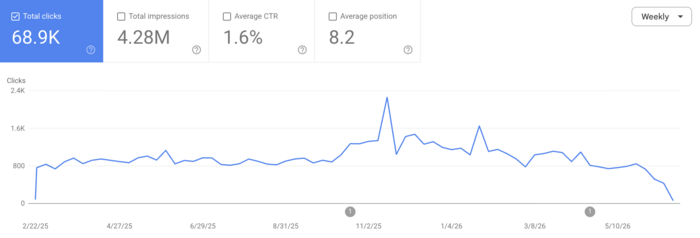
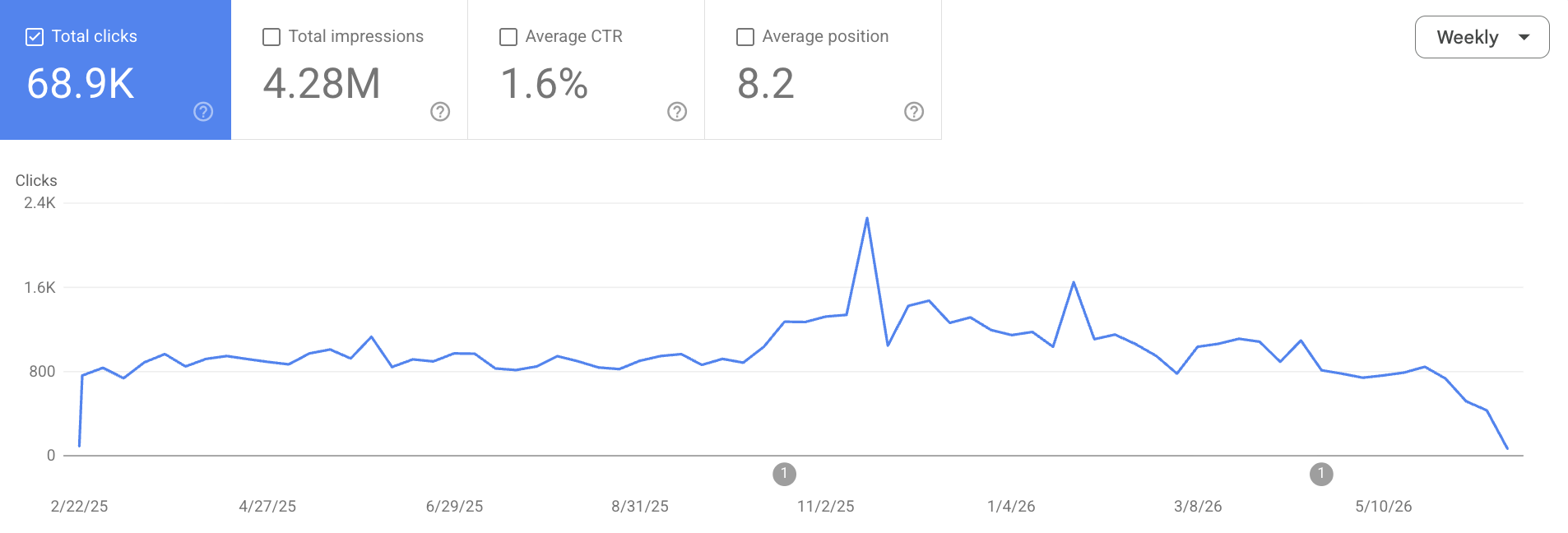
It was not produced with one prompt, and I did not publish the first draft ChatGPT gave me. I used AI throughout the process, but I controlled the topic, argument, sources, structure, examples, product context, and final editing.
In this article, I will show the workflow I use to turn research and editorial input into AI-assisted content that is accurate, original, useful, and capable of performing in search long after publication.
I have spent a lot of time turning this process into a repeatable system, both for my own content and as part of my work on RankDots.
RankDots was built around many of the same principles I describe in this guide. It analyzes competing content, identifies the topics and keywords a page needs to cover, and uses that context to generate a structured article rather than starting from an isolated prompt.
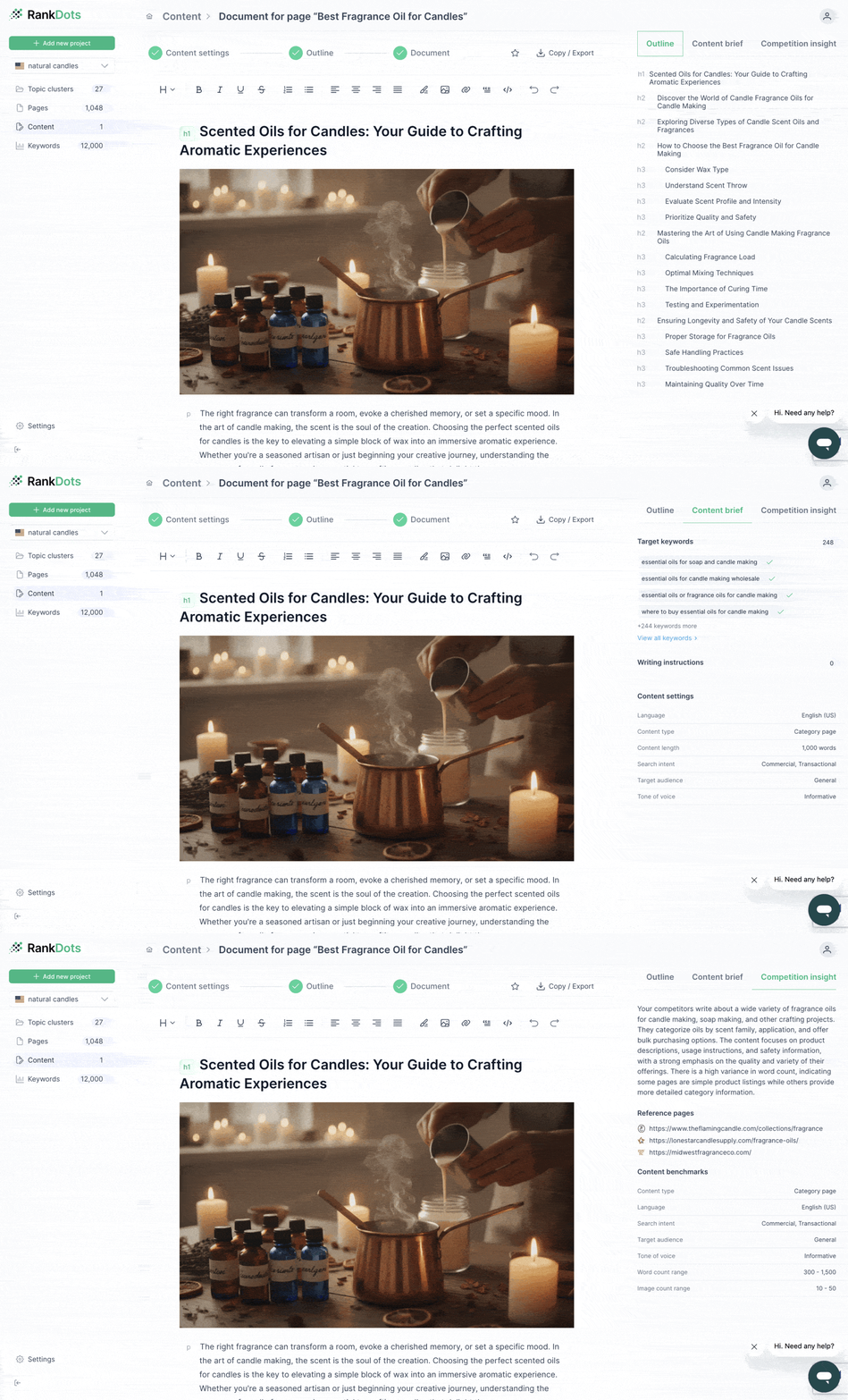
I will point out a few places where it can automate parts of the process, but the workflow itself applies regardless of the tools you use.
Before I start working on any individual article, I set up the context ChatGPT will use throughout the entire content process.
I keep our editorial instructions, reference files, product documentation, and examples of published content inside a dedicated ChatGPT project. This means I do not have to explain our audience, products, tone, and writing standards every time I open a new chat.
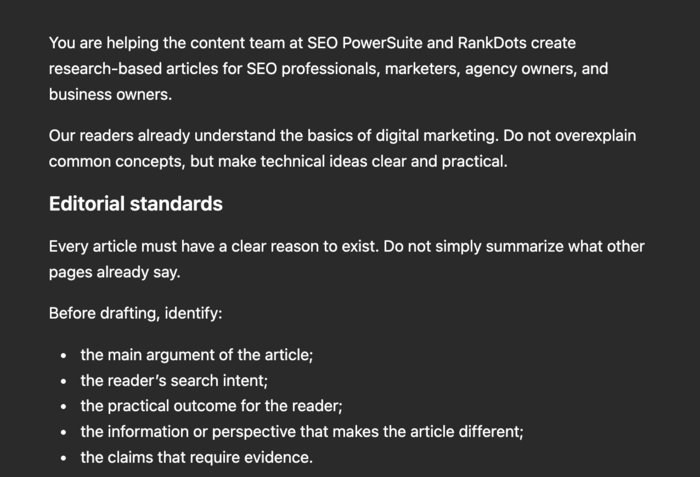
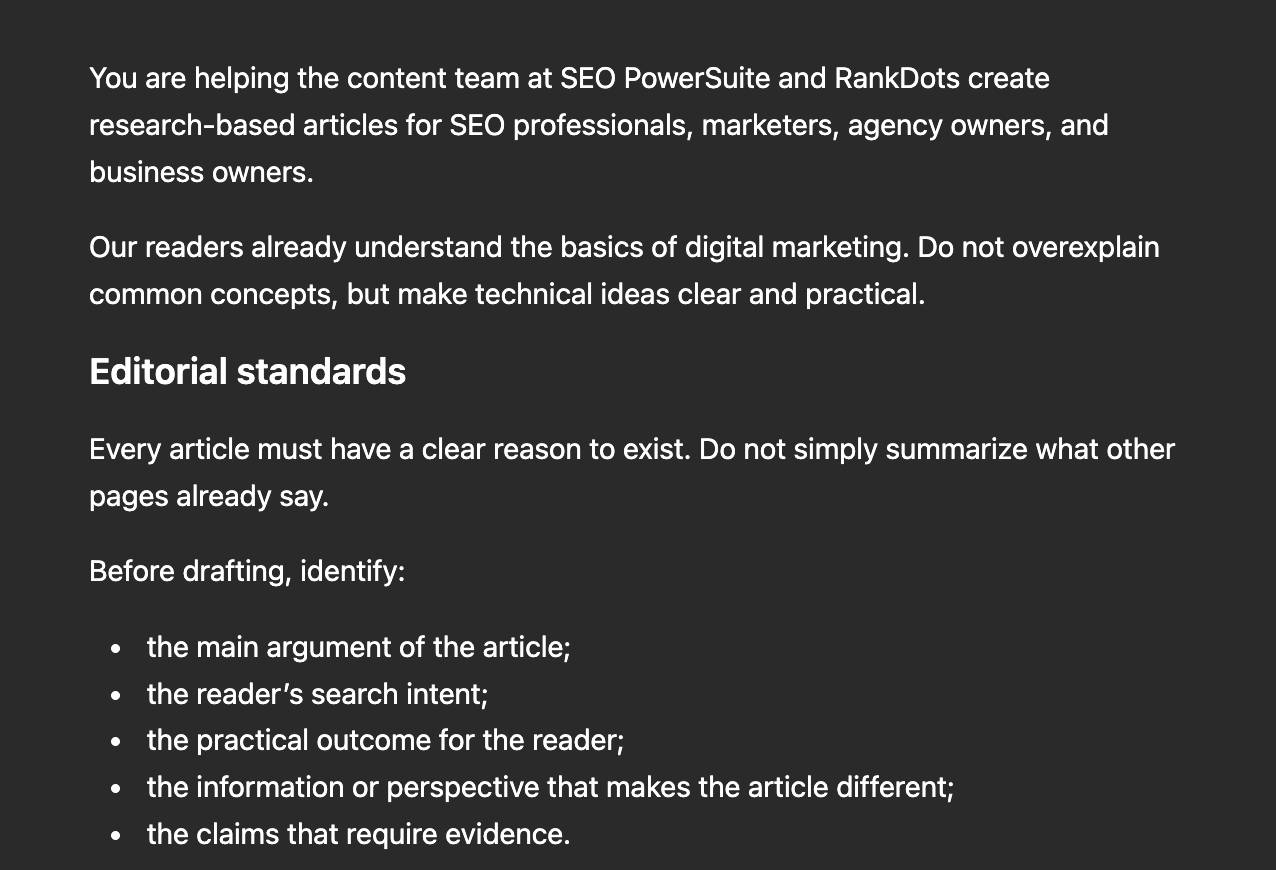
The project contains the information that stays consistent across articles: who we write for, how technical the content should be, how we describe our products, and which phrases or writing habits we avoid.
Examples are especially important. Telling ChatGPT to sound “professional and engaging” is too vague. Showing it introductions, paragraphs, and product descriptions that match our style gives it something concrete to follow.
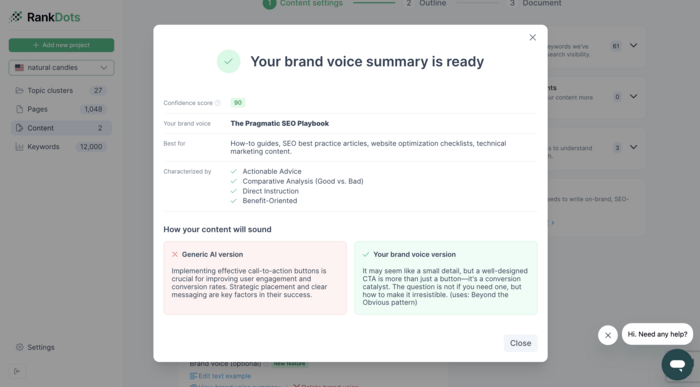
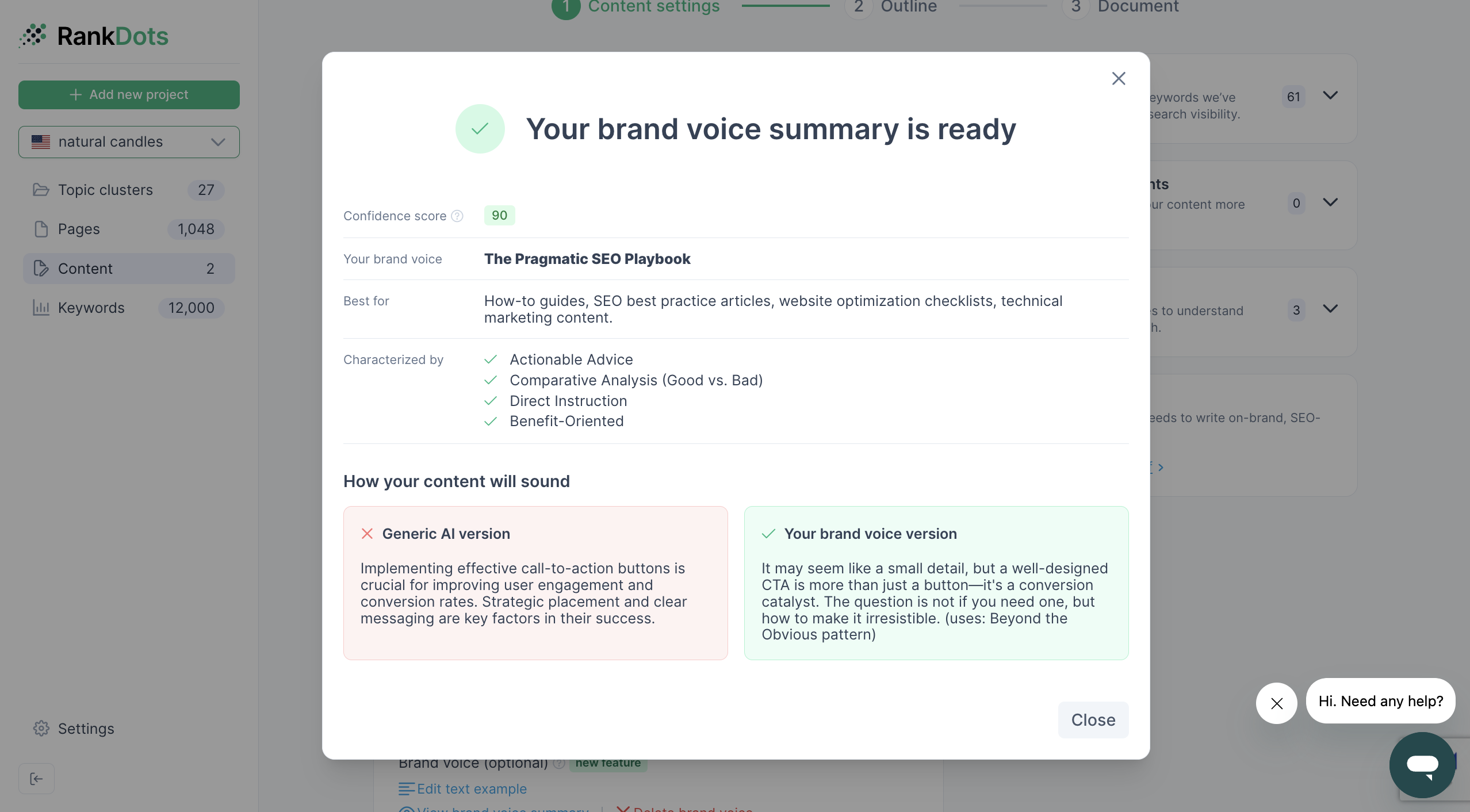
RankDots makes it easy to set up your editorial context. Before generating any content, you can define your brand voice by adding a sample of your existing copy. RankDots analyzes the tone, style, and writing patterns, then applies them to the content it generates.
I do not use the same AI workflow for every article.
Some topics are relatively safe to delegate. Others need much tighter control. Before I begin, I decide how much responsibility AI can realistically take on without weakening the final result.
I usually think about topics in three categories.
AI can do more of the work when the topic is stable, well documented, and easy for me to verify.
This includes things like:
In these cases, AI can help with research, structure, drafting, and editing because the facts are relatively easy to check and the topic does not depend on a strong personal position.
I use AI more carefully when the topic is changing quickly or requires interpretation.
Examples include:
For this type of content, AI can still speed up research and drafting, but I verify the sources more closely and make sure the article clearly separates facts from my own conclusions.
There are also topics where I would never let AI lead the process.
This includes:
AI can still help organize notes or improve wording, but the argument, evidence, and final conclusions need much stronger human control.
The rule I use is simple: I trust AI most when I already know enough about the subject to recognize a bad answer.
If I cannot confidently evaluate the output, I should not be delegating the core thinking to the model.
Having a good idea for an article does not automatically mean that people are searching for it.
Before I spend time researching and writing, I check whether there is real demand around the topic, how people describe the problem, and what type of content currently appears in the search results.
I use Rank Tracker for this stage. I normally begin with a broad phrase and then explore related searches, questions, keyword combinations, and terms that already bring traffic to competing websites.
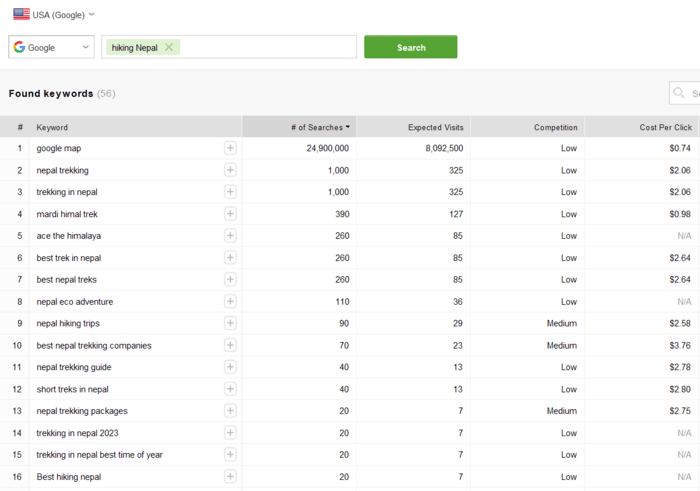
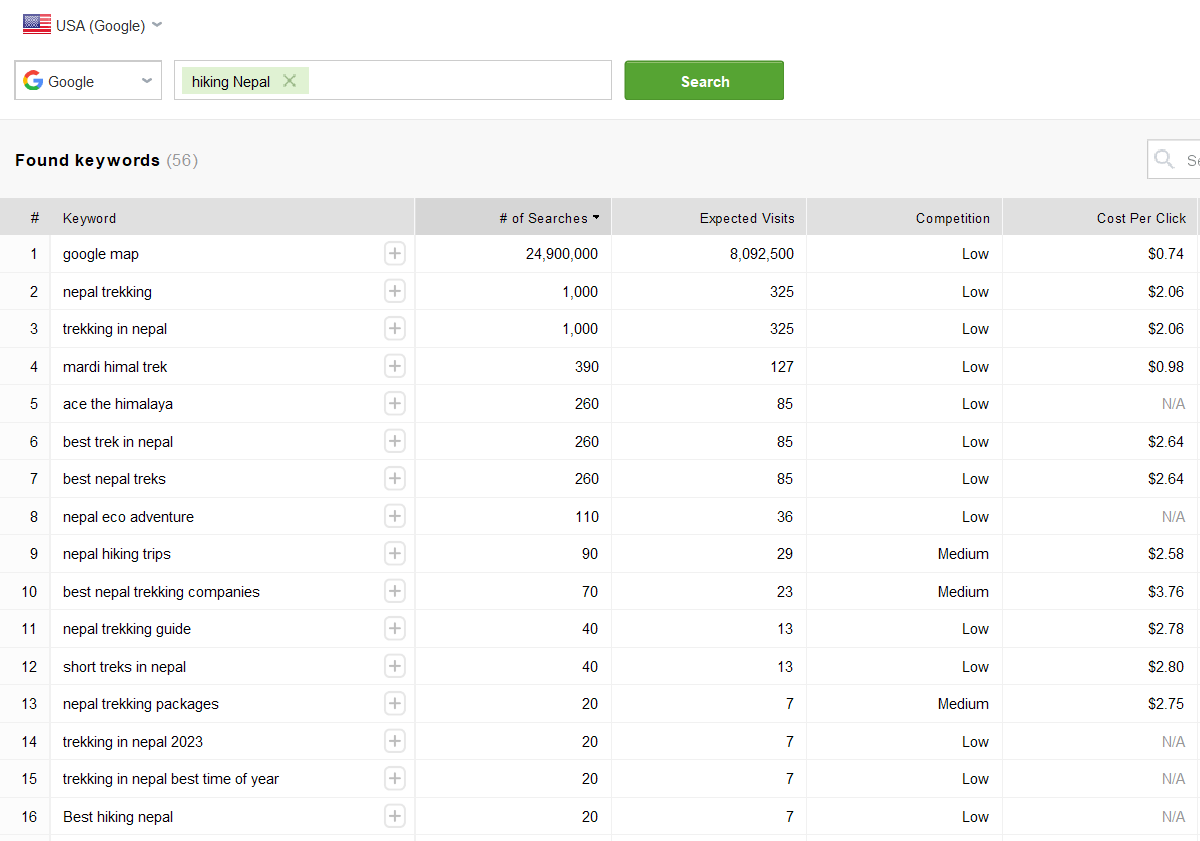
At this point, I am not trying to collect the largest possible list of keywords. I want to understand the search landscape behind the article.
I look at:
When I need to find new topics that people are actively interested in, and that have strong traffic potential, I use RankDots.
I start with one broad seed topic, and RankDots turns it into hundreds of related content ideas. I can then compare all the metrics I need in one place, choose the most promising opportunities, and generate an outline or a complete first draft without moving between several different tools.
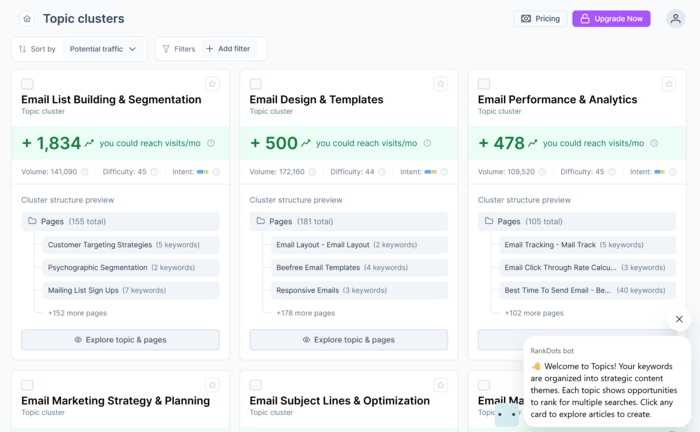
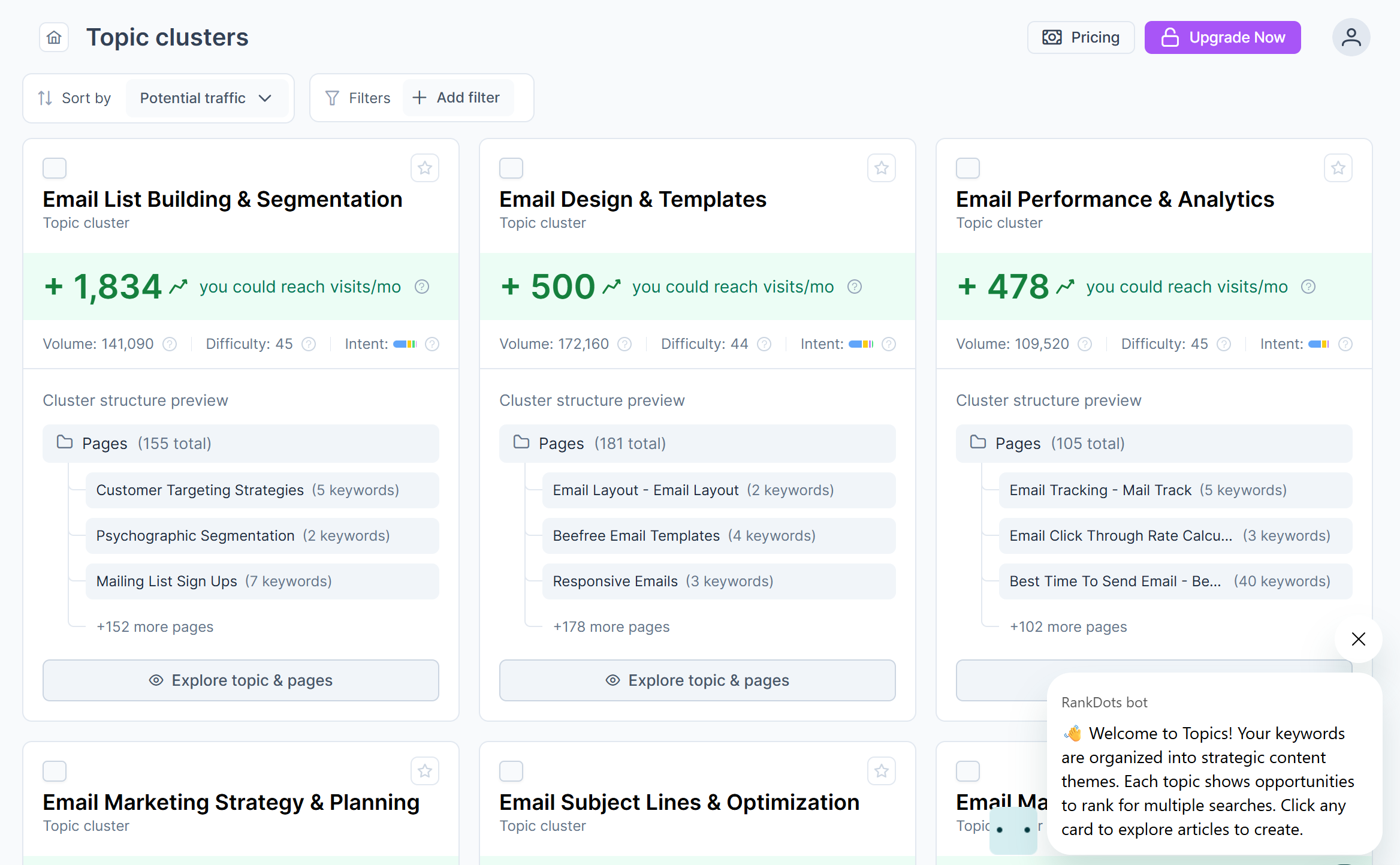
A keyword tells me what people are searching for. It does not tell me what the article should contribute.
That is why I define the article’s position before I start collecting too much information or asking AI to produce an outline.
For example, these two briefs may target the same topic:
The first describes a subject. The second gives the article a point of view.
Without that point of view, AI usually defaults to the safest possible version of the topic. It produces a reasonable introduction, a list of familiar steps, and a conclusion that nobody could strongly disagree with.
The result may be correct, but it is also easy to replace.
Before I move forward, I write down three things:
For this article, my position is simple: The quality of AI-assisted content depends less on the model itself and more on the decisions made around it.
That position affects the entire workflow.
It determines which sources I need, what examples belong in the article, which arguments deserve more space, and which generic sections should be removed.
I also create a short list of things the article will not do.
For this guide, that list could look like this:
This may seem like a small step, but it prevents the article from expanding in every possible direction.
Once the topic and the article’s position are clear, I start collecting the material that will support the argument.
I do not begin by asking ChatGPT to “research the topic and write an article.” That gives the model too much control over which sources matter, which claims deserve attention, and how confidently they should be presented.
Instead, I build a source pack.
A source pack is a controlled collection of documents, data, examples, and notes that I want the article to rely on. It becomes the factual foundation for the draft.
I usually divide sources into three groups.
These are the sources I trust most for factual claims:
These help me understand the topic, compare interpretations, and find additional context:
These are useful for finding questions, opinions, and areas of disagreement:
I rarely use these as the final evidence for an important claim. Their main value is showing me what people are discussing, misunderstanding, or struggling with.


Once the research is complete, I turn it into a short working brief.
I do not need a twenty-page document. But I do need more than a target keyword and a working title.
The brief explains what the article is trying to achieve, who it is for, what position it should take, and which evidence it can use. It also records the decisions I do not want AI to make on its own.
For example, I specify what the reader should understand or be able to do after finishing the article. I define the central argument and note any common assumptions I want to challenge. I add the strongest sources, examples, product use cases, and objections that should be addressed.
I also state what the article should not claim. This is particularly useful when the topic is changing quickly or the available evidence supports a narrower conclusion than the one AI may be tempted to write.
A basic version of my brief looks like this:
That gives the outline, and eventually the draft, a much better starting point than a blank prompt. I still provide the argument, experience, product knowledge, and examples that make the article specific to us.
The point of the brief is not to control every sentence. It is to make sure the important editorial decisions have already been made before AI begins writing.
Once the brief is clear, I use it to build and review the article’s structure.
Once the brief is ready, I ask ChatGPT to create a detailed outline.
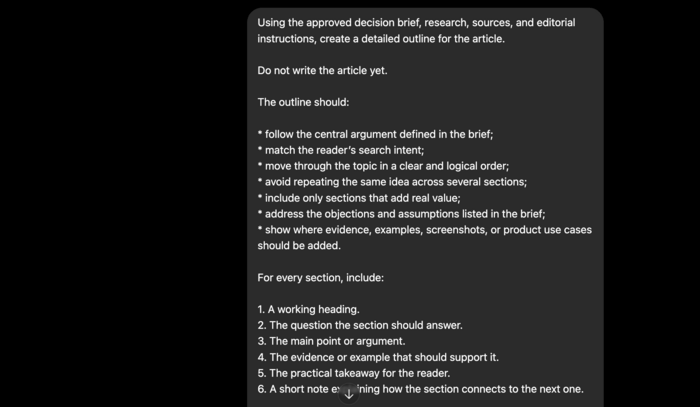
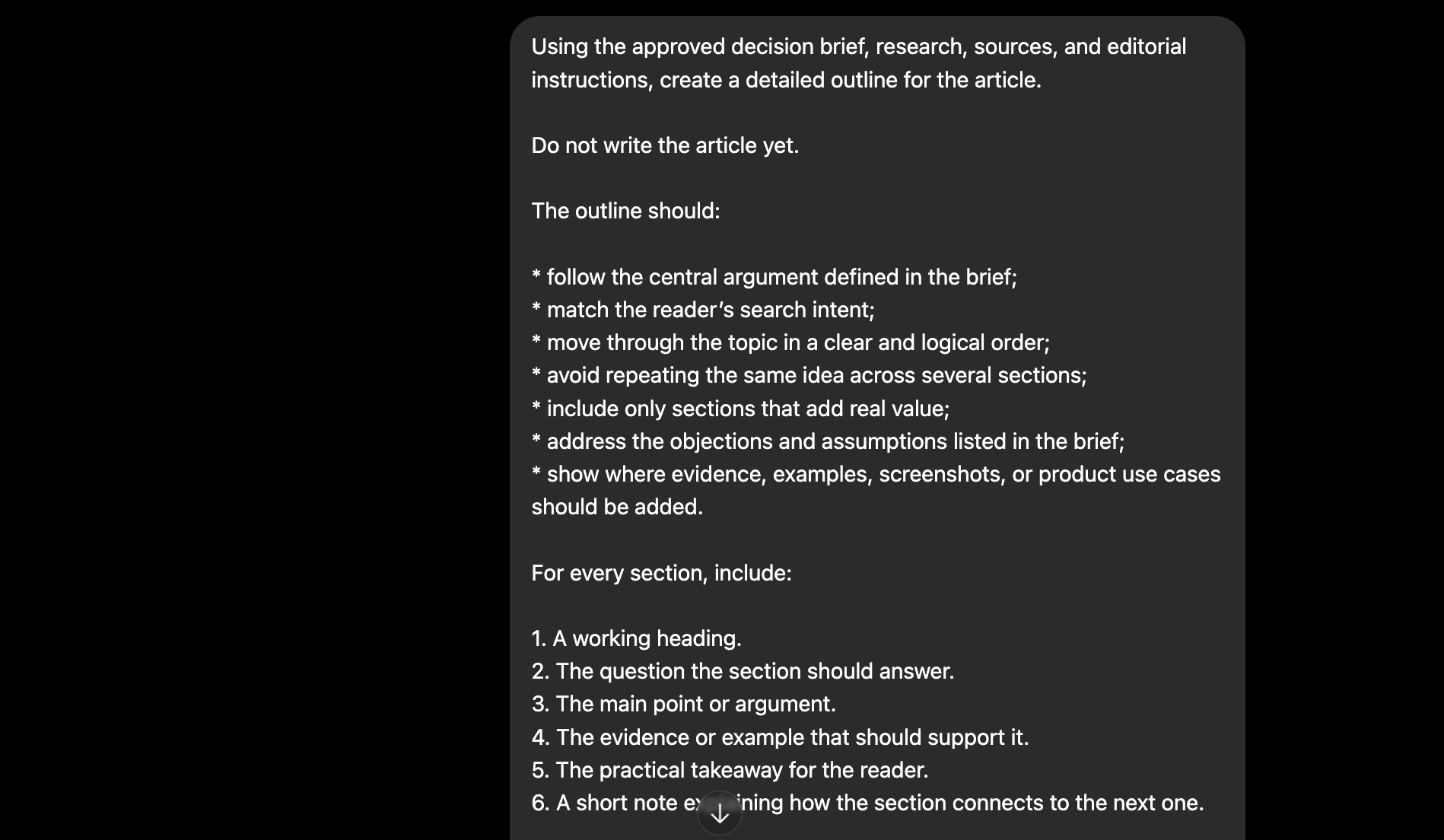
I never move straight from the brief to a full article. The outline is where I check whether the structure supports the main argument, whether the sections appear in the right order, and whether anything important is missing.
For each section, I want to see:
This makes problems much easier to spot.
If two sections make the same point, I can merge them. If a section contains no useful evidence or practical value, I can remove it. If the article reaches a conclusion before explaining the reasoning behind it, I can change the order.
I usually revise the outline several times before approving it. Only when the structure feels complete do I start drafting the article, one section at a time.
Fixing a weak outline takes minutes. Fixing the same problem after 2,000 words have already been written usually means rewriting large parts of the article.
Once the outline is approved, I do not ask ChatGPT to generate the entire article in one go. And this is very important.
In my experience, the longer the requested draft, the more likely the quality is to drop somewhere along the way. Sections begin to repeat each other, the writing follows the same visible pattern, and important details from the brief gradually disappear.
Long AI drafts make it harder for the model to stay aligned with the original brief. As the output grows, early constraints can become less influential, which increases the risk of repetition, generic filler, and inconsistencies.
LLMs generate text probabilistically, so small shifts in context can affect what comes next. In longer outputs, models are also more likely to reuse patterns, lose track of earlier details, or contradict information they introduced themselves.
Instead, I work through the outline one section at a time.
ChatGPT writes the section, I review it, and we revise it before moving on.
At this point, I review the section for direction and substance rather than trying to perfect every sentence. The final authorship and voice pass comes later, once the complete article has been assembled.
This makes it much easier to catch problems while they are still local. If a section is too generic, poorly structured, or based on a weak claim, I can fix it without rewriting the rest of the article.
It also allows the process to improve as the article develops. A decision made in one section may change how the next one should be approached. New examples may reveal gaps in the outline. A repeated idea can be removed before it appears for the third time.
By the end, I have a complete draft, but it has already been reviewed section by section rather than generated as one long block.
Once all the sections are ready, I combine them into one complete article.
Writing section by section helps maintain quality, but it can create a different set of problems. An idea that felt useful in isolation may already have appeared earlier. Two sections may use different terms for the same concept. Transitions may feel abrupt because each part was written separately.
This is why I ask ChatGPT to review the full article before I begin the final edit.
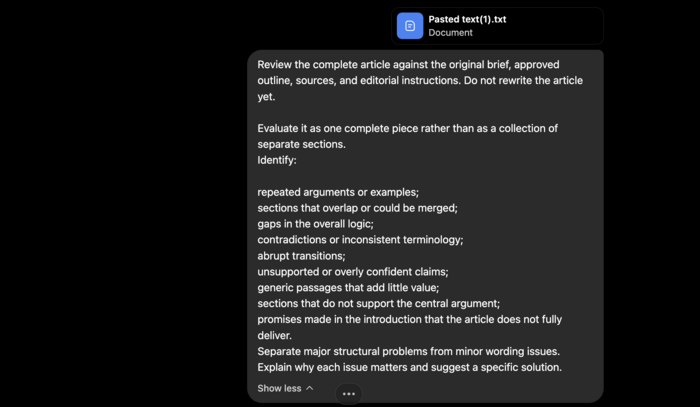
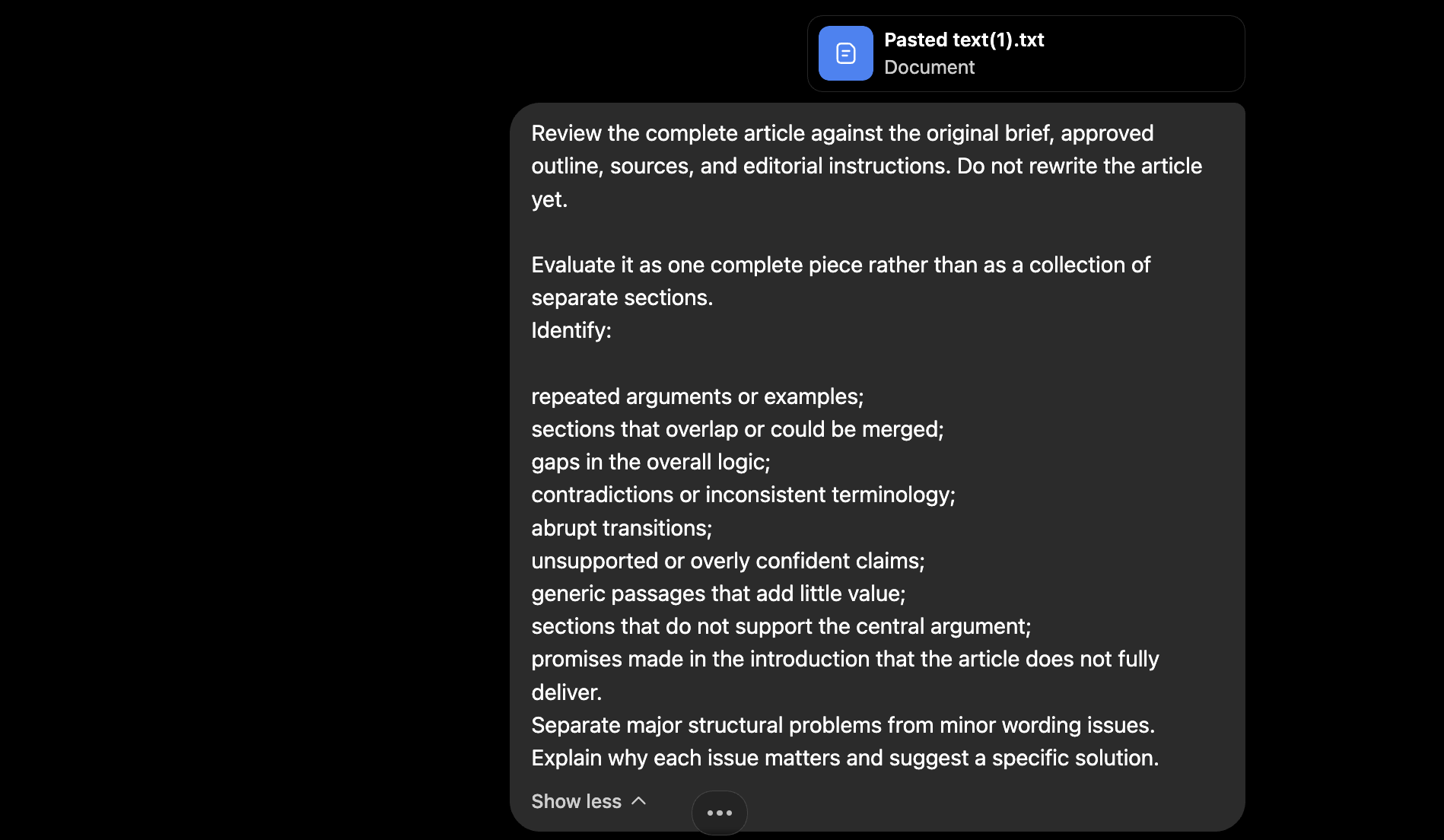
I do not ask it to rewrite anything yet. First, I want a detailed editing report.
Review the complete article against the original brief, approved outline, sources, and editorial instructions. Do not rewrite the article yet.
Evaluate it as one complete piece rather than as a collection of separate sections.
Identify:
Separate major structural problems from minor wording issues. Explain why each issue matters and suggest a specific solution.
This full review is more useful than asking ChatGPT to “polish” the article. It forces the model to step back and evaluate how the sections work together.
I then review its recommendations rather than accepting them automatically. Some suggestions identify real problems. Others may remove useful nuance or make the article more generic.
Once I decide which changes are valid, I ask ChatGPT to apply only the approved structural corrections. After that, I begin the final human edit.
Even after the structural review, the article is not ready to publish.
This is where I read the complete text myself and make sure it reflects my actual experience, opinions, and standards.
I look closely at passages that are correct but interchangeable. If another marketing company could publish a paragraph without changing a word, it probably needs something more specific.
That may be a real example, a screenshot, internal data, a mistake I made, a decision I had to take, or a limitation that AI overlooked.
For example, this sentence is reasonable:
A detailed content brief can improve the quality of AI-generated content.
But it does not give the reader much to use.
I would make it more specific:
My brief must contain the central argument, approved sources, expected reader outcome, and the claims I do not want AI to make. If those parts are missing, I do not start writing.
I also check where AI has made the process sound cleaner than it really is. It often removes uncertainty, ignores trade-offs, and turns an observation that applies in one situation into a general rule.
The goal is not to rewrite every sentence for the sake of proving that a human was involved. It is to make sure the finished article contains real judgment and experience, not just a well-organized summary of existing information.
By the end of this stage, the article should sound like something I would be comfortable publishing under my own name and defending publicly.
Before I optimize or publish the article, I check every important factual claim one more time.
This is separate from normal editing. A sentence can sound clear, natural, and convincing while still saying more than the source actually supports.
I pay particular attention to statistics, product capabilities, comparisons, dates, quotes, and claims about how Google or other platforms work. I return to the original source rather than relying on the summary ChatGPT produced earlier.
I also check how each statement is framed. Is it a verified fact, my interpretation of the evidence, something I observed in my own work, or simply an opinion? The article should make that distinction clear.
AI can help identify sentences that may need verification, but it cannot verify them by referring to its own knowledge.
The goal is simple: every important statement should be something I can trace, explain, and defend.
I only return to on-page optimization once the argument, evidence, and final wording are in place.
Starting with optimization usually pushes the article in the wrong direction. The structure begins to follow a keyword list rather than the reader’s needs, and sections appear simply because competing pages contain them.
At this stage, I use SEO PowerSuite’s Content Editor to compare the finished article with the search landscape I analyzed at the beginning. I check whether the page still matches the intended search intent, whether important related terms are missing, and whether the headings make the subject clear.
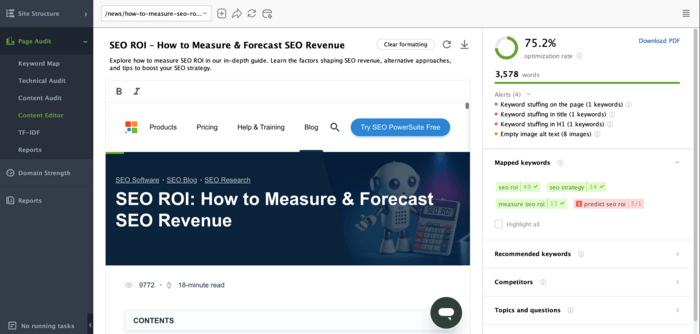
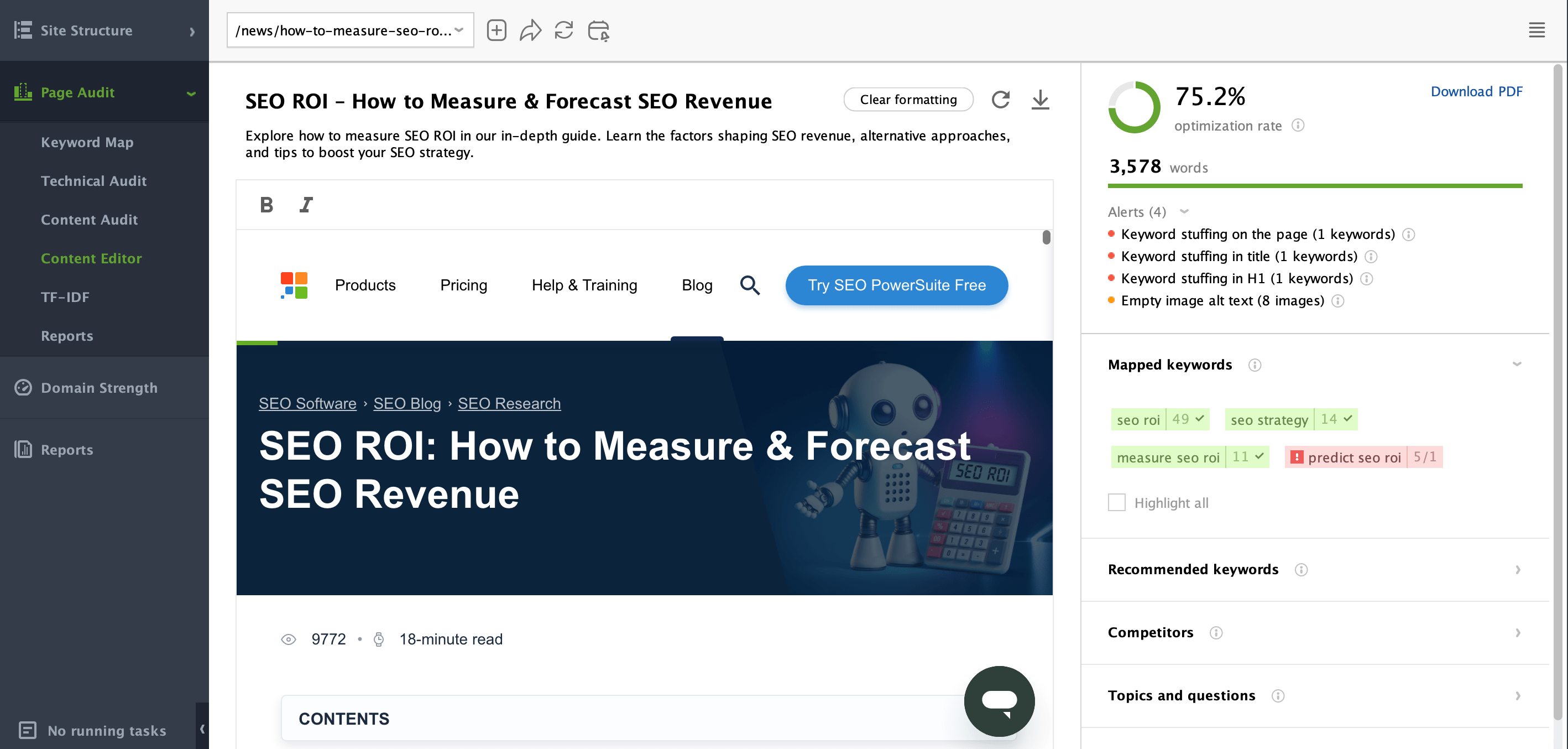
This does not mean inserting every suggested keyword or expanding the article until it covers everything competitors mention. Some terms are absent for a reason. Some competitor sections do not support my argument. Optimization should reveal possible gaps, not automatically fill them.
Before publishing, I connect the new article to the rest of the website.
That means more than adding a few links from the new page to older content. I also look for existing articles that should link back to the new one.
This second part is easy to overlook, but it matters. A new article may contain several useful internal links and still remain poorly connected if no established page points to it.
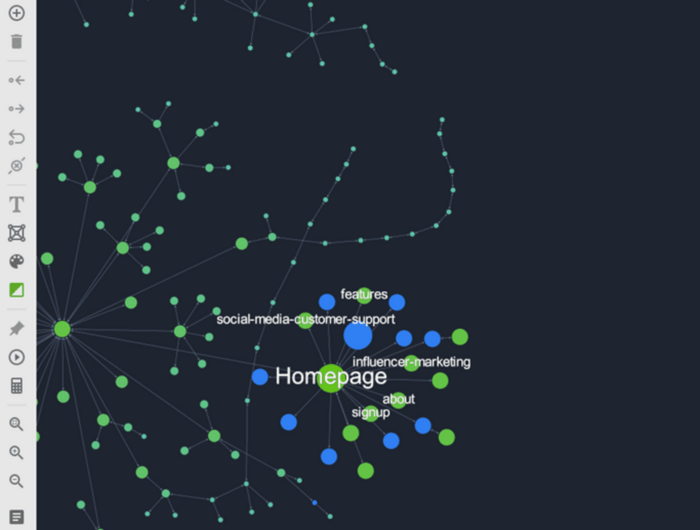
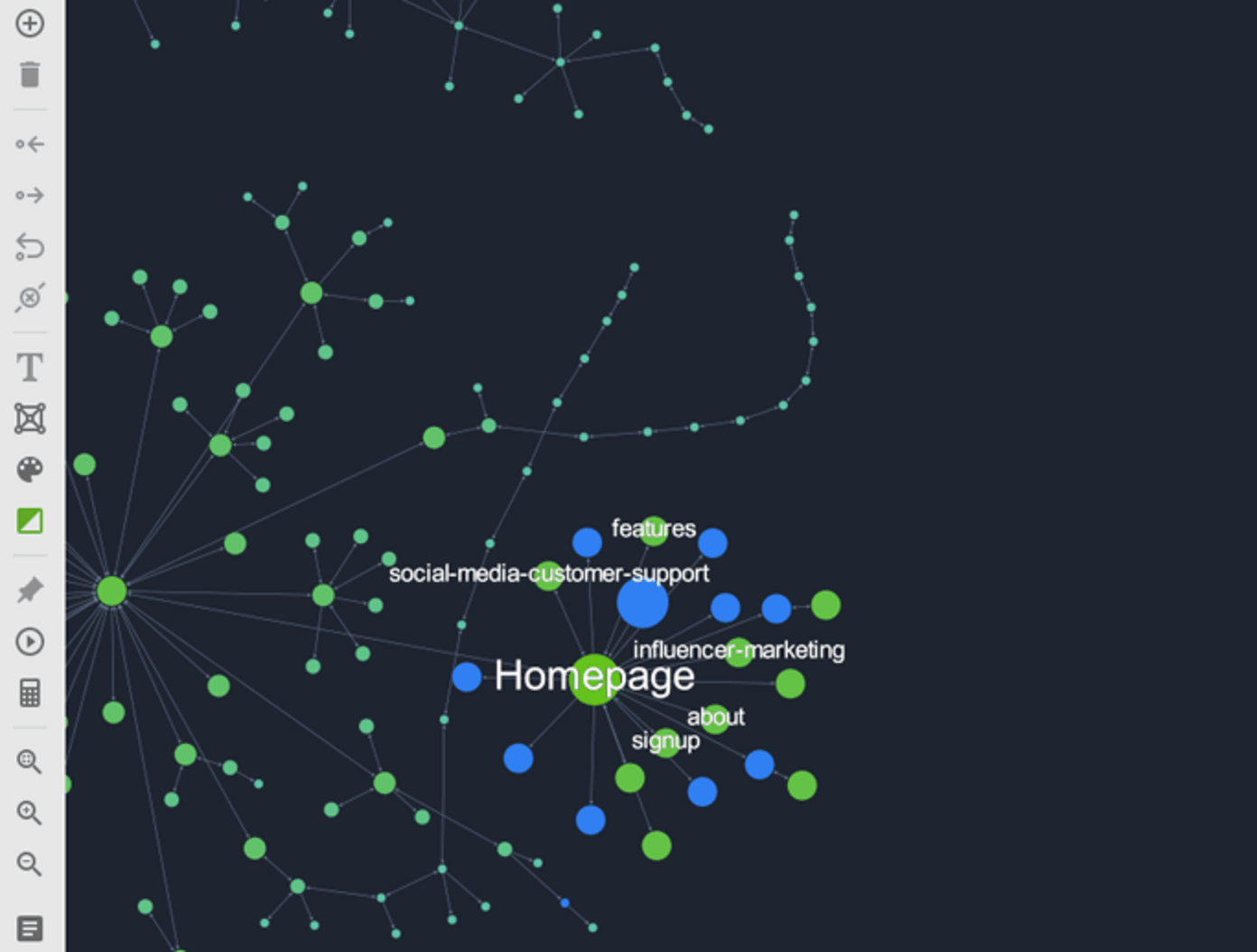
I use the Website Structure Visualization Tool in Website Auditor to review the site structure and find relevant pages that mention the same topic, product, or problem. Then I decide where a link would genuinely help the reader continue the journey.
Publishing the article is not the end of the workflow.
Once the page is live, I track whether it begins ranking for the intended queries, which terms gain visibility, and whether the article appears in Google AI Overviews.
I use Rank Tracker for this. Traditional rankings still matter, but they no longer show the full picture. A page may be cited inside an AI Overview even when its standard organic position has not changed much.
I do not judge every article by the same metric. A practical guide may be expected to generate steady search traffic. A research article may attract links and mentions. A product-led piece may bring fewer visits but more qualified conversions.
The important part is to compare the result with the goal defined in the original brief.
I also use performance data to improve the article. If one section attracts impressions for a query the page does not answer well, I may expand it. If rankings grow but clicks remain weak, I review the title and search snippet. If the article gains visibility in AI Overviews, I look at which parts of the page are being surfaced and whether they can be made clearer.
Over time, this feedback also improves the wider content process. It shows which topics were worth pursuing, which article structures worked, and which editorial decisions produced results rather than simply making the draft look better.
The more capable AI becomes, the easier it is to let it make decisions that should still belong to the author.
I am comfortable using it to organize research, suggest structure, draft sections, identify repetition, and prepare material for review. But I do not delegate the final position of the article, the approval of important sources, sensitive claims, personal examples, or the decision to publish.
These are not just production tasks. They carry responsibility.
ChatGPT can suggest an opinion, but it cannot decide whether I actually believe it. It can make a claim sound convincing, but it does not deal with the consequences if that claim is misleading. It can imitate experience, but it cannot replace the experience that gives the article its value.
The final approval is always mine.
Before publishing, I need to be able to explain where the information came from, why I included it, and whether I would defend the article publicly under my own name.
I automate the work that helps me apply my judgment faster. I do not automate the judgment itself.
The value of AI-assisted content is not measured by how quickly it was produced, but by what it achieves after publication.
A strong workflow turns AI output into content that is accurate, useful, differentiated, and built to perform over time.
When the process works, the result is not just a faster article. It is a page that can rank, attract the right audience, support the product, and continue delivering value long after it goes live.