783
•
6-minute read

Every now and then, I'm asked a question that cuts right to the heart of digital marketing strategy: "What does SEO really cost?" It's a fair question, and one that's often met with frustratingly vague answers. The lack of SEO pricing transparency can make it feel impossible for businesses to budget effectively. The only problem is, a simple price tag doesn't exist, and for good reason.
This article is designed to pull back the curtain on search engine optimization costs. We will demystify the pricing structures, explore the variables that dictate your investment, and provide clear benchmarks to help you make a confident, informed decision. We'll move beyond the numbers to understand the value behind them, framing SEO not as a monthly expense, but as a long-term investment in the sustainable growth and visibility of your business. And crucially—we'll answer the most important question of all. Are you wondering what your business should expect to pay for effective SEO? Let's find out.
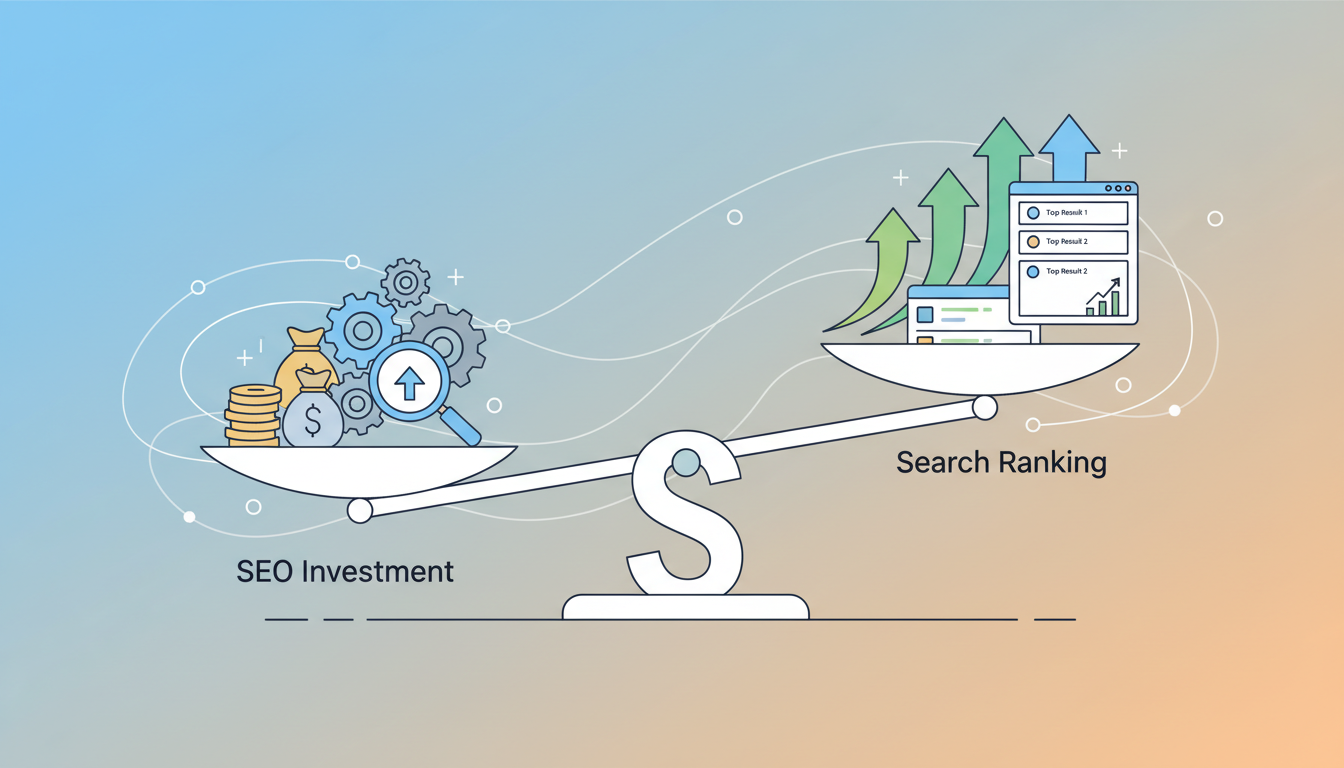
So, why isn't there a universal price list for SEO? The answer is simple: search engine optimization is not a product; it's a service tailored to the unique landscape of your business, industry, and goals. The website SEO cost is a dynamic calculation, not a fixed fee. If you're looking for a one-size-fits-all solution, you're likely to find one that fits no one particularly well. Instead, a reputable SEO partner will assess several critical factors to build a strategy—and a price—that reflects the work required to achieve your specific objectives.
Understanding these variables is the first step toward a realistic budget allocation and a successful partnership. Here are the primary drivers that influence your SEO investment:
Your Business Goals & Scope: Ambition has a price. Are you a local plumber aiming to dominate the "plumber in [Your City]" search results, or are you a national SaaS company trying to rank for highly competitive terms like "CRM software"? The former requires a focused, local strategy, while the latter demands a comprehensive, resource-intensive national campaign. A full-scale audit, content overhaul, technical remediation, and aggressive link building will naturally command a higher investment than a package focused solely on local citation management.
Current Website Health & History: Not all websites start from the same place. A brand-new website is a blank slate, which can be both a pro and a con. It has no authority but also no baggage. In contrast, an established website might have years of content and some domain authority, but it could also be saddled with significant technical debt, a poor backlink profile from past black-hat tactics, or even a manual penalty from Google. The initial cost to clean up these issues and build a solid foundation can significantly impact the upfront SEO fees.
Industry Competition: The digital battlefield is not level. Trying to rank in hyper-competitive niches like finance, law, insurance, or real estate is a different game entirely than ranking for a niche hobbyist term. Highly competitive industries are saturated with businesses that have been investing heavily in SEO for years. To gain ground, you need a more aggressive, sophisticated, and sustained effort, which directly translates into a higher monthly cost to cover the extensive content creation, digital PR, and strategic link building required to compete.
Target Keywords & Audience: The keywords you target are directly tied to cost and effort. Targeting broad, high-volume keywords (e.g., "running shoes") is exponentially more difficult and expensive than targeting specific, long-tail keywords (e.g., "best trail running shoes for wide feet"). Similarly, if your business targets multiple geographic locations or diverse audience segments, the complexity of the strategy increases, requiring more tailored content and localized campaigns, which in turn influences the overall price.
Agency Expertise & Reputation: In SEO, you often get what you pay for. A seasoned agency with a portfolio of success stories, specialized expertise, and a team of strategists, writers, and technical experts will command higher rates than a solo freelancer just starting out. While it can be tempting to choose the cheapest option, a low price can often signal inexperience or the use of outdated, risky tactics. Balancing cost with a provider's proven track record and transparent processes is critical to achieving a positive return on your investment.
Once you understand the factors that drive cost, the next step is to understand how agencies and consultants structure their SEO plans and pricing. There is no single "best" model; the right choice depends on your business needs, budget, and long-term objectives. So, when SHOULD you choose one model over another? Let's break down the most common structures, including their typical applications and inherent trade-offs.
This comparison makes it much easier to forecast expenses—and to align the pricing model with the specific SEO challenge you're trying to solve.
| Pricing Model | Typical Application | Pros | Cons |
|---|---|---|---|
| Hourly Rates ($100 - $300+/hour) |
Specific, ad-hoc tasks like consulting, training, technical troubleshooting, or small-scale content optimization. | High flexibility; pay only for the work you need. Ideal for businesses with in-house teams that need occasional expert guidance. | Unpredictable monthly costs; can become expensive for ongoing work. Lacks the strategic commitment of a long-term partnership. |
| Monthly Retainers (See breakdown below) |
The most common model for comprehensive, ongoing SEO strategies aimed at long-term growth. | Consistent, sustained effort; allows for long-term strategy and relationship building. Predictable budgeting and dedicated resources. | Requires a significant monthly commitment. Results are cumulative and may not be immediately visible, making the initial investment feel substantial. |
| Project-Based Pricing ($1,000 - $10,000+) |
Defined, one-off projects with clear start and end points. Examples include a technical SEO audit, a website migration plan, or a foundational keyword research and content strategy project. | Fixed, predictable cost with clear deliverables and scope. Excellent for tackling specific, known issues. | Inflexible if new needs arise during the project. Does not cover the ongoing optimization and adaptation that is crucial for long-term SEO success. |
| Performance-Based Pricing | Ties payment directly to the achievement of specific KPIs, such as ranking improvements, organic traffic milestones, or lead generation. | Lower upfront financial risk for the client. Directly aligns the agency's incentives with the client's goals. | Can be complex to structure and measure fairly. Emphasize caution: This model can attract agencies that use risky, short-term tactics to hit goals. Avoid any provider promising guaranteed #1 rankings, as this is a major red flag. |
| Hybrid Models | A combination of the above, such as a project-based fee for an initial audit and site cleanup, followed by a monthly retainer for ongoing management. | Offers a high degree of flexibility to create a custom package that aligns perfectly with a business's specific needs and budget cycle. | Can be more complex to structure in a contract, requiring clear definitions for each phase of the engagement. |
To truly understand your website SEO price, you need to look inside the box. A comprehensive SEO strategy is not a single activity but a symphony of interconnected disciplines working together to improve your visibility and drive results. When you invest in a monthly retainer or a project, you're paying for a team's time, tools, and expertise across these critical areas. Here’s a detailed breakdown of where your investment goes.
Technical SEO is the foundation upon which your entire strategy is built. If search engines can't efficiently crawl, render, and understand your website, even the best content in the world won't rank. This phase involves a deep dive into your site's architecture to identify and fix issues related to crawlability, indexability, site speed, mobile-friendliness, security (HTTPS), and structured data (Schema markup). Because it's so foundational, a comprehensive technical audit is often a significant upfront cost, ranging from $1,500 to $7,000+ for a standalone project, but it's an absolutely essential first step for any serious campaign.
This is the art and science of aligning your website's content with what your audience is searching for. It's more than just sprinkling keywords—it's about demonstrating relevance and providing value. This service includes in-depth keyword research to understand user intent, creating high-quality, long-form content (blog posts, guides, landing pages), optimizing title tags and meta descriptions, structuring content with proper headings, implementing a smart internal linking strategy, and improving user experience (UX) signals. The ongoing cost for content creation and optimization is a core part of most retainers, as fresh, relevant content is the fuel for SEO success.
Off-page SEO refers to actions taken outside of your own website to impact your rankings. The most significant component of this is link building—the process of acquiring high-quality backlinks from other reputable websites. These links act as "votes of confidence" in the eyes of search engines, signaling that your site is a trustworthy authority on a given topic. This is not about buying spammy links; modern link building is a sophisticated discipline involving digital PR, guest blogging, relationship building, and creating "link-worthy" assets. Because it's a continuous, labor-intensive effort, it often represents a substantial portion of the overall SEO services pricing.
If you're a brick-and-mortar business or serve a specific geographic area, local SEO is non-negotiable. This specialized subset of SEO focuses on appearing in local search results, like Google's "Map Pack." Services include optimizing your Google Business Profile, building local citations (mentions of your business name, address, and phone number on relevant directories), managing online reviews, and creating location-specific landing pages. For many small businesses, a focused local SEO strategy can deliver a significant ROI without the high cost of a national campaign.
Effective SEO is data-driven. A crucial component of any SEO service is the ongoing tracking, analysis, and reporting of key performance indicators (KPIs). This includes monitoring keyword rankings, organic traffic, user engagement metrics, conversion rates, and backlink growth. This data is used to refine the strategy, identify new opportunities, and demonstrate ROI. Transparent, regular reporting is the hallmark of a trustworthy SEO partner and is almost always included in a monthly retainer. It ensures you know exactly what work is being done and how it's impacting your bottom line.
While a custom quote is always necessary, it's helpful to have a realistic understanding of the average price for SEO. The following benchmarks provide a general framework for what businesses can expect to invest based on their size, goals, and the competitive landscape. Think of these as starting points for your budgeting conversations. The actual SEO monthly cost will depend on the specific scope of work defined by you and your chosen partner.
Here’s a breakdown of typical search engine optimization cost per month scenarios:
Small Businesses & Startups (Local or Niche Focus)
For businesses primarily focused on a local service area or a very specific niche, the investment is more contained. The strategy typically centers on foundational technical SEO, Google Business Profile optimization, local citation building, and a modest amount of content creation. If you run a small business, then a focused strategy in this range can deliver a powerful ROI without breaking the bank.
Expected Monthly Range: $500 - $2,000 per month
Medium-Sized Businesses (Regional or Growing National Presence)
As a business expands its reach and faces greater competition, the complexity and intensity of the SEO strategy must increase. This budget tier supports a more comprehensive approach, including ongoing technical monitoring, consistent content marketing, strategic on-page optimization, and a proactive link building campaign. This investment is designed to build authority and capture market share in a more competitive environment.
Expected Monthly Range: $2,000 - $5,000 per month
Large Enterprises & Highly Competitive Industries (National/International)
At this level, SEO is a large-scale, integrated marketing function. The investment supports an extensive, multi-faceted campaign managed by a dedicated team of specialists. This includes advanced technical SEO for large, complex websites, high-volume content production, sophisticated digital PR and link acquisition strategies, in-depth analytics and conversion rate optimization (CRO), and often coordination across multiple brands or international markets. The scale of investment is necessary to compete and win at the highest level.
Expected Monthly Range: $5,000 - $20,000+ per month
Freelancer vs. Agency Costs
It's also worth noting the difference between hiring a freelancer and an agency. A freelancer's seo price per month may be lower, often falling in the small business range, which can be a great option for specific tasks or smaller budgets. However, an agency typically offers a broader range of expertise (technical, content, link building, strategy) and more resources under one roof. That breadth can make a measurable difference for more complex or ambitious campaigns.
Remember, these are guidelines. A thorough proposal from a reputable provider will break down exactly what services are included for your specific investment.
It's natural to ask: "Is this SEO expense truly justifiable for my business?" The key is to shift your perspective. SEO is more than a marketing cost—it's an investment in a durable, long-term business asset. Unlike many other forms of marketing, its value compounds over time, delivering returns long after the initial work is done. Let's explore the compelling ROI of a well-executed SEO strategy.
Sustainable Organic Traffic: How is SEO different from paid ads (PPC)? When you pay for an ad, the traffic stops the moment you turn off your budget. SEO takes a different approach: it’s about building a foundation that earns you visibility, meaning you generate traffic continuously without paying for every click. This creates a sustainable, predictable stream of visitors that becomes a core asset for your business.
Higher Quality Leads & Conversions: Users who find your business through an organic search are not being interrupted; they are actively seeking a solution to a problem. This intent-driven traffic is often highly qualified and closer to a purchase decision. By optimizing for the specific questions and needs of your audience, SEO delivers not just more traffic, but the right traffic, leading to higher conversion rates and better quality leads.
Enhanced Brand Authority & Trust: There is a powerful psychological effect to ranking at the top of Google. It builds instant credibility and positions your brand as a trusted leader in your industry. Every time a potential customer sees your name at the top of the search results, it reinforces your authority. This enhanced brand trust extends beyond just clicks, influencing purchasing decisions and long-term loyalty.
Cost-Effectiveness Over Time: While SEO requires an upfront and ongoing investment, the long-term cost per acquisition (CPA) is often significantly lower than that of paid channels. Think of it like buying a home versus renting. With PPC, you're renting your visibility. With SEO, you're building equity in a digital asset. Over time, the cost to acquire a customer through organic search drops dramatically as your rankings stabilize and your content continues to attract visitors. That translates into serious savings.
Competitive Advantage: Your customers are using search engines to find solutions. If you're not on the first page, your competitors are. A strong SEO presence allows you to capture market share that would otherwise go to your rivals. By strategically targeting keywords and outranking competitors, you are placing your business directly in the path of their potential customers, giving you a powerful and sustainable competitive edge.
To measure your own SEO ROI, track key metrics like the growth in organic traffic, improvements in keyword rankings for valuable terms, the number of leads or sales generated from organic search (using analytics goals), and the overall increase in brand visibility and share of voice.
Selecting an SEO provider is a critical business decision. The right partner can become a transformative growth engine, while the wrong one can waste time and money. To ensure you maximize the value of your seo management cost, it's essential to approach the selection process with a clear strategy. Here is a simple "Rule of Three" to guide your decision-making.
1. Define Your Goals Clearly: Before you even start looking for an agency, look inward. What are your specific business objectives? Simply saying "I want to rank #1" is not a goal. A better goal is "I want to increase qualified leads from organic search by 20% within 12 months." Having clear, measurable goals will help you find a partner who can build a strategy to achieve them and allow you to measure success accurately.
2. Look Beyond Just the Price Tag: It's tempting to compare proposals based on the seo price per month alone, but this is often a mistake. The cheapest option is rarely the best value in a complex service like SEO. Instead, evaluate proposals based on the scope of work, the expertise of the team, their strategic approach, and their track record of delivering results. Focus on the potential return on investment, not just the upfront cost.
3. Seek Transparency & Communication: A great SEO partner operates as an extension of your team. Look for agencies that prioritize clear, consistent communication and transparent reporting. They should be able to explain their strategy in plain English and provide regular updates on progress, challenges, and results. Does your potential partner offer a clear breakdown of their SEO agency cost and what deliverables it covers? If they are evasive or their process is a "black box," walk away.
To help you vet potential providers, here is a checklist of essential questions to ask:
Final thoughts: Beware of agencies promising instant results or "guaranteed first-page rankings." SEO is a long-term, marathon effort, and such promises are often red flags for outdated or risky practices that can harm your website in the long run. This freedom matters.
Navigating the world of SEO costs can bring up a lot of questions. Here are concise, direct answers to some of the most common queries we hear from businesses.
Q: How long does it take to see results from SEO?
A: While some minor improvements can be seen early on, significant results from SEO typically take 4 to 6 months to materialize. For competitive industries, it can take up to 12 months to see a substantial impact. SEO is a long-term strategy, and the results are cumulative and lasting.
Q: Can I do SEO myself to save money?
A: Yes, you can learn and implement basic SEO yourself, especially for a small, local business. However, SEO is a complex and constantly evolving field. To achieve significant results, especially in competitive markets, the expertise, tools, and time commitment offered by a professional are generally required to be effective.
Q: What's the difference between SEO and PPC, and which is better for my budget?
A: SEO (Search Engine Optimization) focuses on earning organic, unpaid traffic, building a long-term asset. PPC (Pay-Per-Click) involves paying for ads to appear at the top of search results, delivering immediate traffic. Neither is "better"; they work best together. PPC is great for quick results and testing, while SEO is better for sustainable, long-term, and cost-effective growth.
Q: Are there any hidden costs in SEO?
A: A transparent agency will not have hidden SEO fees. However, be aware that the SEO budget may not include costs for related services like content writing, web development work to implement technical fixes, or premium SEO tools. Always ask for a clear breakdown of what is included in the retainer and what would be considered an additional expense.
Q: How much should a small business budget for SEO?
A: As a general guideline, a small business should budget between $500 and $2,000 per month for a focused local or niche SEO campaign. The exact amount depends on the business's location, competition, and growth goals.
Q: Is a long-term contract necessary for SEO?
A: Most reputable agencies require a minimum commitment of 6 to 12 months. This is not to "lock you in" but because SEO takes time to show a meaningful return on investment. A short-term engagement is often not long enough to implement a strategy and measure its impact effectively.
In 2024, SEO is no longer just about keywords and links. It's about understanding your audience, building a valuable user experience, and establishing your brand as a credible authority in the digital ecosystem. The seo optimization cost is not a simple expense; it is a strategic investment in the visibility, credibility, and long-term profitability of your business. While the price can vary significantly based on your unique situation, the underlying principle remains the same: a well-executed SEO strategy is one of the most powerful and cost-effective drivers of sustainable business growth available today.
The journey begins with understanding that you are not just buying a service, but forging a partnership. By seeking a transparent, value-driven SEO provider who aligns with your business goals, you move beyond the question of "how much does it cost?" to the more powerful question of "what can we achieve together?" The savings and growth from a properly executed SEO campaign don’t come at the expense of other channels — it even lets you make your paid advertising more effective by providing valuable audience insights. By investing wisely in your organic presence, you are not just preparing for the next quarter; you are building a resilient digital future for your brand.