70905
•
15-minute read
•

Google's homepage is starting to look different. The familiar search box is still there, but Google is adding shortcuts for image creation, file analysis, and brainstorming with Gemini.
A new sidebar also lets users return to previous AI conversations without starting from scratch.
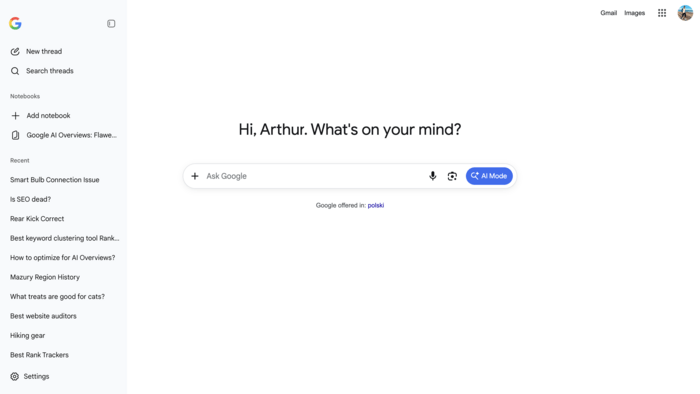
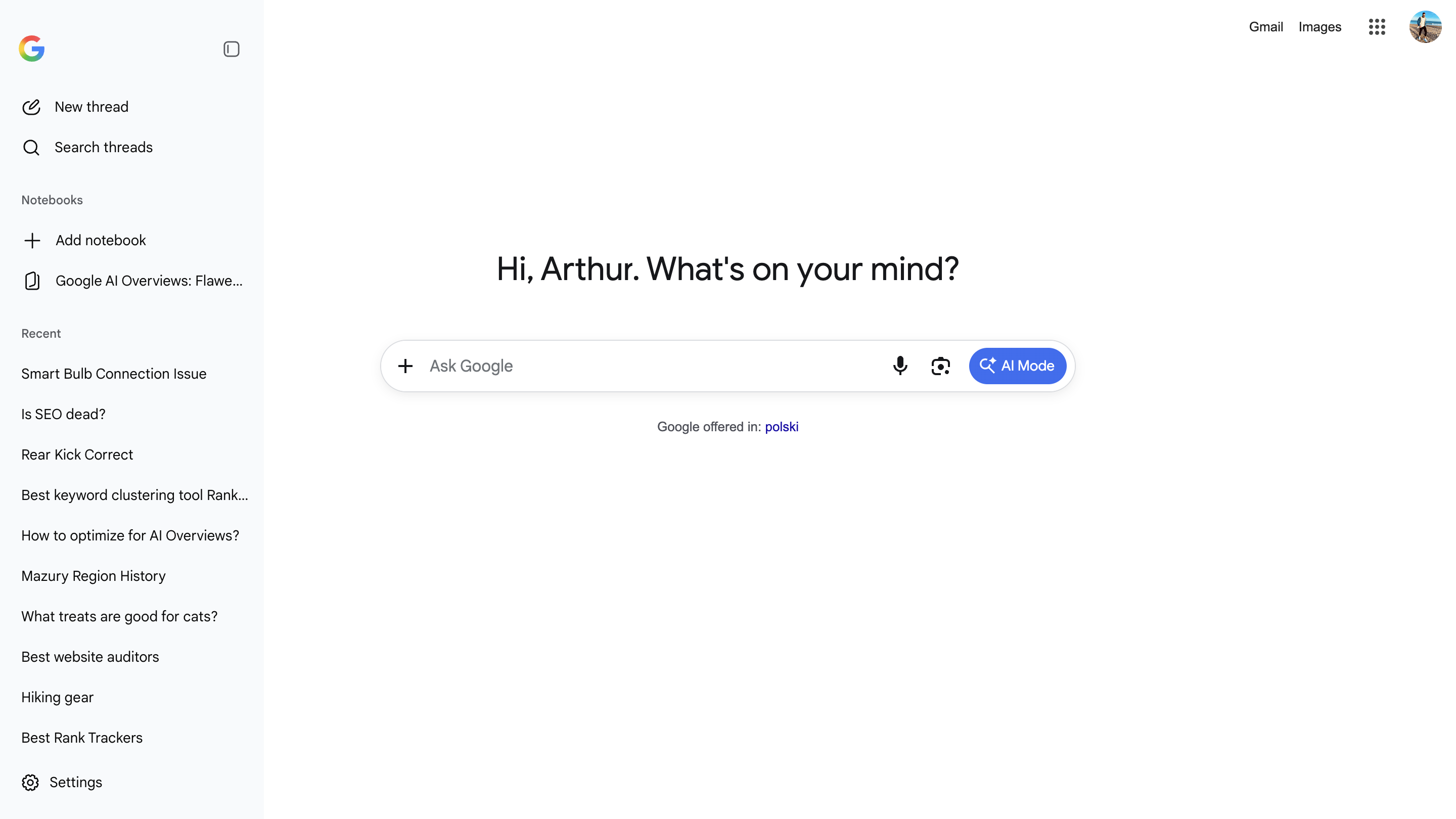
Google's desktop homepage redesign is a small but telling example of where search is heading.
People increasingly use search to explore a subject, ask follow-up questions, compare options, and continue research across multiple sessions. Google has acknowledged this shift: its June 2026 investor presentation reported more than 2.5 billion monthly active users of AI Overviews and over 1 billion users of AI Mode.
And it's not a case of everyone abandoning Google for ChatGPT. In a Semrush survey of 1,030 US consumers who have tried AI tools, 77% said they use AI and traditional search engines together when researching products.
For SEO professionals, this creates a bigger challenge than learning how to optimize for another search feature. Rankings still matter, but so does getting your brand discovered in AI answers, industry discussions, videos, and other places where people research their options.
Content strategy, technical SEO, and brand authority all have a role to play.
I've identified eight developments marketers should pay attention to in 2027, along with practical ways to adapt their SEO strategies:
Keyword research has always been a foundation of SEO. But collecting thousands of keywords and targeting them individually is no longer a particularly effective way to build a content strategy.
Search engines are getting better at understanding context, related subjects, and the intent behind a query. Marketers need to think beyond individual phrases and pay more attention to the topics those phrases represent.


People are gradually changing the way they search. Instead of entering a few generic words, users increasingly provide additional context to explain what they need. This is particularly noticeable in queries involving comparisons, recommendations, and more complex questions.
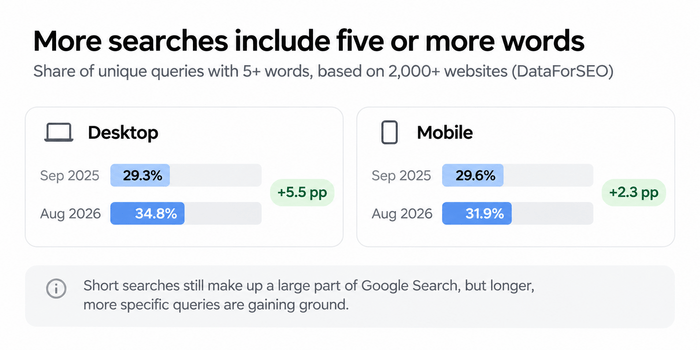
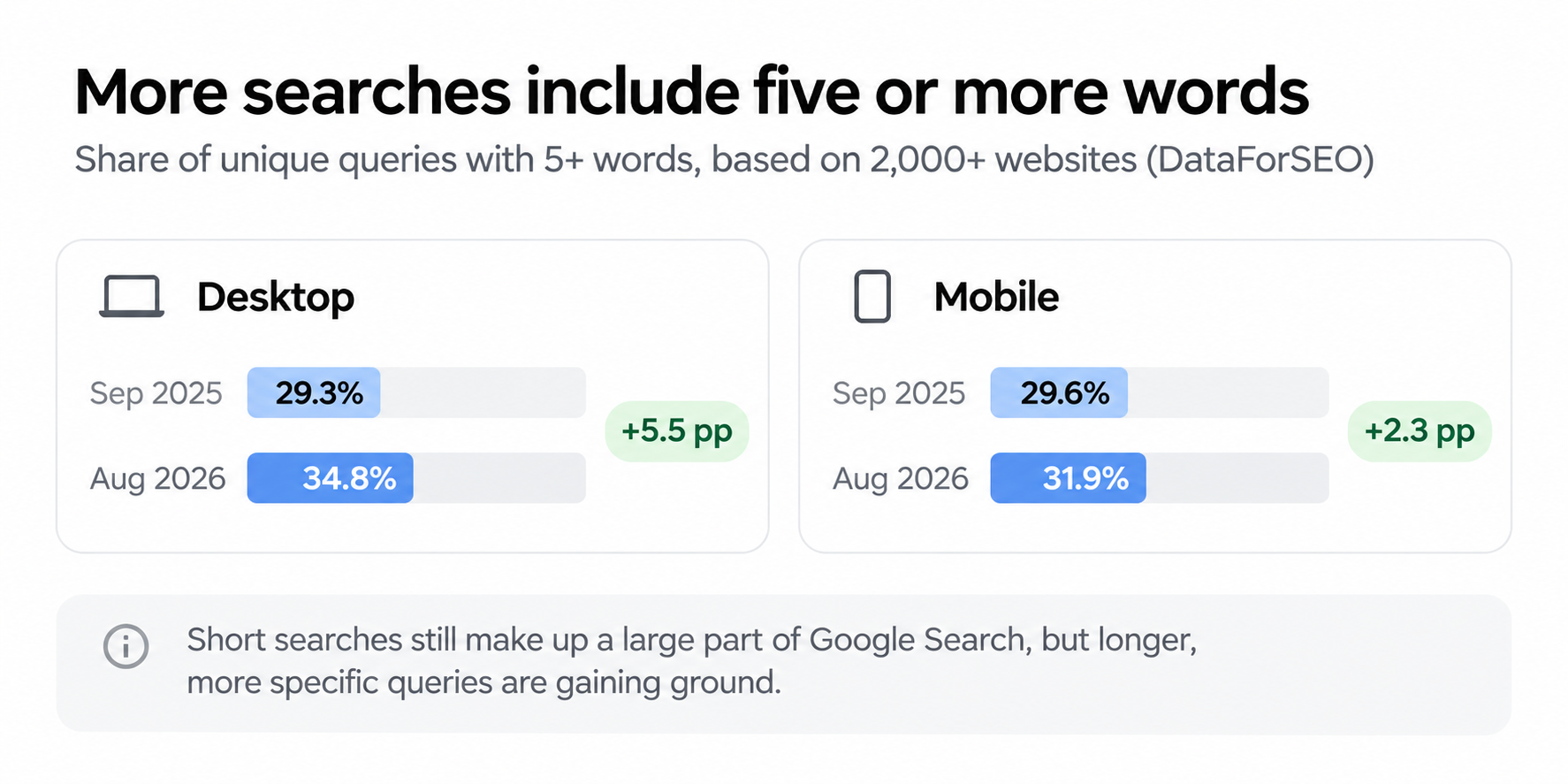
A DataForSEO analysis of search queries from more than 2,000 websites found that the share of unique desktop queries containing five or more words increased from 29.3% in September 2025 to 34.8% in August 2026. On mobile, the share grew from 29.6% to 31.9%. Short searches still account for a substantial part of Google Search, but longer, more specific queries are gaining ground.
This matters for AI-powered search, too. In an analysis of 146 million Google search results, Ahrefs found that 46% of queries containing seven or more words triggered AI Overviews, compared with approximately 10% of one- and two-word queries. Longer queries are more likely to require context and explore several aspects of a subject.
Google also uses a process called query fan-out, generating multiple related searches to explore different subtopics and retrieve additional relevant information. A single user question can therefore involve several related information needs, making comprehensive topic coverage more relevant than optimizing a page for one exact phrase.
A keyword list doesn't tell you whether your website covers a subject adequately. You might rank for several related queries while missing important questions, comparisons, or use cases that your potential customers are also searching for.
Another common problem is fragmented content. Publishing separate articles for closely related keywords can result in overlapping pages competing for similar search intent, while other important topics remain completely uncovered.
The objective should be to build a connected content structure: focused pages addressing distinct search needs, organized into broader topic clusters.
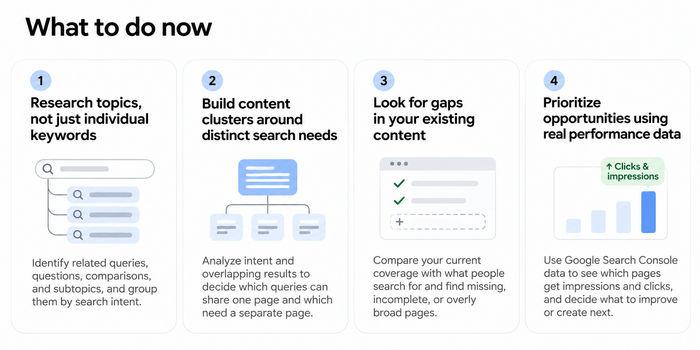
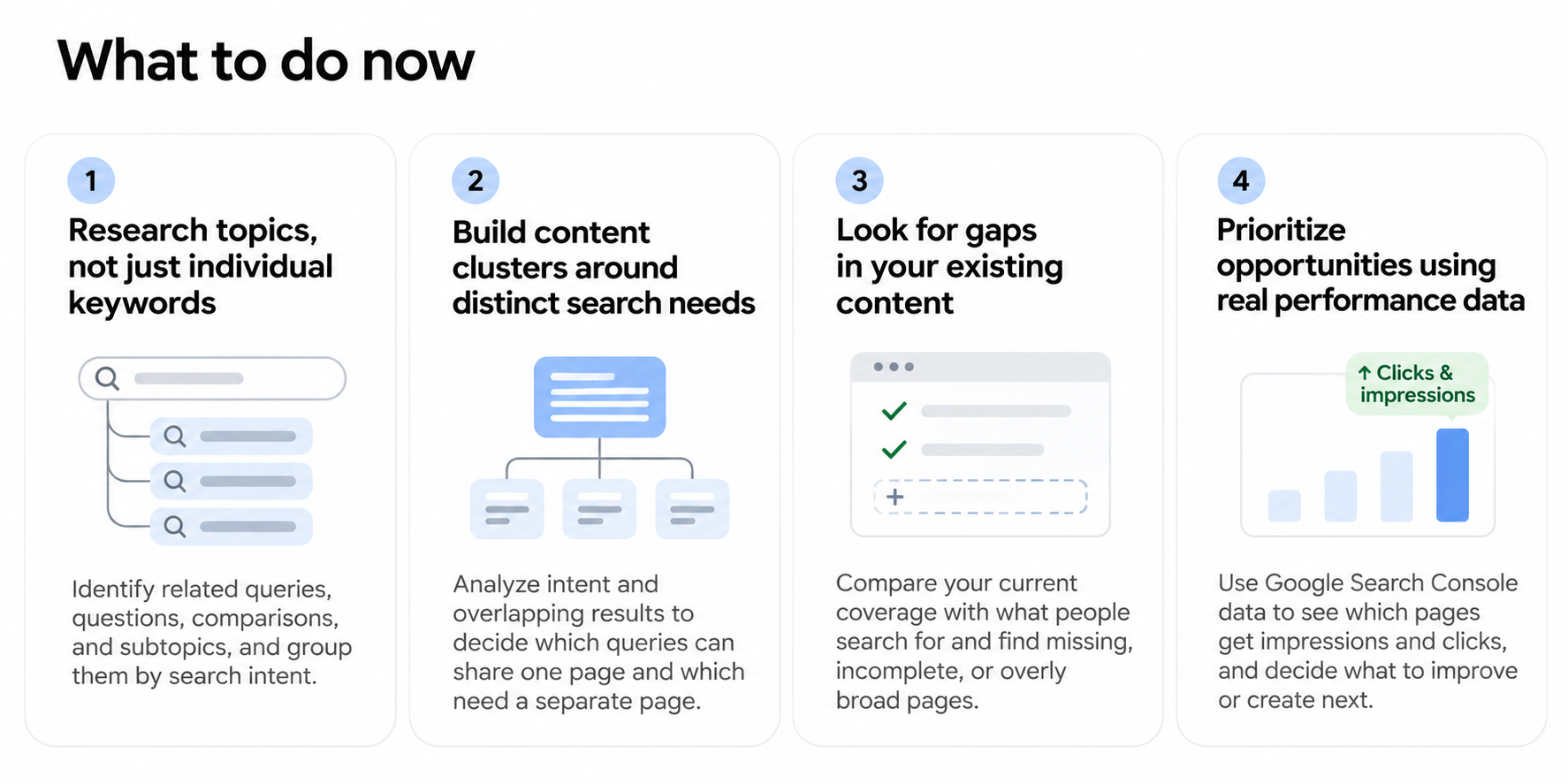
1. Research topics, not just individual keywords.
Start with the broader subjects relevant to your business. Identify related search queries, questions, comparisons, and subtopics. Group them according to search intent and the type of content needed to address them.
2. Build content clusters around distinct search needs.
Not every keyword deserves its own page. Analyze search intent and overlapping search results to determine which queries can be addressed by one comprehensive resource and which require separate pages.
3. Look for gaps in your existing content.
Compare your website's current coverage with the topics and pages your audience searches for. Identify missing resources, incomplete pages, and content that tries to address too many unrelated subjects at once.
4. Prioritize opportunities using real performance data.
Google Search Console can reveal which pages already receive impressions and clicks, which queries they're appearing for, and where additional optimization may be useful. Use this information to decide whether to improve an existing page or create something new.
This is where traditional keyword research tools often leave marketers with more work than answers. Finding keywords is only the beginning. The real challenge is organizing them into a coherent content plan and deciding what to work on first.
RankDots approaches this through topic research and AI-powered keyword clustering. It discovers relevant keywords, groups them into page-level opportunities based on search intent and overlapping Google results, and organizes related pages into broader topic clusters.
Its Google Search Console Opportunities module takes this further by connecting your actual website performance with your topic strategy.
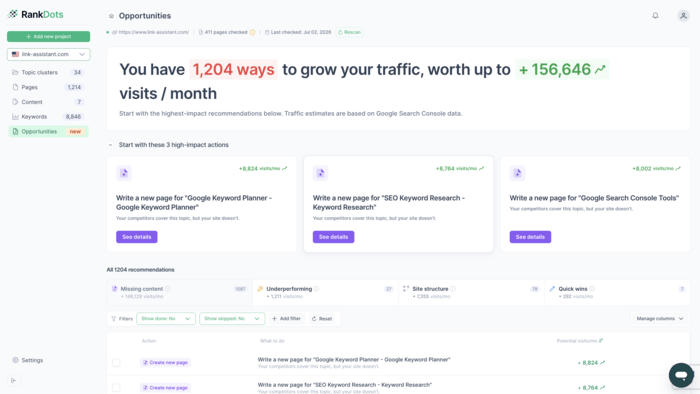
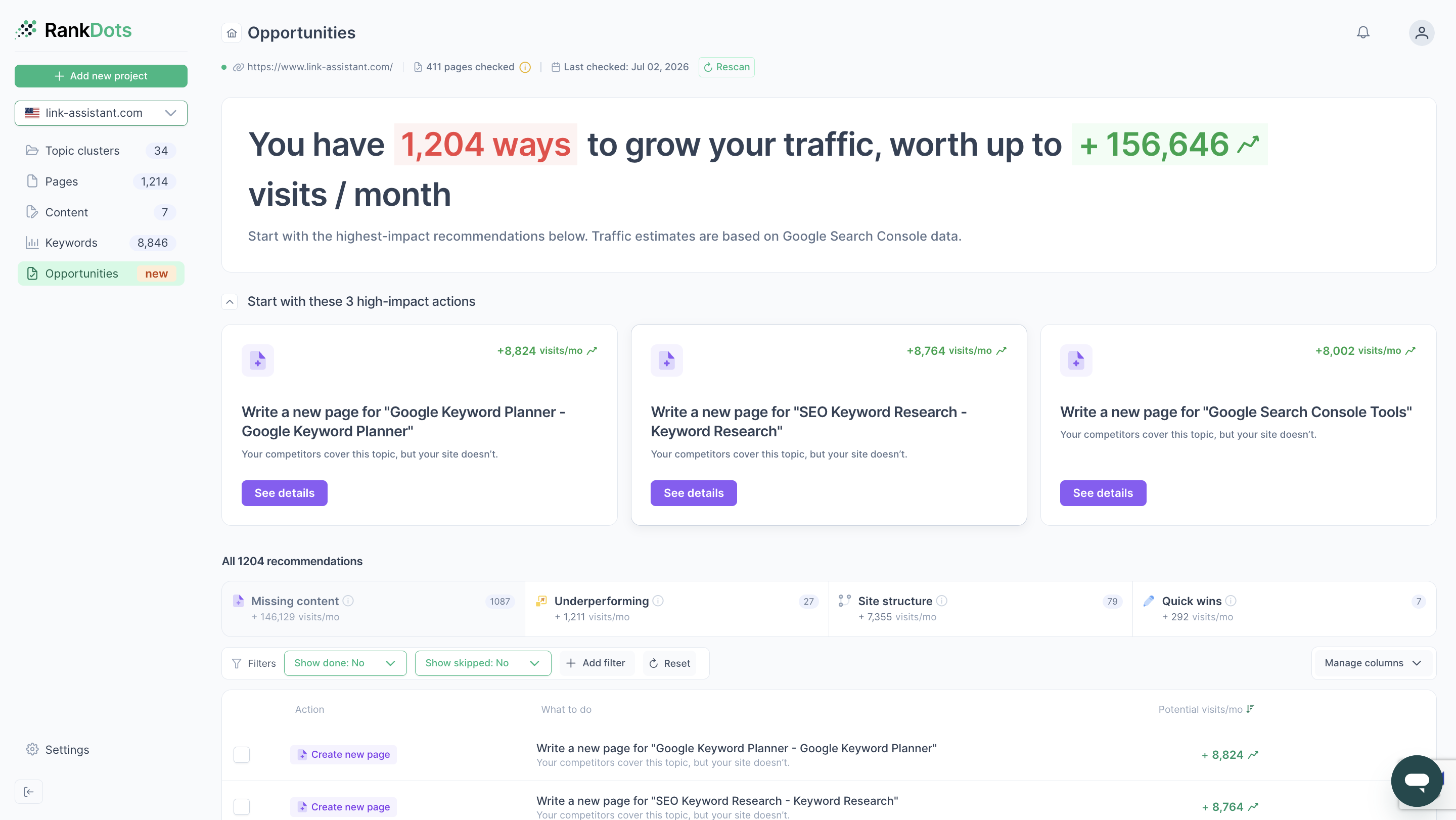
Instead of simply showing you keyword metrics, it identifies specific actions: Fix a page that underperforms, Create a missing page, Expand incomplete content, or Split an overloaded URL into more focused resources.
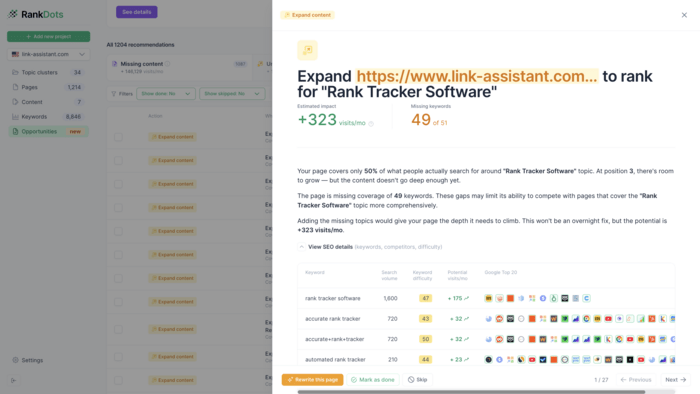
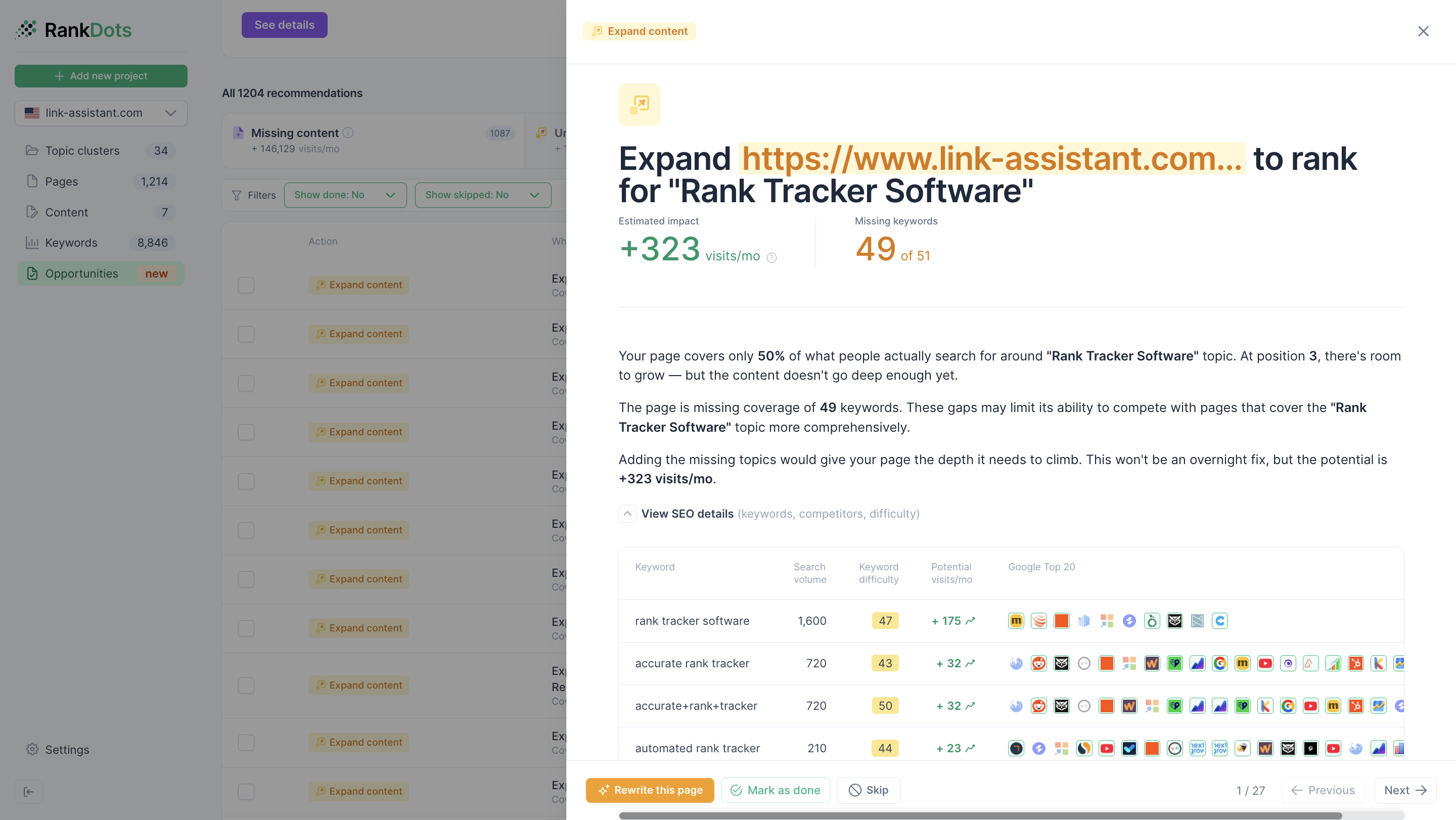
The result is a more practical approach to content planning: understand what your audience searches for, see what your website already covers, identify what's missing, and prioritize the next steps.
A search used to be a relatively self-contained interaction: enter a query, review the results, and decide where to go next. Google is gradually changing this experience by making it easier to ask follow-up questions, add context, and continue researching without starting over.
In January 2026, Google made the transition from AI Overviews to AI Mode more seamless. Users can now ask follow-up questions directly from an AI Overview and continue into a conversation while keeping the context of their original search. The idea is to let people move from a quick answer to more detailed research without having to reformulate their queries from scratch.
Google is also making Search less dependent on text. Its Search Live experience, expanded globally in March 2026, lets users have real-time conversations using their voice and phone camera. For example, someone trying to repair an appliance can point their camera at it, describe the problem, and ask follow-up questions while receiving contextual guidance. This feature is now available in more than 200 countries and territories where AI Mode is supported.


The latest updates to Google's desktop homepage point in the same direction. A redesigned interface brings Gemini-powered tools for image creation, file analysis, and brainstorming closer to the search bar.
A new sidebar also lets users return to previous AI searches and continue those conversations. Google Search VP Robby Stein explained that people increasingly arrive with questions that require more than a single interaction.
People may approach a subject through several related questions rather than one carefully formulated search. A product search, for example, can turn into a conversation about specifications, compatibility, alternatives, pricing, and reviews.
That creates a different challenge for content teams. A page targeting one high-volume keyword may not address all the information someone needs to make a decision. Content needs to provide enough context to answer the initial question while helping readers explore related aspects of the subject.
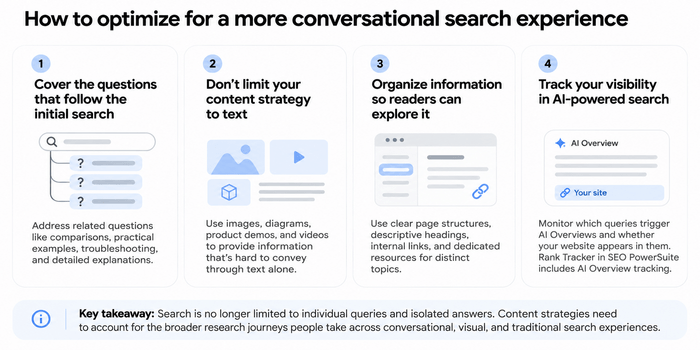
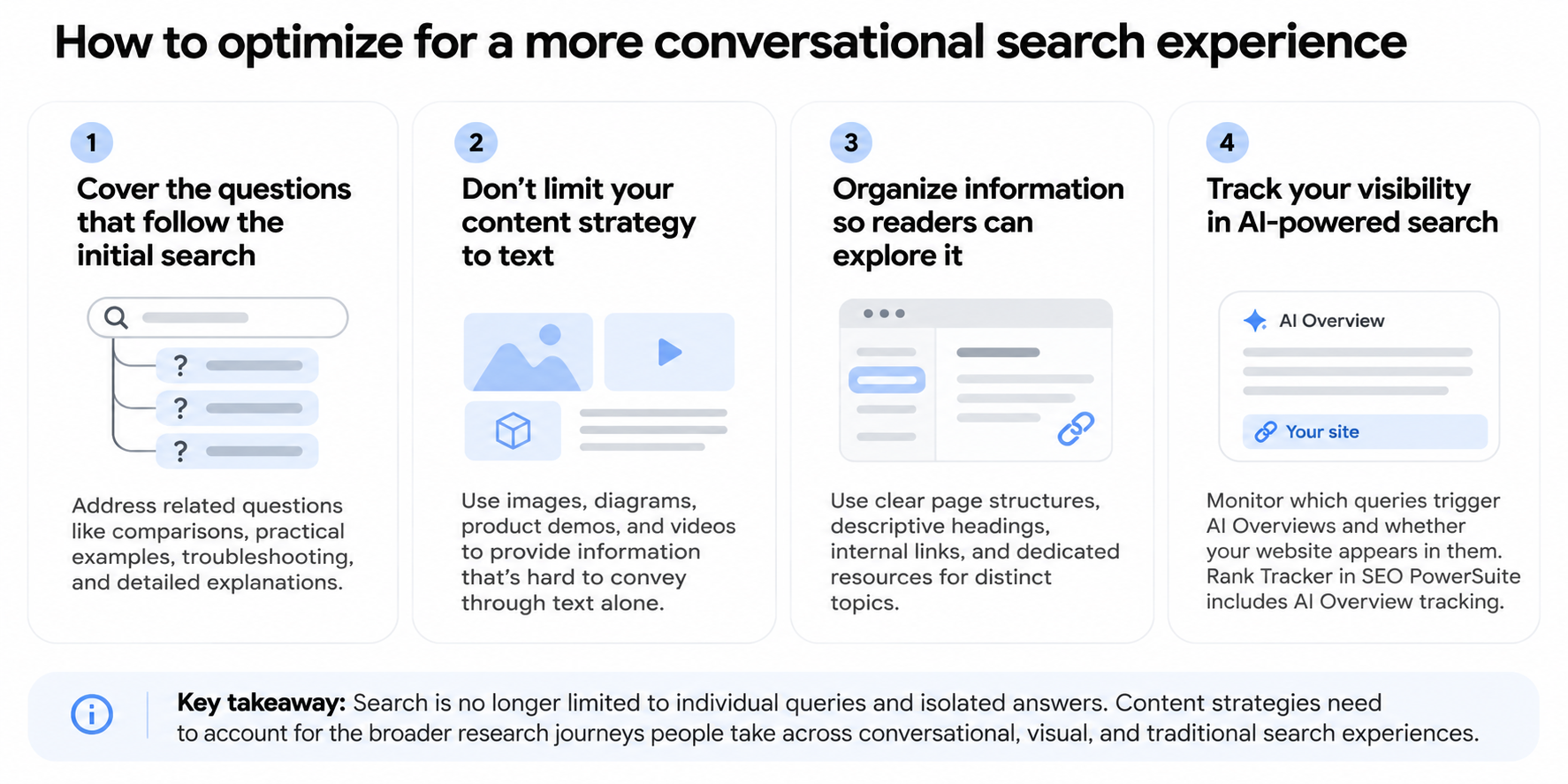
1. Cover the questions that follow the initial search.
Think about what users are likely to ask next. Product comparisons, practical examples, troubleshooting guides, and detailed explanations can help address the different stages of a research journey.
2. Don't limit your content strategy to text.
Images, diagrams, product demonstrations, and videos can provide information that is difficult to communicate through text alone. Make visual assets relevant, descriptive, and accessible.
3. Organize information so readers can explore it.
Use clear page structures, descriptive headings, meaningful internal links, and dedicated resources for distinct topics. Readers should be able to move from a general explanation to more specific information without having to start their research again.
4. Pay attention to how your pages appear in AI-powered search.
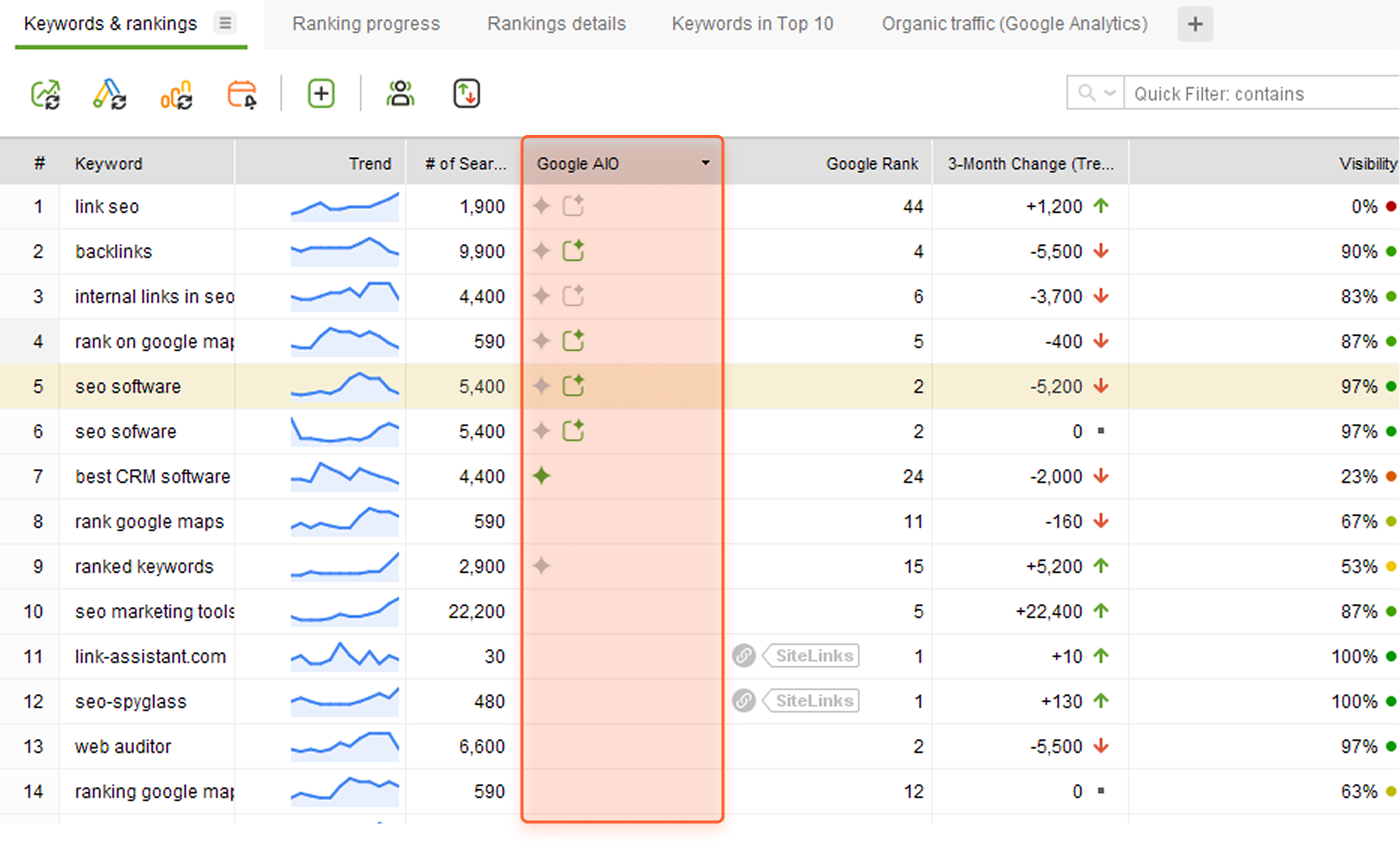
Monitor which queries trigger AI Overviews and whether your website appears in them. SEO PowerSuite's Rank Tracker includes Google AI Overview tracking, allowing you to monitor your website's mentions, cited sources, and competitors' visibility.
Search is becoming a more continuous experience. Businesses that help people explore a subject, rather than simply providing an answer to one query, will be better prepared for these changes.
Finding information is only part of what people use AI assistants for. The next step is getting these systems to do some of the work: find available options, compare them against specific requirements, make appointments, and help complete purchases.
Google is already bringing these capabilities into Search. Its agentic features in AI Mode can search multiple reservation platforms and websites to find available restaurant tables, event tickets, and local services based on a user's preferences.
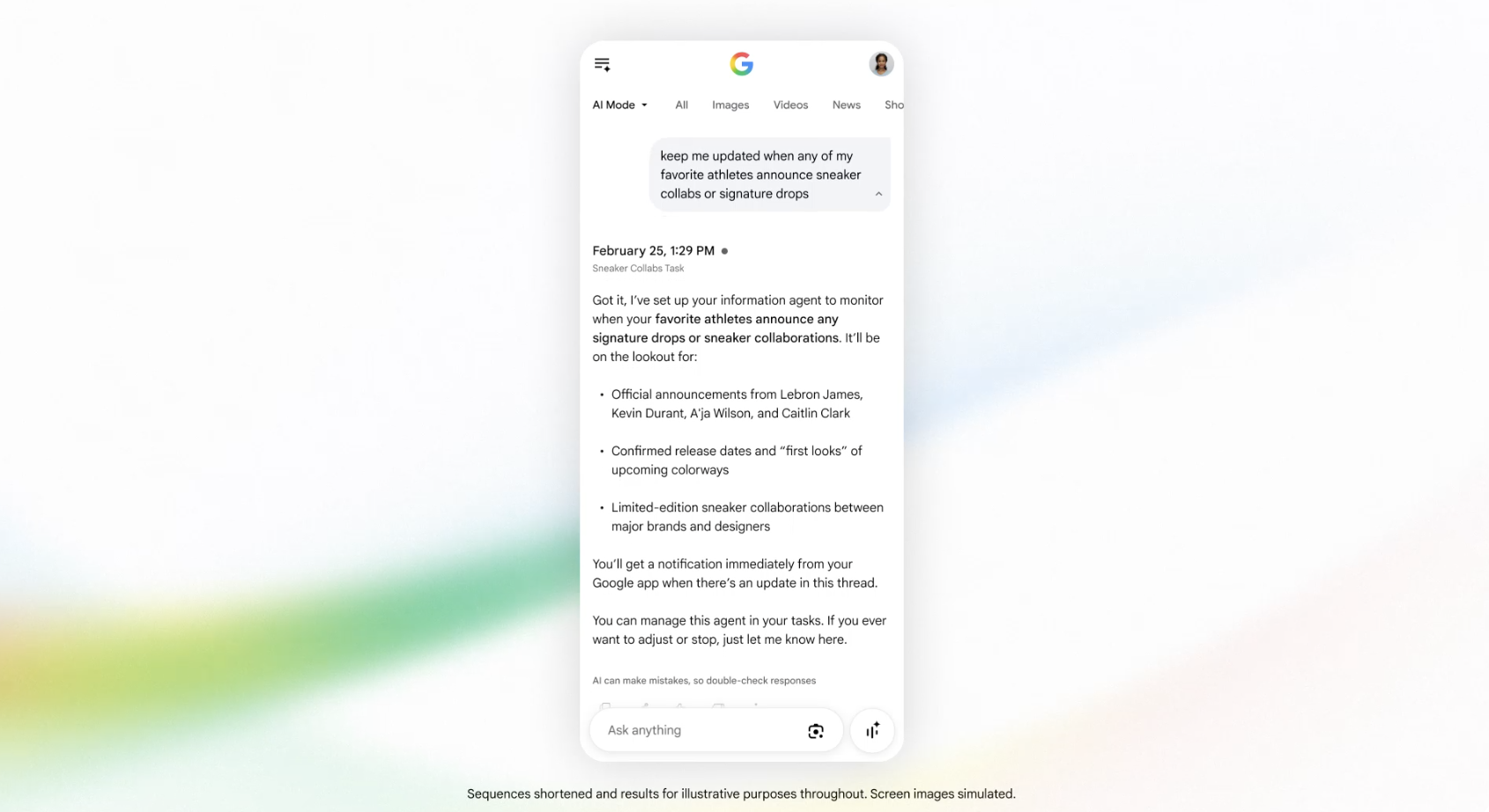
Instead of making users check several websites themselves, Search presents suitable options and links to the relevant booking pages. Google is also expanding these capabilities to tasks such as contacting local businesses on behalf of users.
The same development is happening outside traditional search. Google Maps' Ask Maps can now handle multi-step tasks such as finding restaurants along a route and adding selected dishes to a food order.
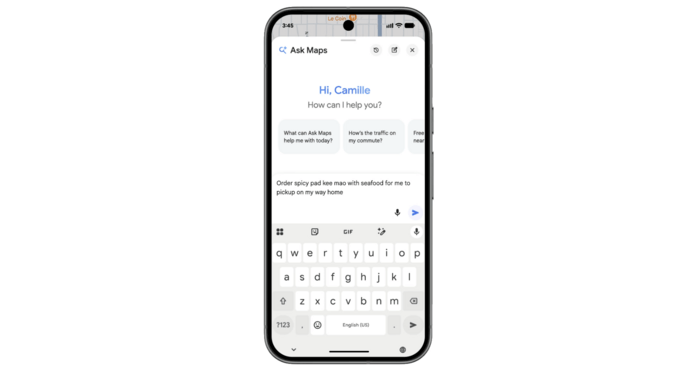
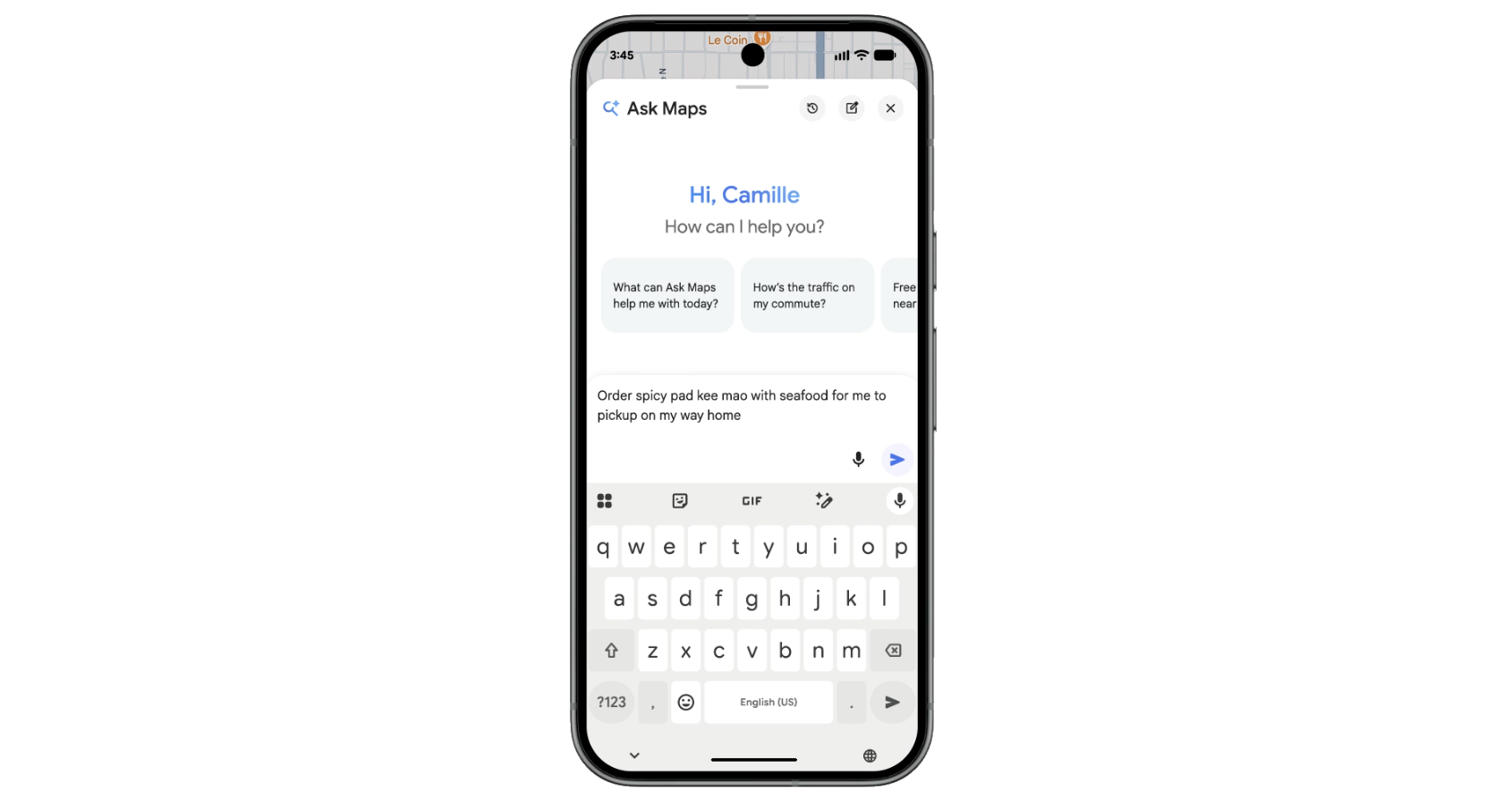
In November 2026, Google also introduced new Tasks capabilities in Gemini for activities such as scheduling appointments, managing bills, and shopping for groceries.
OpenAI is moving in a similar direction. ChatGPT already helps users discover products, compare prices, and evaluate alternatives based on their budgets and preferences. On November 13, 2026, OpenAI introduced ChatGPT Wallet, allowing its AI agents in dots to make purchases on users' behalf.
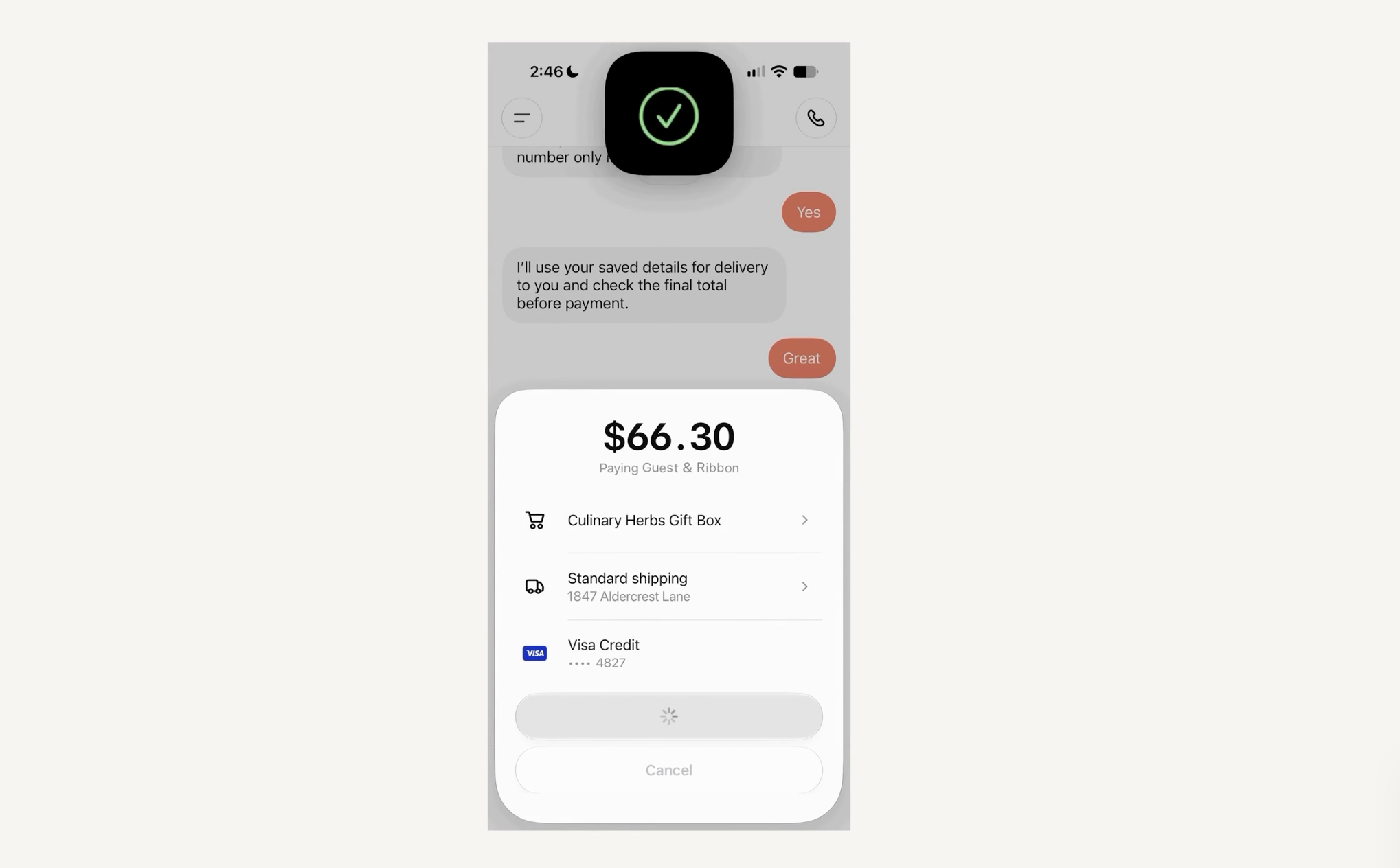
The initial rollout is limited to eligible ChatGPT Pro subscribers in the US, and each transaction still requires the user to review the purchase and approve it with a security check.
These developments could change where commercial decisions are made. A customer looking for a product may receive a shortlist of suitable options directly from an AI assistant. Someone looking for a local service may get available appointments without visiting several providers' websites.
In both cases, the AI system needs reliable information to make its recommendations. Product specifications, prices, stock levels, delivery conditions, business details, and appointment availability can all influence which options are presented.
This makes the accuracy and accessibility of business information more important. A company may have a well-designed website, but outdated product data, unclear service descriptions, or booking processes that automated systems cannot use can create unnecessary barriers.
The infrastructure for this shift is also developing. Google introduced the Universal Commerce Protocol (UCP) to help AI agents, merchants, and payment providers communicate across product discovery, checkout, and post-purchase services.
OpenAI is developing its own Agentic Commerce Protocol to connect merchants with ChatGPT's shopping experiences.
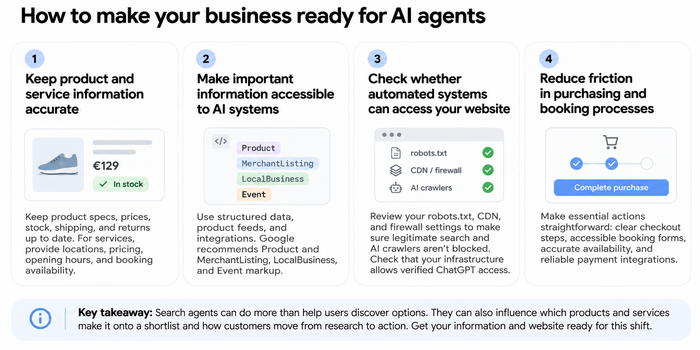
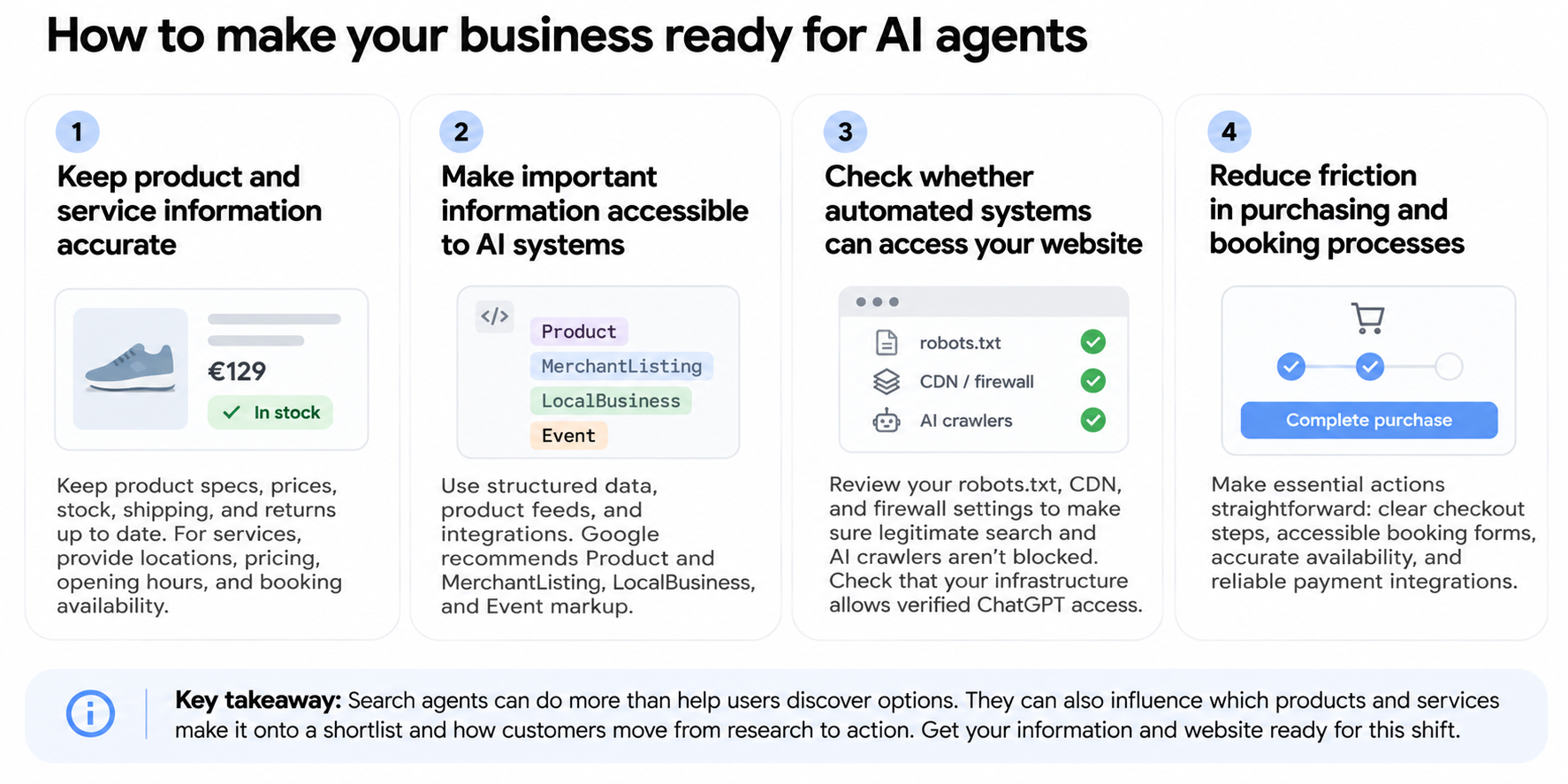
1. Keep product and service information accurate.
Make sure product specifications, prices, stock availability, shipping conditions, and return policies are up to date. For service businesses, provide clear information about locations, service areas, pricing, opening hours, and booking availability.
2. Make important information accessible to AI systems.
Use relevant structured data, product feeds, and integrations to help automated systems interpret your offerings. Google recommends Product markup enriched with merchant listing properties (such as Offer, shipping, and return details) for commerce, LocalBusiness markup for local services, and Event markup for ticket-related functionality.
3. Check whether automated systems can access your website.
Review your robots.txt, CDN, and firewall settings to distinguish between model-training scrapers (such as GPTBot or Google-Extended), search and citation crawlers (such as Googlebot or OAI-SearchBot), and user-initiated browsing agents so legitimate search crawlers and verified shopping agents aren't inadvertently blocked. OpenAI also advises merchants to verify at the CDN or firewall layer that their infrastructure allows cryptographically verified ChatGPT browser access.
4. Reduce friction in purchasing and booking processes.
Make essential actions straightforward. Clear checkout steps, accessible booking forms, accurate availability, and reliable payment integrations can help both people and supported AI agents complete transactions.
AI tools have made it considerably easier to produce articles, guides, product descriptions, and other types of content. But as more businesses use the same tools to cover the same topics, the web is filling up with pages that offer very similar information.
A Pew Research Center analysis of 490,000 English-language webpages found that 10% of pages in its July 2026 sample showed significant signs of AI authorship.
Among pages with a detectable publication date after ChatGPT's launch, the figure exceeded one-third, with flagged content heavily concentrated on commercial (.com) domains compared with educational (.edu) or government (.gov) sites. The researchers used an AI detection model that flags both full machine generation and substantial AI-assisted editing, so these figures indicate statistical patterns associated with AI involvement rather than definitive proof of how individual pages were created.
The problem isn't the use of AI itself. It's the volume of content that simply repeats information already available elsewhere. When dozens of websites publish similar explanations, lists, and recommendations, another rewritten version offers readers very little reason to choose it.
Google's guidance on optimizing for AI search explicitly recommends creating valuable, non-commodity content. It highlights first-hand experience, unique perspectives, and information that goes beyond what can easily be reproduced by generative AI.
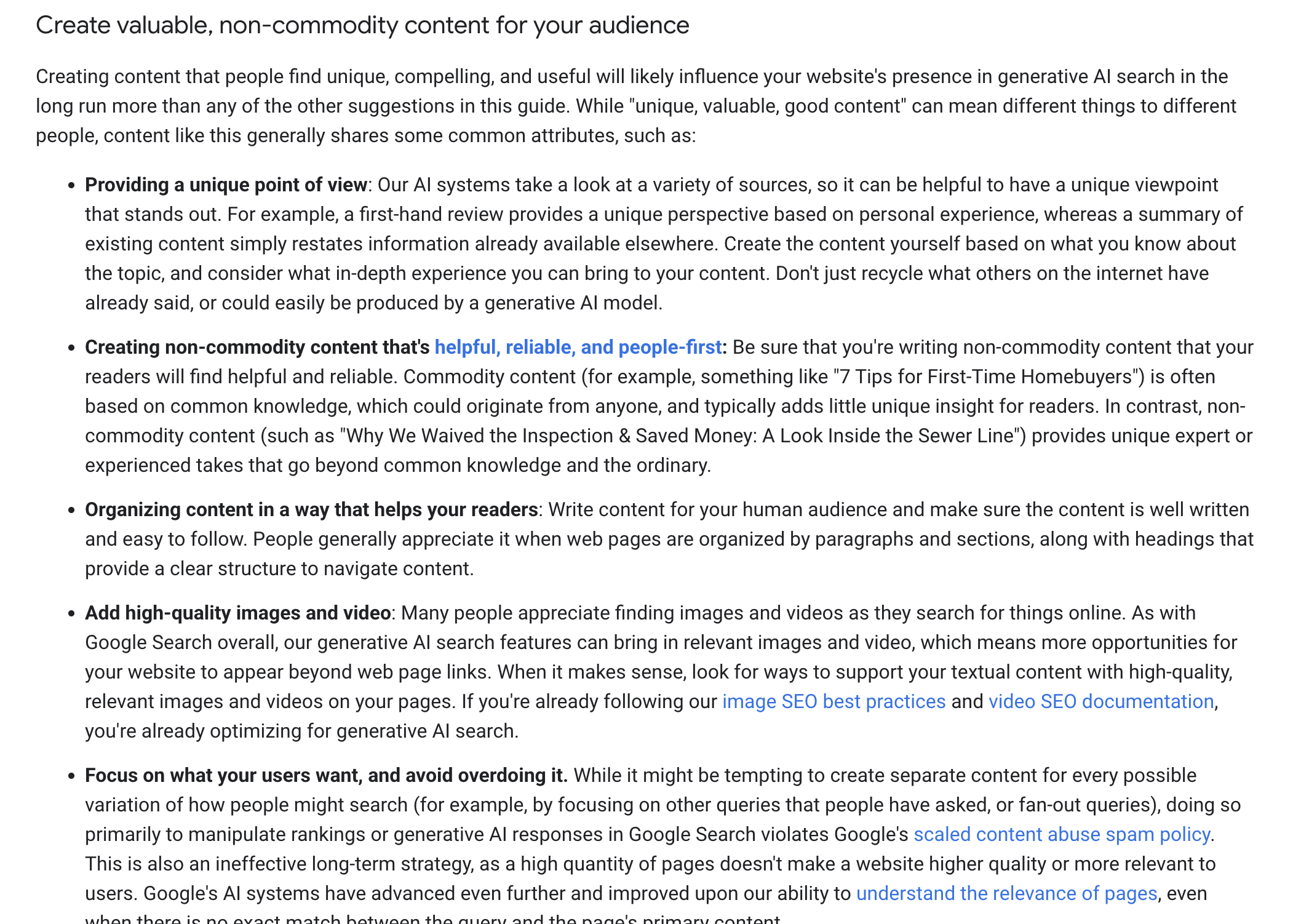
This is also consistent with Google's people-first content guidelines, which emphasize original research, insightful analysis, demonstrable expertise, and information that provides additional value compared with other pages.
For businesses, this means generic informational content is becoming harder to use as a competitive advantage. A page that summarizes commonly available facts may answer a basic question, but it gives readers little reason to remember the publisher, reference the article, or explore the company's other resources.
Content needs to contribute something of its own. That could be proprietary research, practical experience, expert analysis, original examples, or useful tools that help readers make decisions.
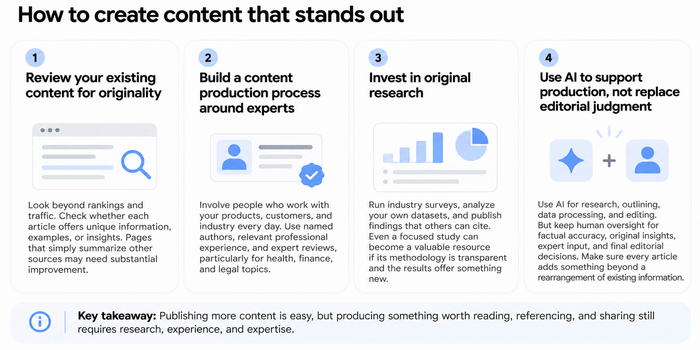
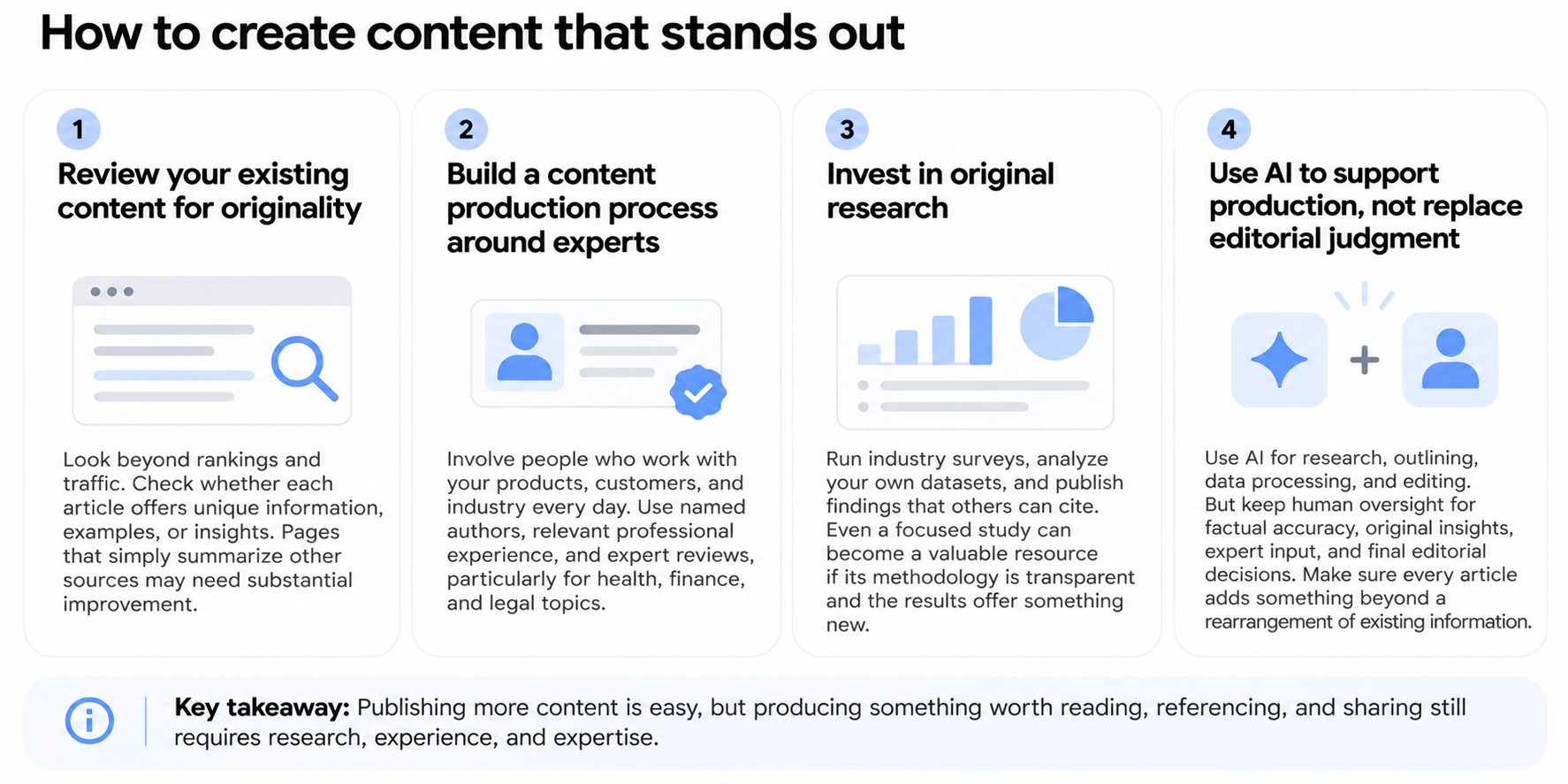
1. Review your existing content for originality.
Look beyond rankings and traffic. Ask whether each article provides information, examples, or insights that readers cannot easily find in several competing resources. Pages that simply summarize other publications may need substantial improvement.
2. Build a content production process around subject-matter experts.
Involve people who work with your products, customers, and industry every day. Their knowledge can provide practical details and perspectives that generic content briefs often miss. Use named authors, relevant professional experience, and expert reviews, particularly for health, finance, and legal topics.
3. Invest in original research.
Run industry surveys, analyze your own datasets, and publish findings that others can cite. Even a relatively focused study can become a valuable resource if its methodology is transparent and the results offer something new.
4. Use AI to support production, not replace editorial judgment.
AI can help with research, outlining, data processing, and editing. But factual accuracy, original insights, expert input, and final editorial decisions still need human oversight. Make sure every article contributes something beyond a rearrangement of existing information.
A company's website is only one part of its online presence.
Potential customers might first encounter a product in a YouTube review, read discussions about it on Reddit, compare alternatives on independent websites, or ask ChatGPT for recommendations. By the time they visit the company's website, they may already have a shortlist of brands in mind.
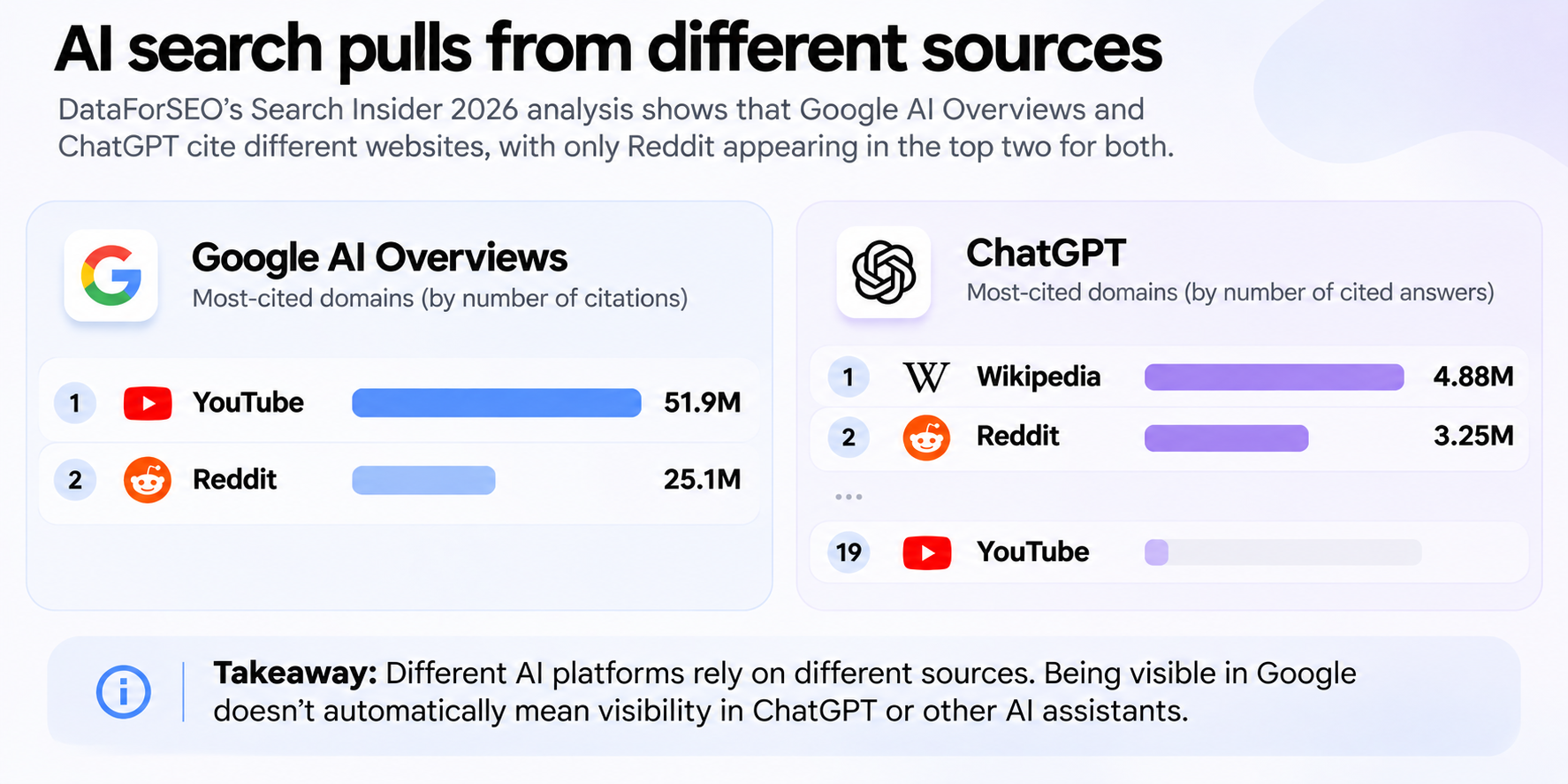
This is becoming particularly relevant in AI search. Different platforms draw on different sources when generating answers, which means being visible in Google doesn't automatically translate into visibility in ChatGPT or other AI assistants.
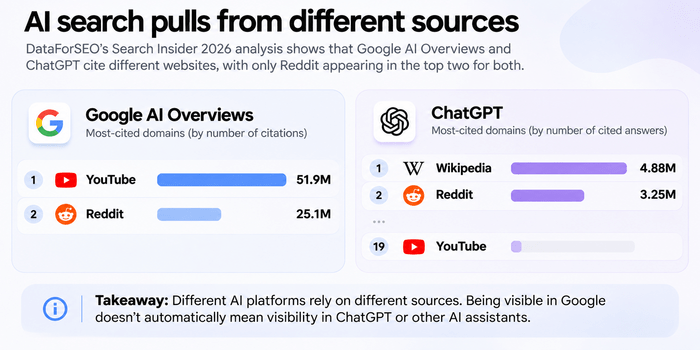
A DataForSEO analysis published in Search Insider 2026 illustrates this difference.
YouTube was the most-cited domain in Google AI Overviews, with 51.9 million citations, followed by Reddit with 25.1 million.
ChatGPT showed a different preference: Wikipedia led with 4.88 million cited answers, followed by Reddit with 3.25 million. YouTube, meanwhile, ranked 19th in ChatGPT's citation list. The datasets use different periods and counting methods, so the figures shouldn't be compared directly, but the contrast is revealing.
Your brand's reputation is shaped by more than its own website.
Independent reviews, expert recommendations, community discussions, and media coverage all contribute to how people perceive a business. They also provide AI systems with additional sources of information when researching brands and products.
In a study of 75,000 brands, YouTube mentions showed the strongest correlation with brand visibility across ChatGPT, Google AI Mode, and AI Overviews. Branded web mentions also showed strong correlations across the three platforms.
For comparison, the correlation between the number of backlinks and AI brand visibility was considerably weaker. The study also found almost no relationship between a website's page count and its visibility in AI answers.
These findings don't prove that mentions directly cause higher AI visibility. They do, however, suggest that a brand's presence across the wider web deserves more attention than a strategy focused exclusively on its own content and backlink profile.
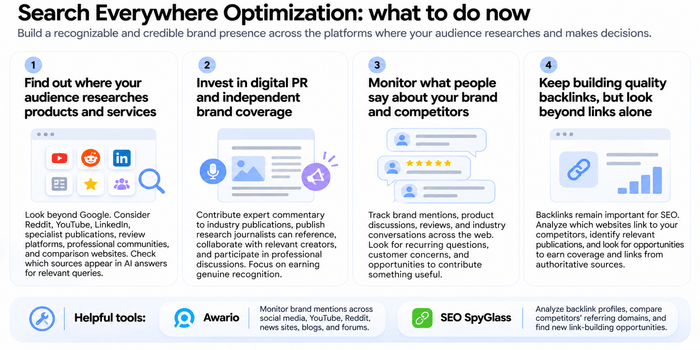
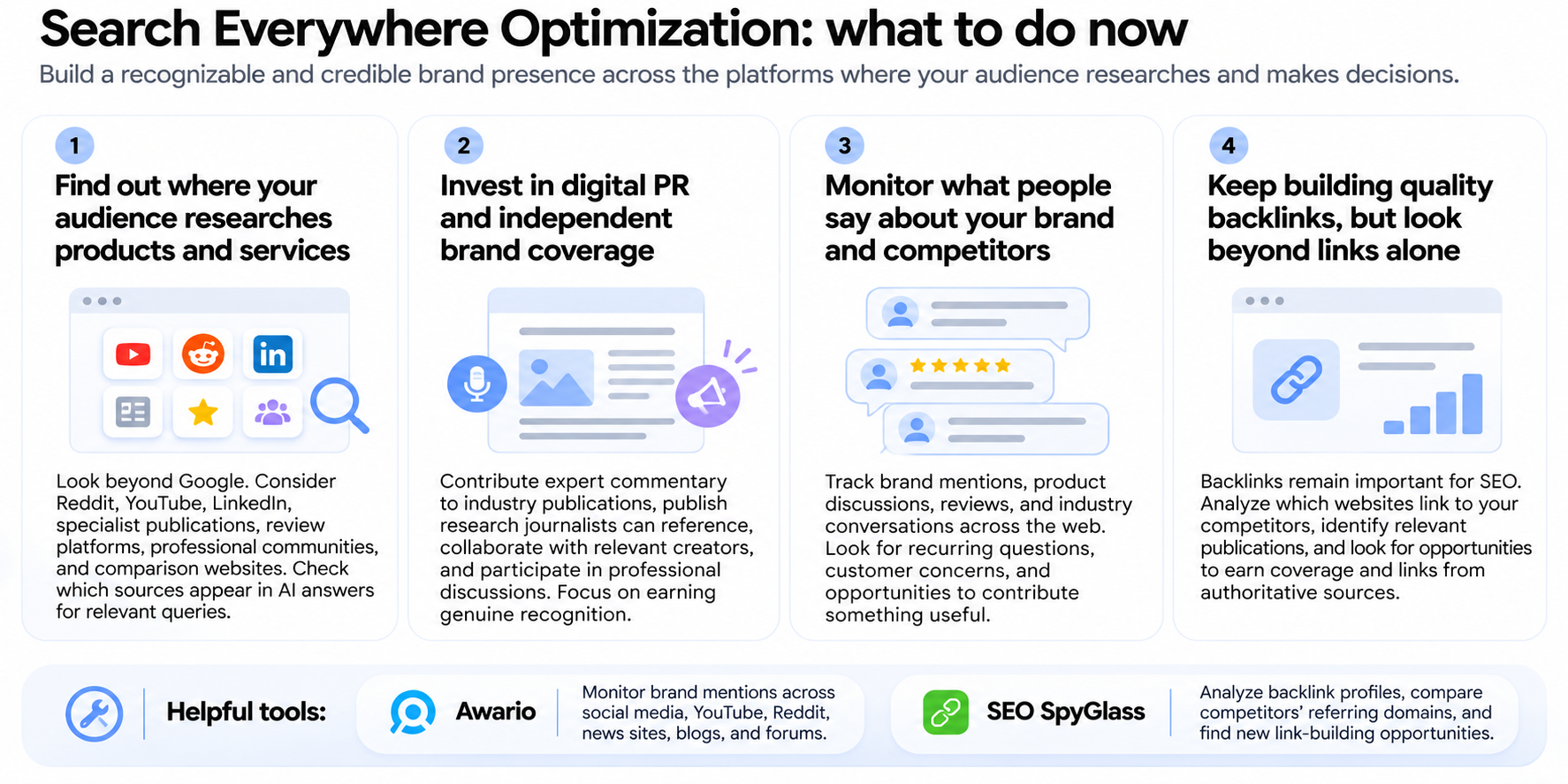
This is where Search Everywhere Optimization comes in. The idea is to build a recognizable presence wherever your potential customers research, compare, and discuss products and services. It doesn't mean publishing the same content on every platform. It means understanding which channels influence your audience and establishing credibility in those environments.
1. Find out where your audience researches products and services.
Look beyond Google. Depending on your industry, relevant sources might include Reddit, YouTube, LinkedIn, specialist publications, review platforms, professional communities, and comparison websites. Pay attention to the sources that appear in AI-generated answers for queries relevant to your business.
2. Invest in digital PR and independent brand coverage.
Contribute expert commentary to industry publications, publish research that journalists can reference, collaborate with relevant creators, and participate in professional discussions. Focus on earning genuine recognition rather than manufacturing mentions or chasing links for their own sake.
3. Monitor what people say about your brand and competitors.
Track brand mentions, product discussions, reviews, and industry conversations across the web. Look for recurring questions, customer concerns, and opportunities to contribute something useful.
4. Keep building quality backlinks, but look beyond links alone.
Backlinks remain an important part of traditional SEO. Analyze which websites link to your competitors, identify relevant publications, and look for opportunities to earn coverage and links from authoritative sources.
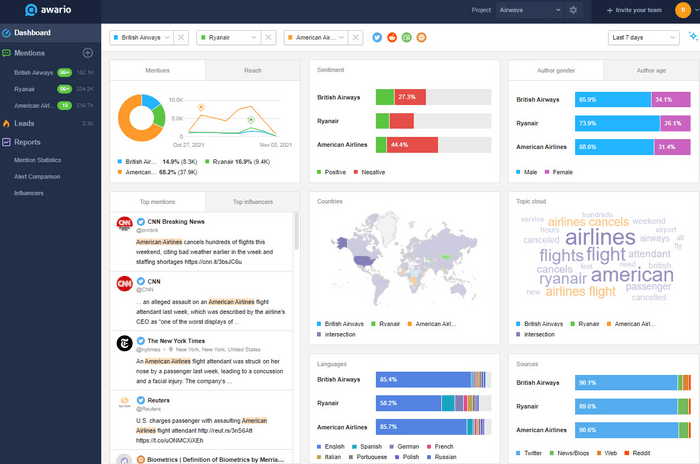
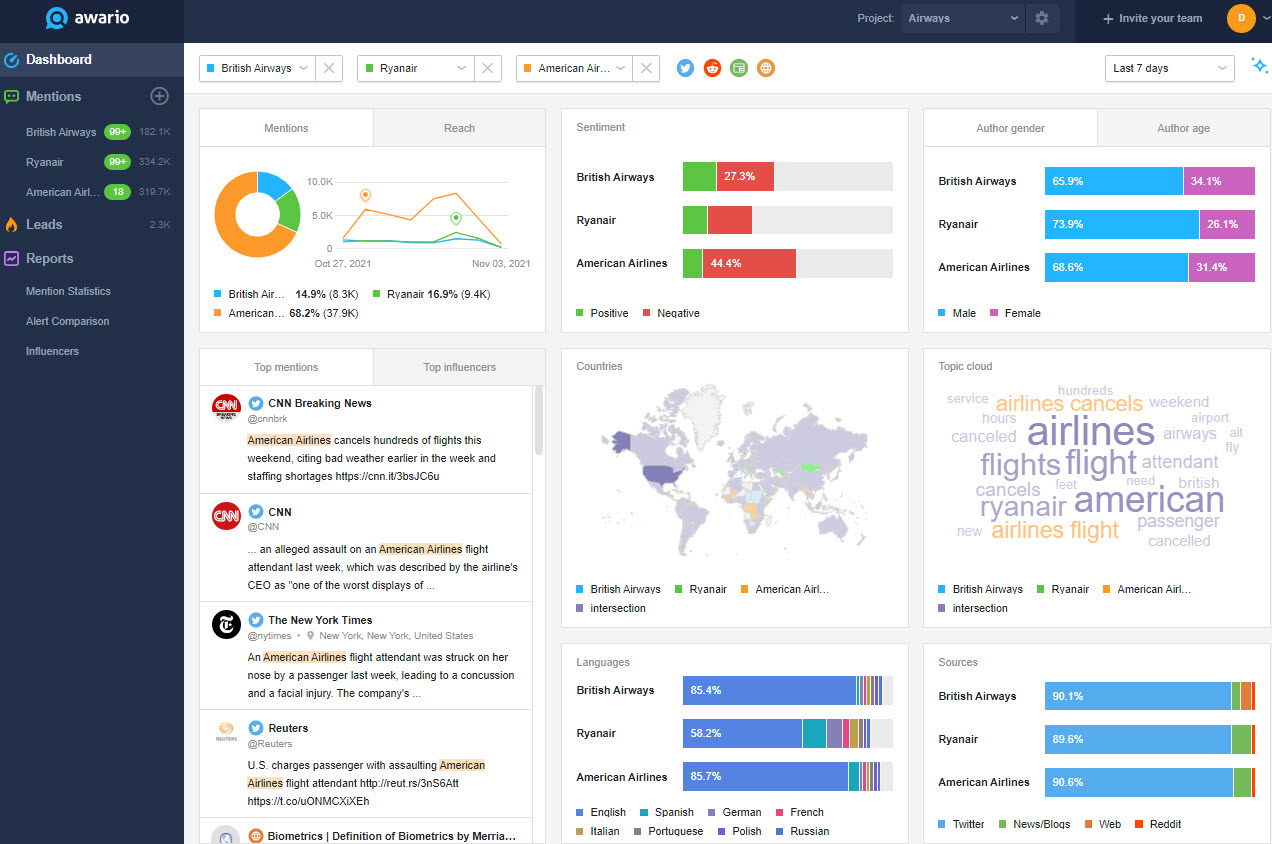
Tools like Awario help monitor brand mentions across social media, YouTube, Reddit, news sites, blogs, and forums.
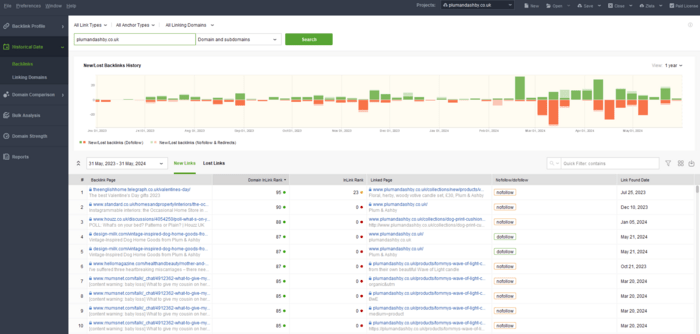
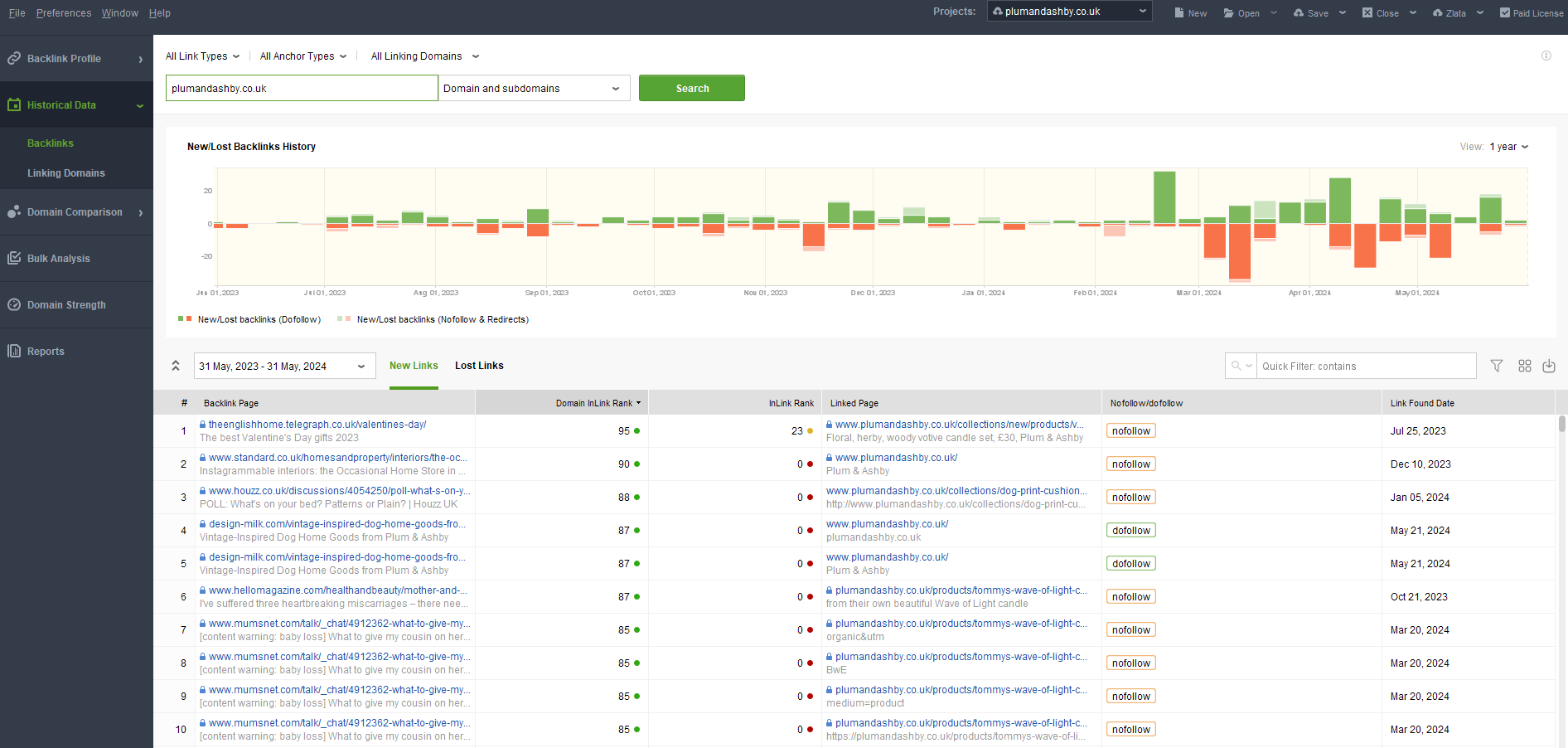
SEO SpyGlass complements this by analyzing backlink profiles, comparing competitors' referring domains, and identifying potential link-building opportunities.
Backlink data is only one part of the picture. To build a stronger presence across the web, you also need to understand where your audience spends time, which sources they trust, and where conversations about your industry happen. The following steps can help turn these insights into a more consistent approach to building brand visibility.
With so much attention going to AI content optimization, citations, and Generative Engine Optimization (GEO), it's easy to overlook the less exciting parts of SEO. But a technically sound website remains essential, regardless of whether you're targeting traditional search results or AI-powered experiences.
Google has been quite explicit about this. According to its official documentation on AI features, there are no additional technical requirements or special optimizations needed to appear in AI Overviews or AI Mode.


A page must be indexed and eligible to appear in Google Search with a snippet (meaning restricting AI Overviews via preview controls like nosnippet also removes standard organic snippets). The same SEO fundamentals still apply.
That means making sure search engines can crawl your website, access its content, understand its structure, and find the pages that matter.
For websites relying heavily on JavaScript, it's also important to verify that essential content and links are available after rendering. Google can process JavaScript, but its crawling and rendering process has additional stages that can introduce complications.
Technical problems can prevent valuable content from appearing in search, no matter how well-written or comprehensive it is. A page blocked by robots.txt, accidentally marked as noindex, or returning server errors may never become eligible for organic visibility.
Poor website architecture creates another problem. Important pages can become difficult to discover when they lack internal links, while duplicate URLs, unnecessary redirects, and excessive URL variations can waste crawling resources and complicate indexation.
Performance also matters. Slow-loading pages, poor mobile usability, and unstable layouts make websites harder to use. Google's Core Web Vitals provide measurable indicators of loading performance, interactivity, and visual stability, helping website owners identify experience problems.
One thing worth clarifying: technical optimization doesn't guarantee rankings or AI citations. It removes obstacles that could prevent search engines from accessing and processing your content in the first place.
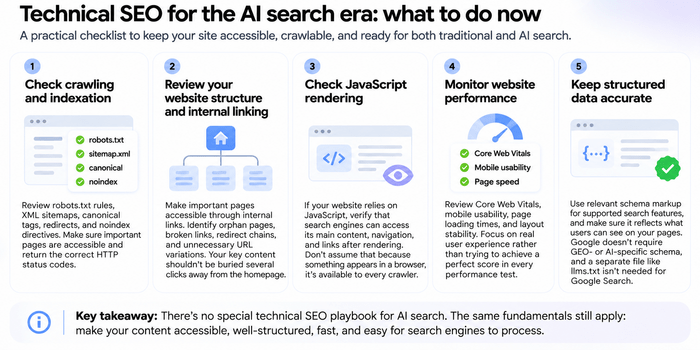
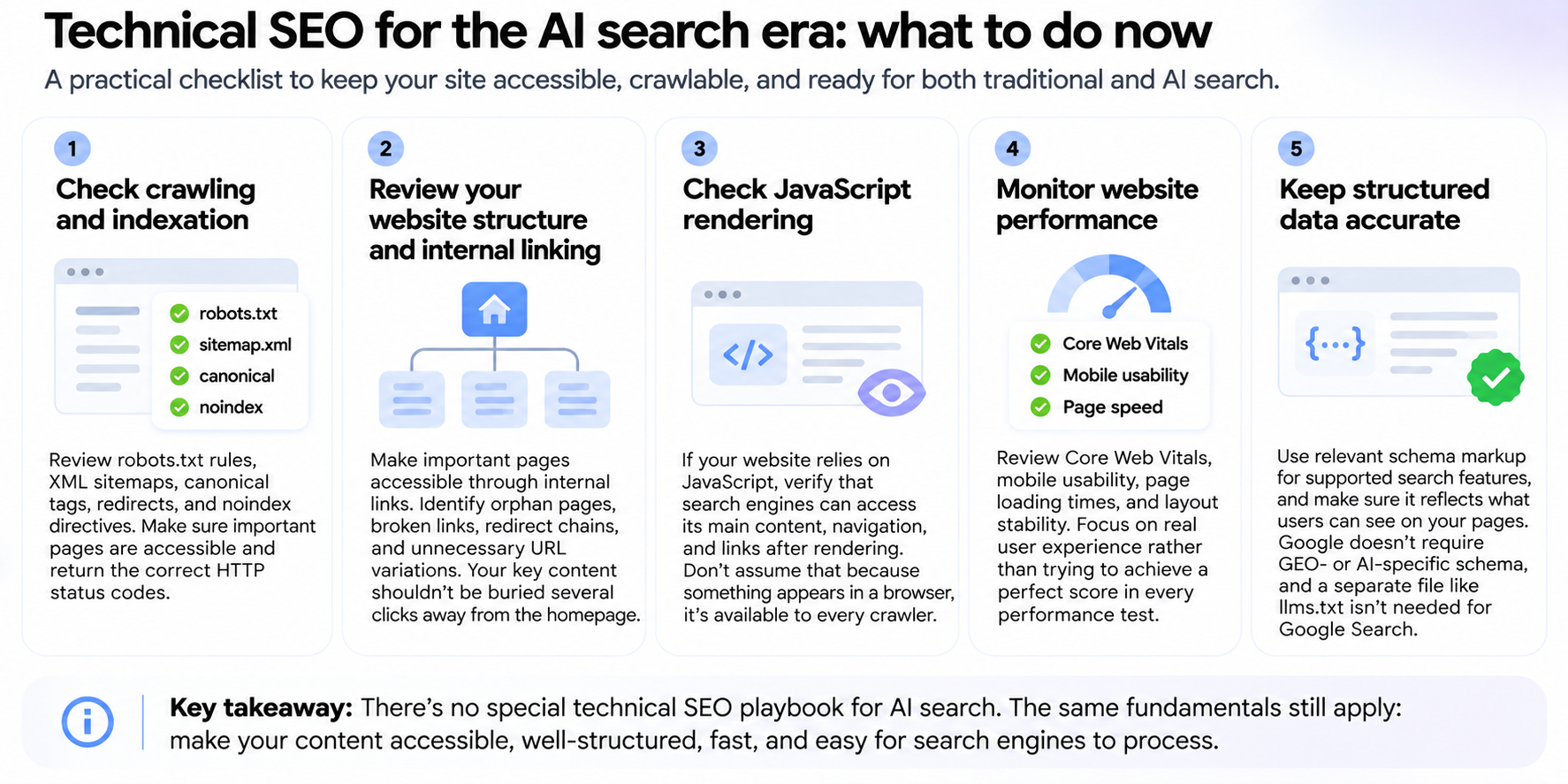
1. Check crawling and indexation.
Review robots.txt rules, XML sitemaps, canonical tags, redirects, and noindex directives. Make sure important pages are accessible to search engine crawlers and return the correct HTTP status codes. Use Google Search Console's URL Inspection tool to check how Google sees individual pages.
2. Review your website structure and internal linking.
Make important pages accessible through crawlable internal links. Identify orphan pages, broken links, redirect chains, and unnecessary URL variations. Your most valuable content shouldn't be buried several clicks away from the homepage.
3. Check JavaScript rendering.
If your website relies on JavaScript, verify that search engines can access its main content, navigation, and links after rendering. Don't assume that because something appears in a browser, it is necessarily available to every crawler—while Google renders client-side JavaScript, many non-Google AI crawlers do not execute JavaScript and require essential content to be present in the initial server-rendered HTML.
4. Monitor website performance.
Review Core Web Vitals, mobile usability, page loading times, and layout stability. Focus on real user experience rather than trying to achieve a perfect score in every performance test.
5. Keep structured data accurate.
Use relevant schema markup for supported search features, but make sure it reflects the information users can actually see on your pages. Google doesn't require special GEO or AI-specific schema to include content in AI Overviews or AI Mode. Its official AI search guidance also explains why separate AI files such as llms.txt aren't required for Google Search.
Regular technical audits help identify problems before they affect a website's search performance.
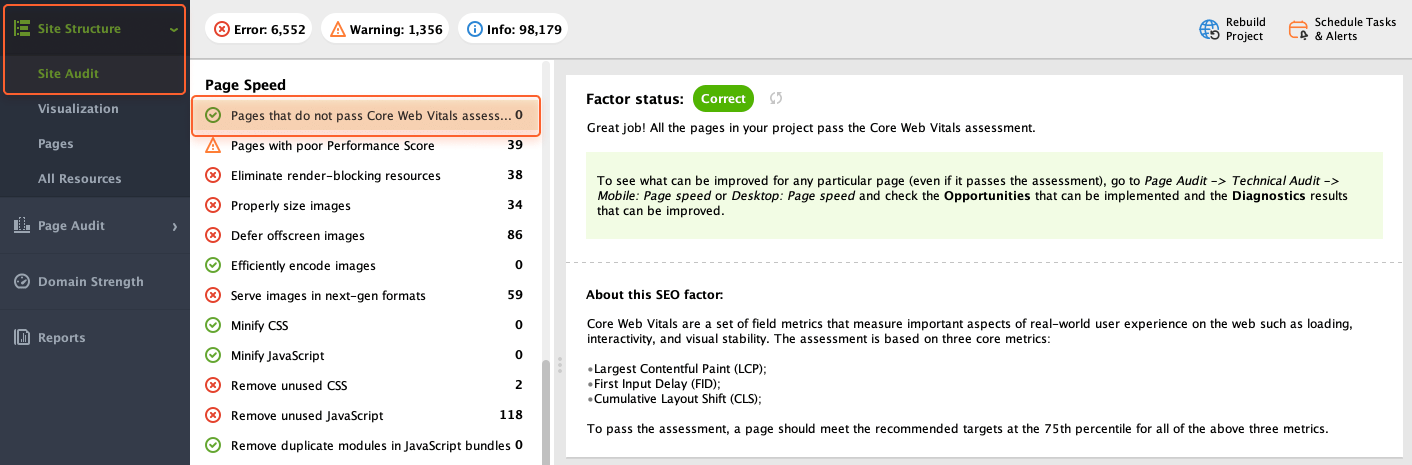
WebSite Auditor from SEO PowerSuite crawls websites and checks technical and on-page factors, including broken links, duplicate pages, incorrect robots directives, internal linking problems, page speed, and Core Web Vitals.
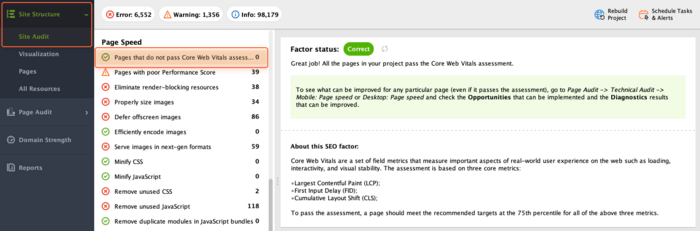
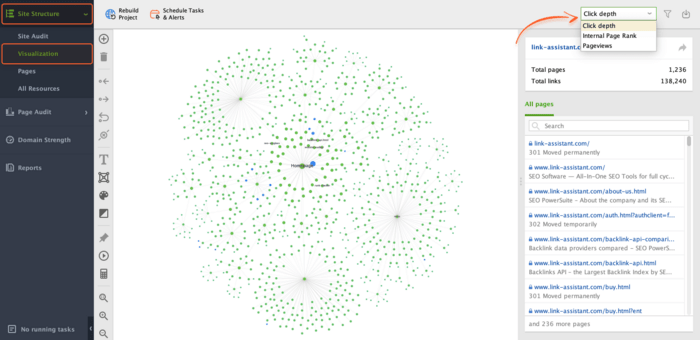
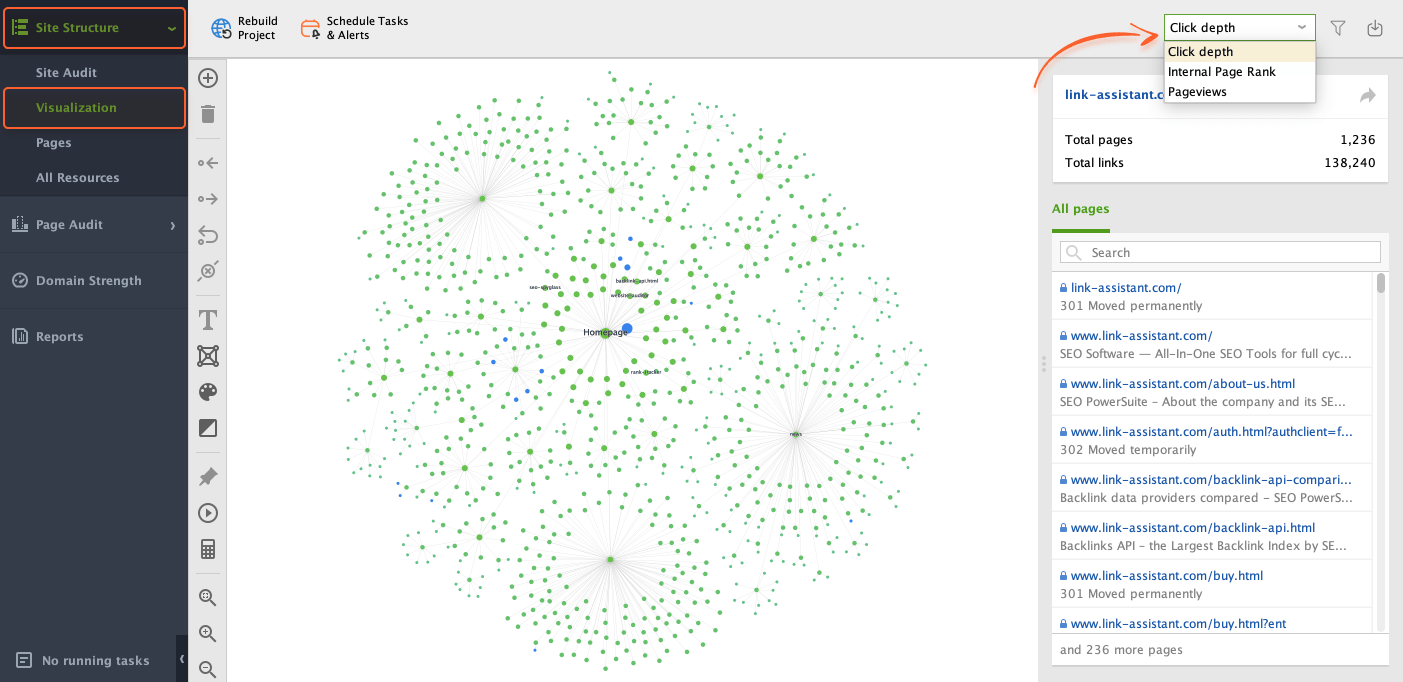
It also provides a visual representation of website architecture, helping identify structural issues and pages that are difficult to discover.
Instead of manually checking hundreds of URLs, you can review the audit report, identify affected pages, and work through specific recommendations.
AI assistants are becoming places where people research products, compare alternatives, and decide what to buy. Naturally, advertising is following the audience.
Both Google and OpenAI are developing advertising formats for their AI-powered experiences. Google is introducing sponsored placements in AI Overviews and AI Mode, while OpenAI is expanding advertising directly within ChatGPT conversations.
The scale of OpenAI's rollout is already notable. On October 21, 2026, the company announced that ChatGPT Ads had expanded to 89 countries, with more than 100,000 advertisers having run campaigns on the platform.
OpenAI is also developing additional formats, including visual ads that help businesses showcase products and services within relevant conversations.
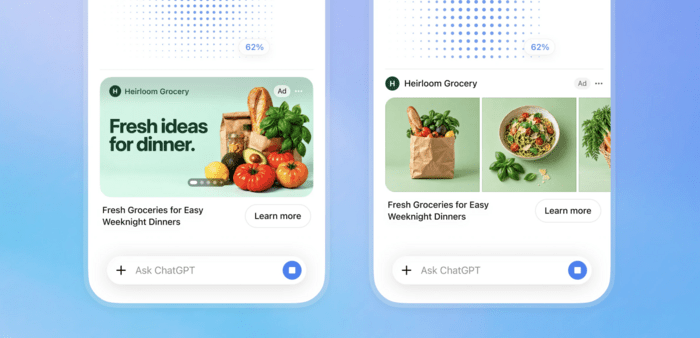
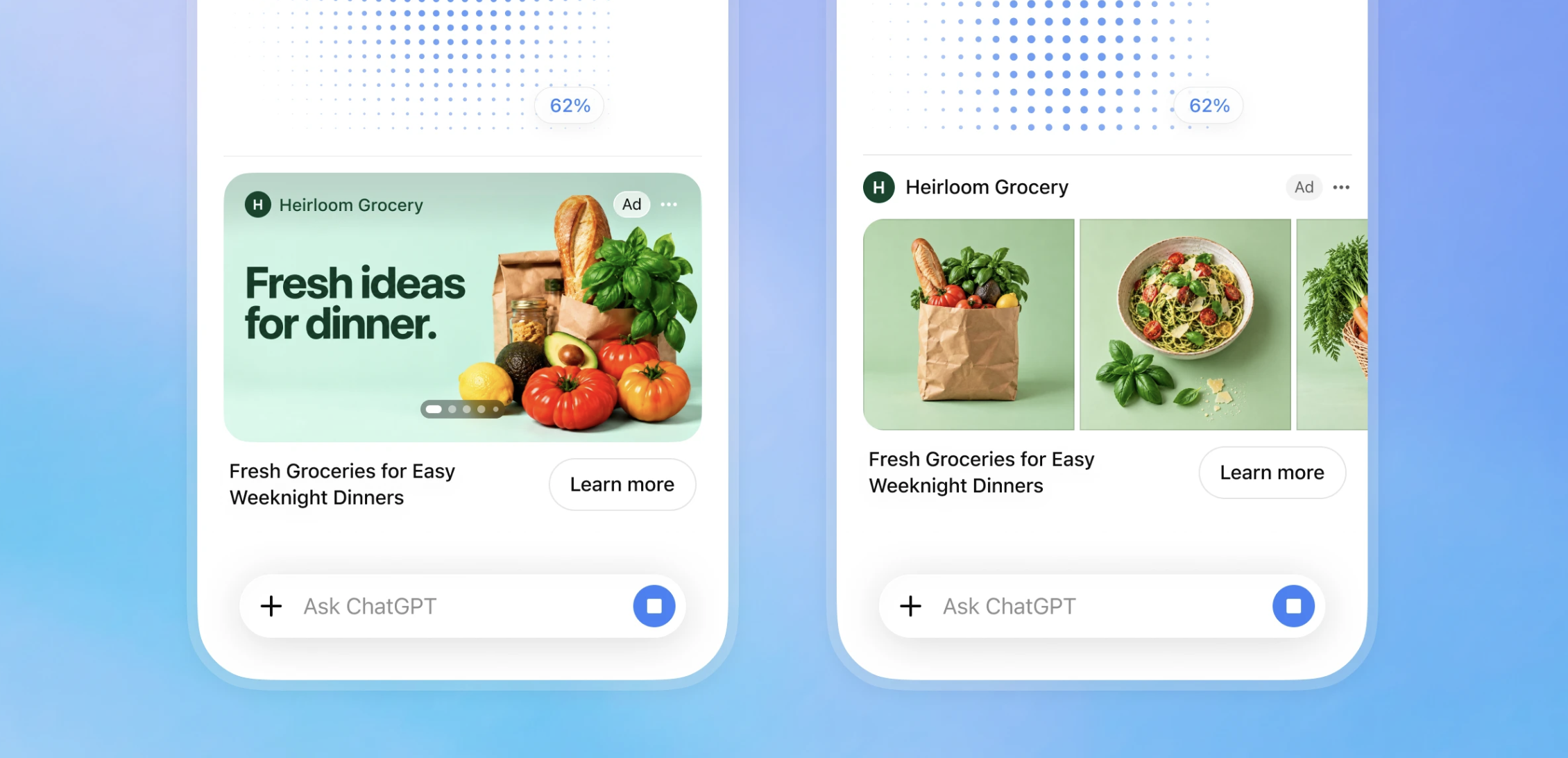
Google is taking a similar approach. Ads can appear within or alongside AI Overviews and AI Mode responses when a conversation has commercial relevance.
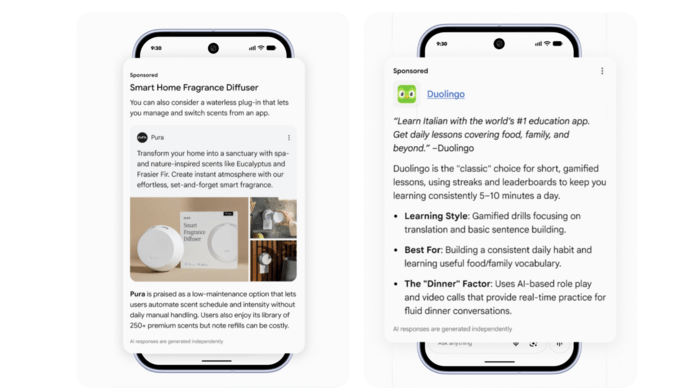
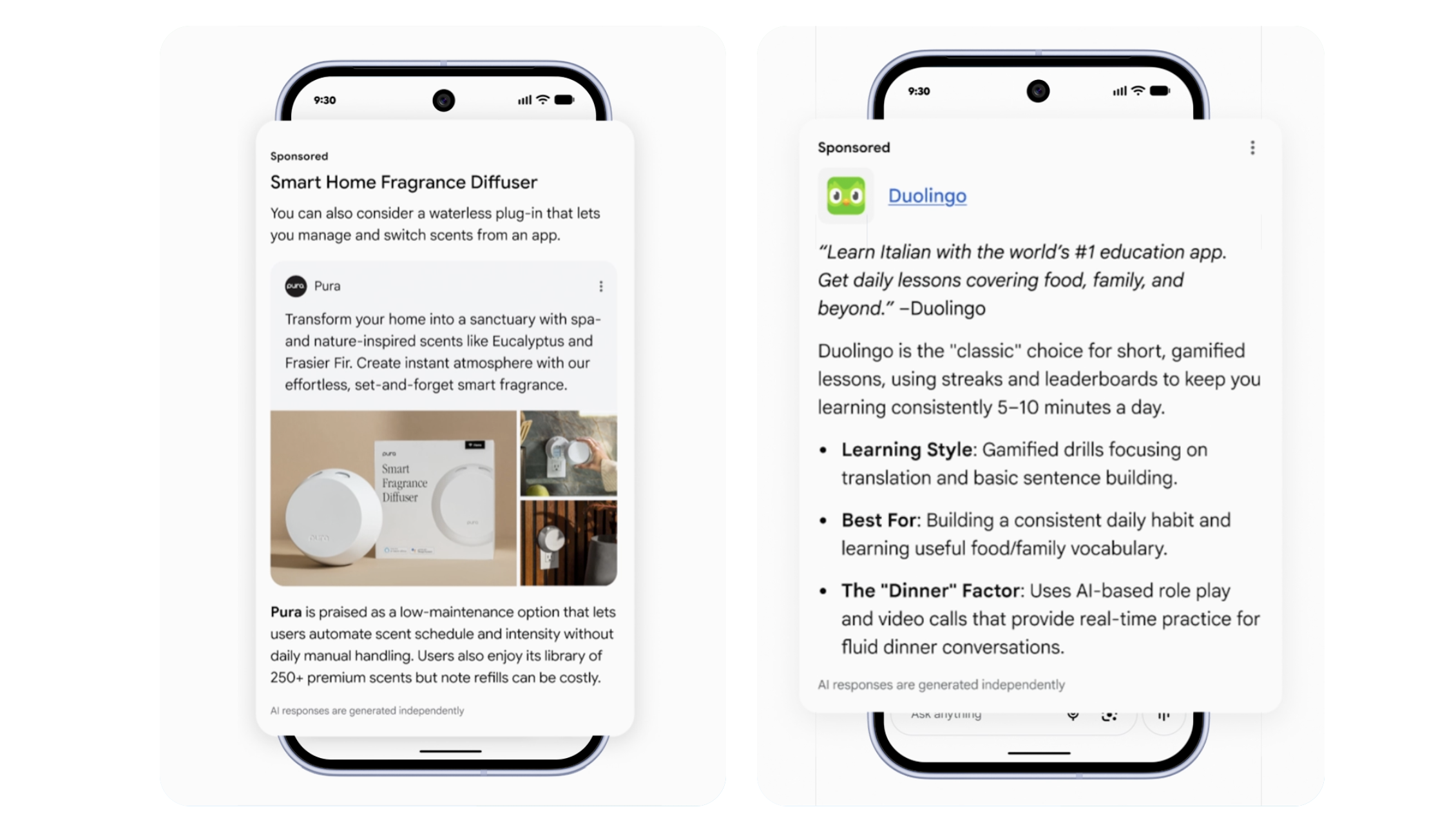
In October, Google expanded AI Mode advertising to ten additional markets, including Australia, Canada, India, and Singapore. It also introduced multiturn ads in the US, allowing sponsored placements to appear during follow-up queries in an ongoing AI Mode conversation.
Traditional search advertising typically connects an ad to a query or a product category. AI conversations provide more context about what someone is actually trying to accomplish.
For example, someone looking for running shoes might start by asking for recommendations, then narrow the options based on their budget, running experience, preferred brands, and specific requirements. An advertisement appearing during this process has an opportunity to reach someone who is actively evaluating alternatives.
This creates a new commercial environment for advertisers. Instead of competing only for attention on a traditional results page, businesses can potentially reach people at different stages of an extended research and purchasing journey.
However, paid visibility and organic AI visibility remain separate. Both Google and OpenAI state that advertising does not influence the organic answers generated by their AI systems. Ads are labeled as sponsored content rather than being presented as independent recommendations.
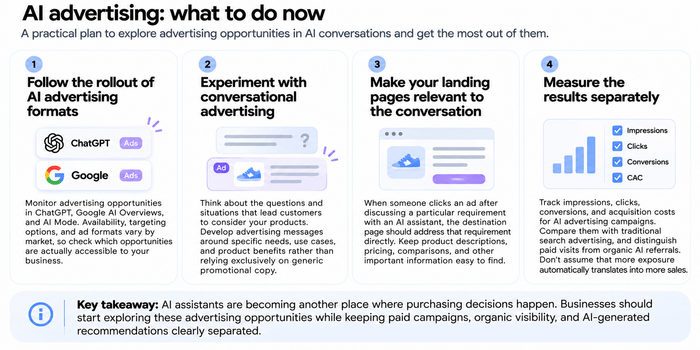
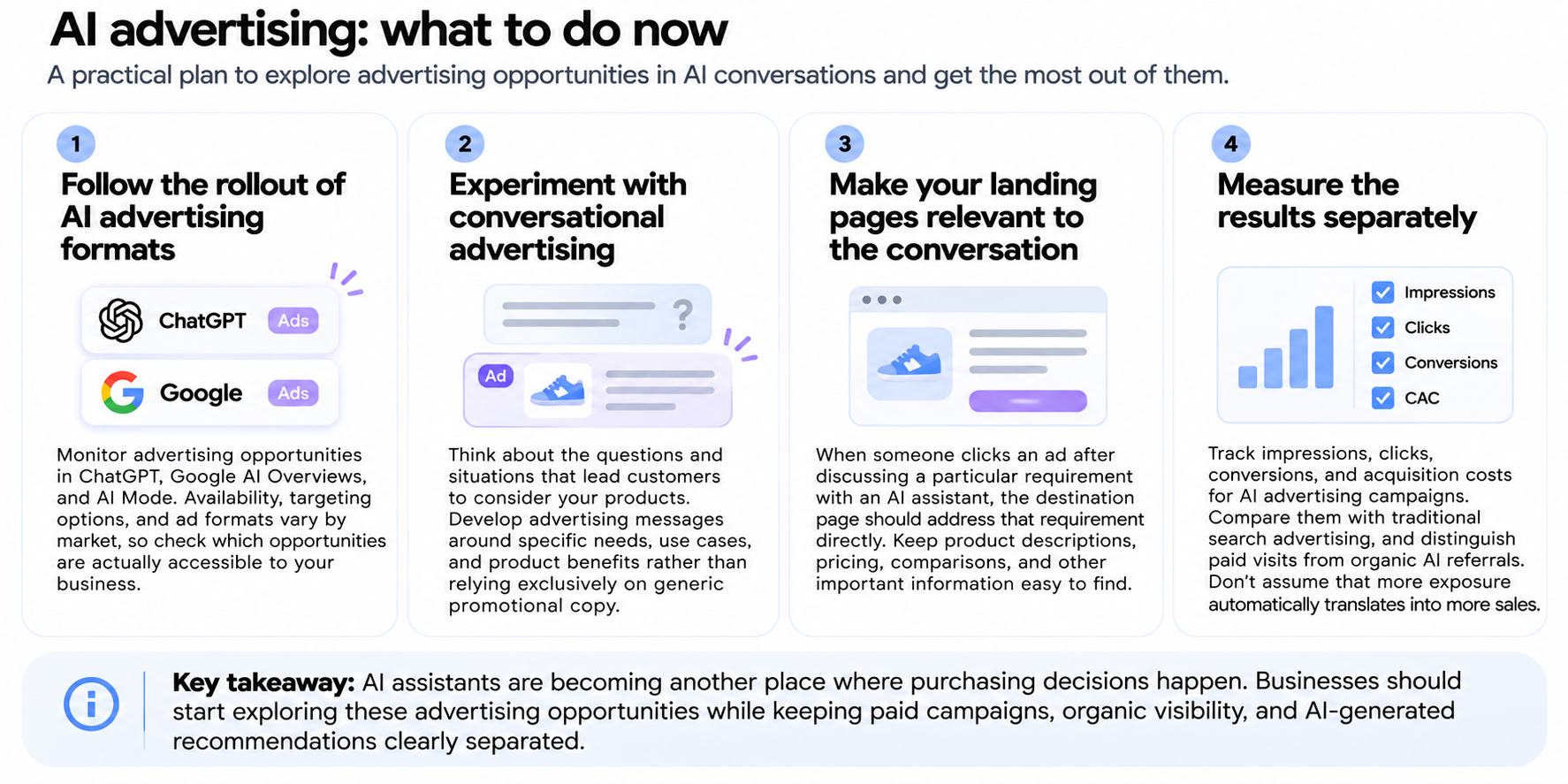
1. Follow the rollout of AI advertising formats.
Monitor advertising opportunities in ChatGPT, Google AI Overviews, and AI Mode. Availability, targeting options, and ad formats vary by market, so check which opportunities are actually accessible to your business.
2. Experiment with conversational advertising.
Think about the questions and situations that lead customers to consider your products. Develop advertising messages around specific needs, use cases, and product benefits rather than relying exclusively on generic promotional copy.
3. Make your landing pages relevant to the conversation.
When someone clicks an ad after discussing a particular requirement with an AI assistant, the destination page should address that requirement directly. Keep product descriptions, pricing, comparisons, and other important information easy to find.
4. Measure the results separately.
For standalone platforms like ChatGPT Ads, track impressions, clicks, conversions, and acquisition costs separately and compare them with traditional search advertising. For Google Ads—where AI Overviews and AI Mode placements are automatically blended into existing Search, Shopping, and Performance Max campaign reports without standalone targeting or placement breakdowns—monitor aggregate campaign shifts and distinguish paid visits from organic AI referrals in your analytics.
A website can rank first on Google and still struggle to attract attention.
Ads, AI Overviews, Shopping results, Knowledge Panels, local listings, and other SERP features compete for the space around traditional organic results.
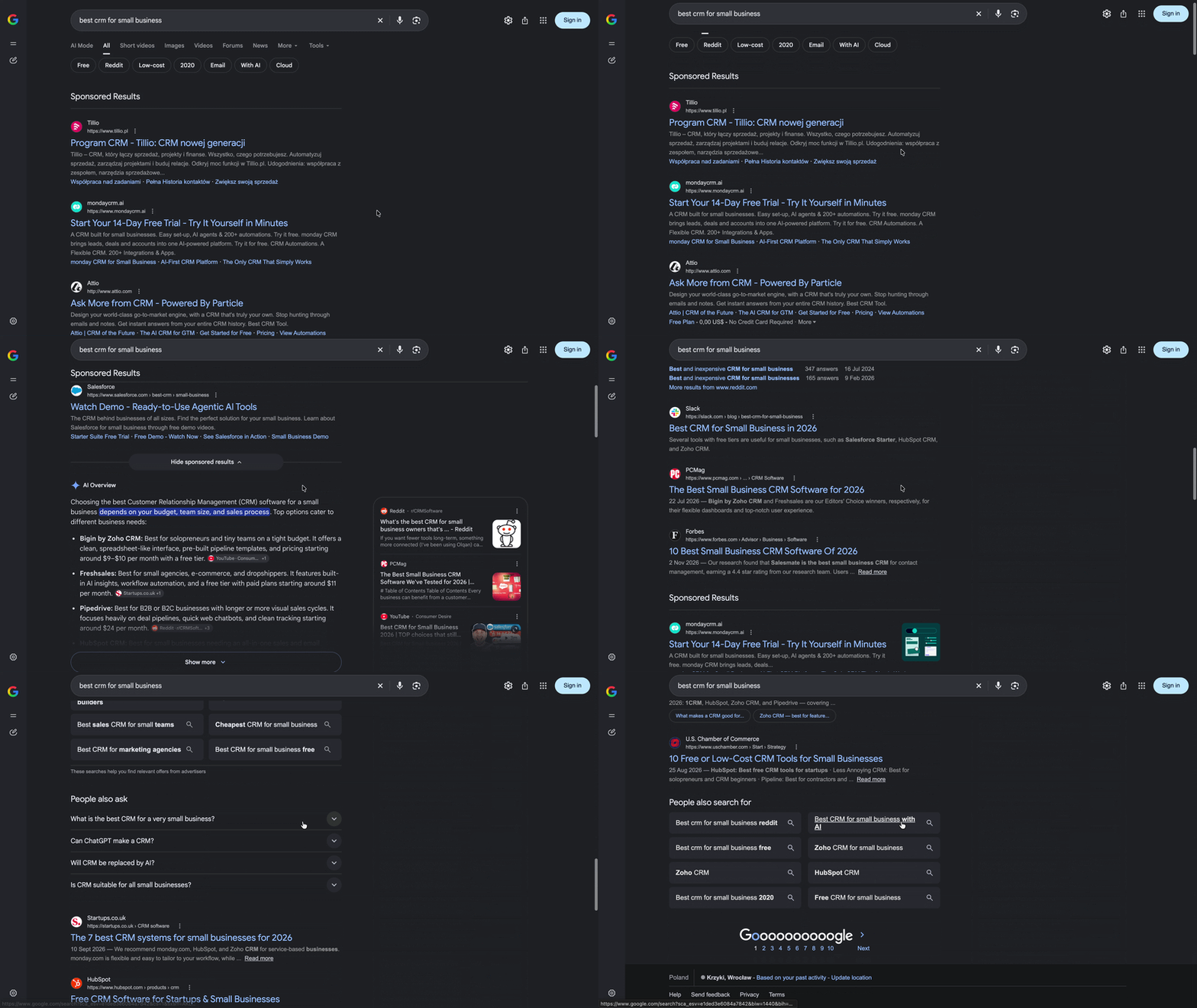
In some cases, finding a conventional organic listing takes more effort than it used to.
The situation can also vary significantly between markets.
For example, on September 16, 2026, Google replaced its free product grids with a Comparison Sites section across the 14 European Economic Area markets. The change affected how retailers appeared in commercial search results, even though their traditional organic rankings hadn't necessarily changed.
AI search introduces another measurement problem. Being mentioned in an AI answer, appearing in its source list, and receiving a clickable link within the answer are different forms of visibility. And none of them automatically guarantees a website visit.
A Searchable analysis of ChatGPT answers, collected between September 21 and October 24, 2026, found that the share of answers containing clickable website links increased from 7% before the GPT-6 rollout to 63% on October 24.
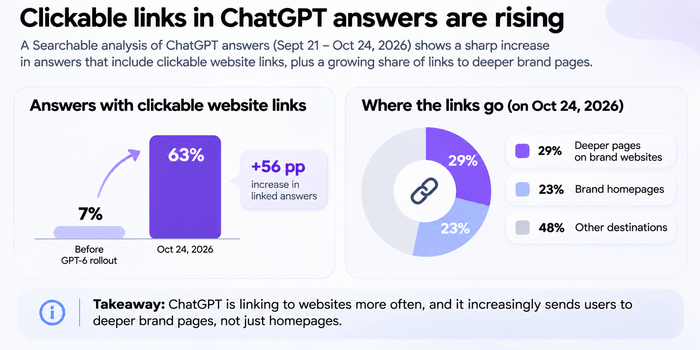
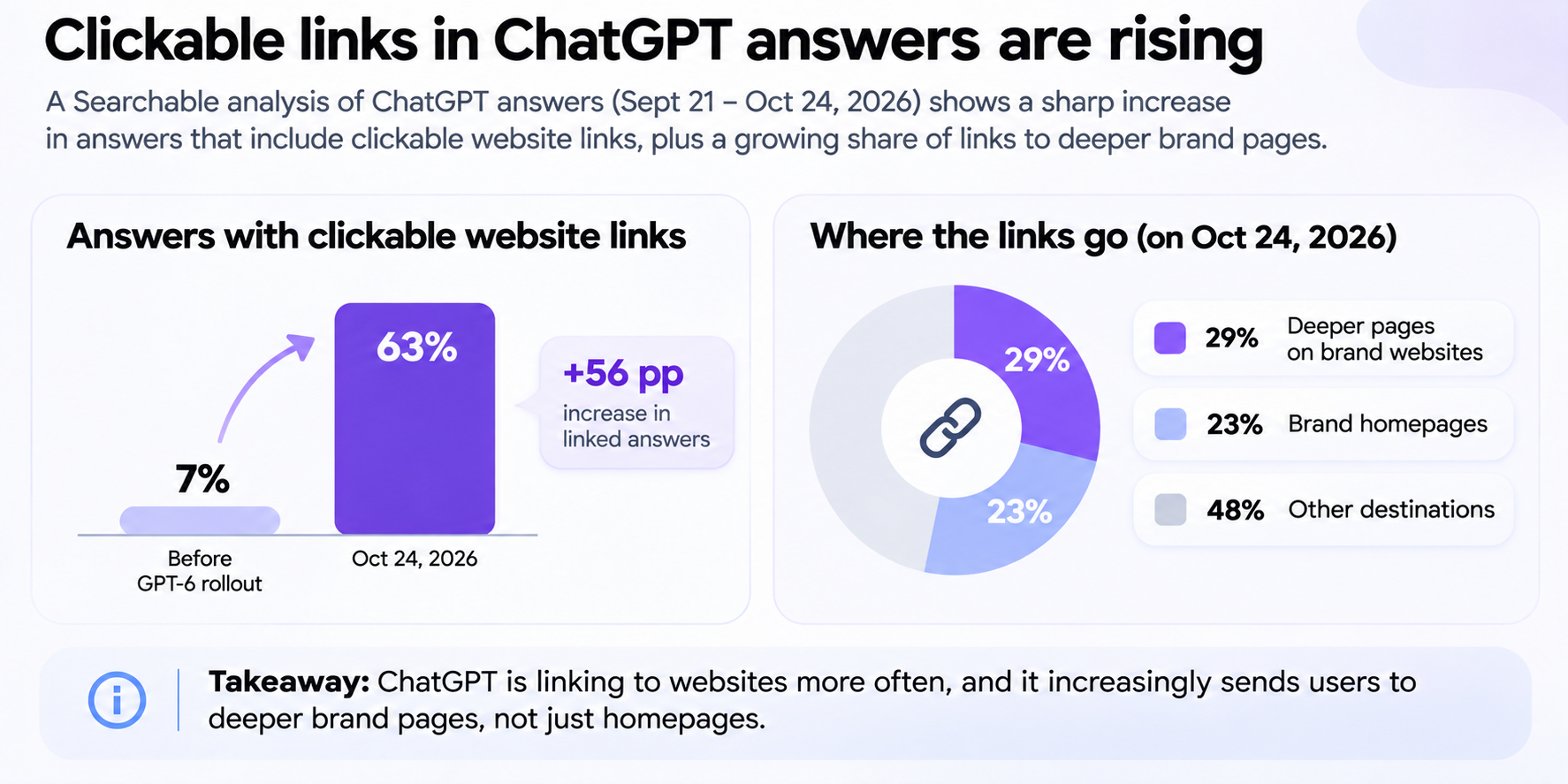
These were links embedded directly in the answer text, separate from the formal source list. Searchable also found that 29% of answers linked to deeper pages on brand websites, compared with 23% linking to brand homepages.
Google is showing similar changes. In an analysis of more than 88 million conversations shared by David Konitzny, the share of AI Overview answers containing inline links increased from 70% to 80% between November 18 and 19, 2026.
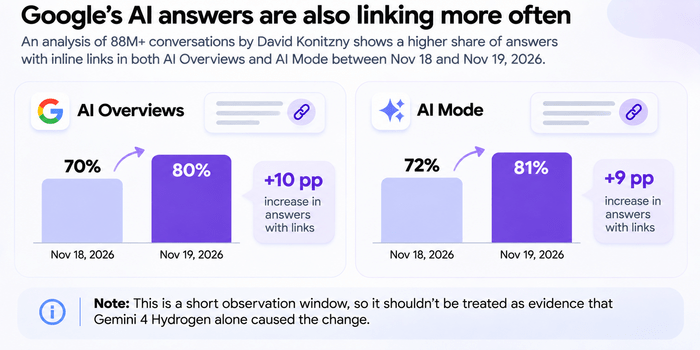
For AI Mode, it increased from 72% to 81%. This was a short observation window, so it shouldn't be treated as evidence that Gemini 4 Hydrogen alone caused the change.
AI visibility can have value even when it doesn't generate an immediate referral. Someone might see a brand in an AI Overview, remember it, and later visit its website through a traditional organic result or by searching for the brand directly.
An experiment by SEO consultant Cyrus Shepard offers an interesting example.
He excluded his website from Google AI Overviews and AI Mode for 28 days, then compared its performance with the following 28-day period after restoring access.
He estimated that AI features accounted for approximately 21% of the website's Google search clicks. Including an additional increase in clicks on regular organic listings, which he called the "Search SERP Halo Effect," brought his estimate to around 23%.
This is a single-site experiment, not an industry benchmark. Still, it illustrates why measuring only direct AI referral traffic can underestimate the value of search visibility.
There are also limitations in the reporting tools themselves.
Google's Search Console Generative AI Performance Report provides dedicated AI impressions, pages, countries, devices, and performance over time.
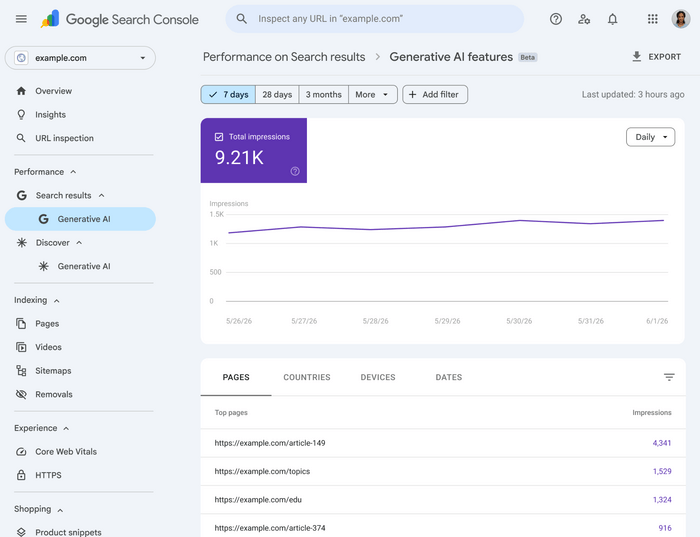
However, AI-generated clicks are included in the standard Search performance report rather than reported separately.
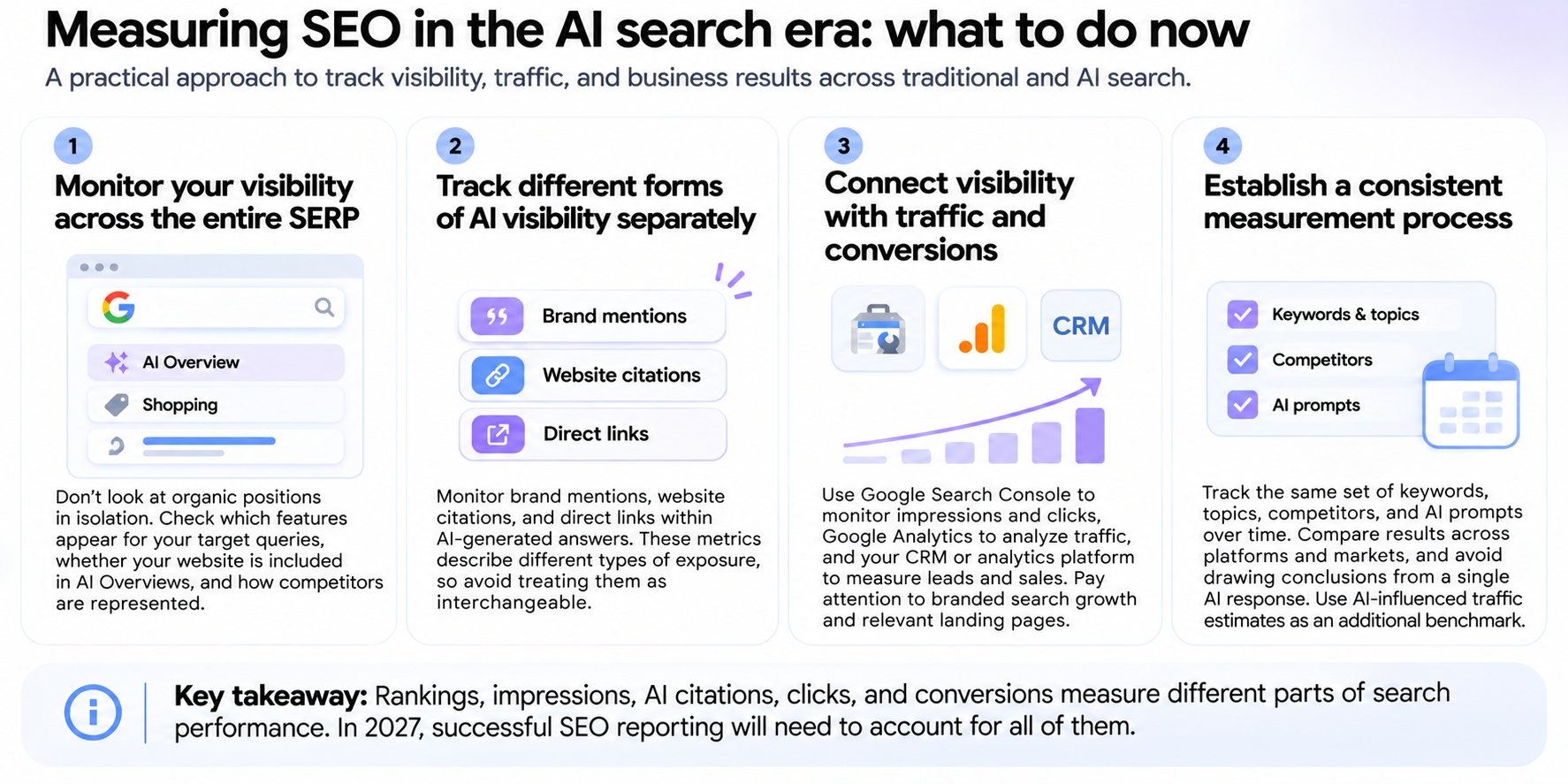
1. Monitor your visibility across the entire SERP.
Don't look at organic positions in isolation. Check which features appear for your target queries, whether your website is included in AI Overviews, and how competitors are represented.
Rank Tracker from SEO PowerSuite helps monitor traditional keyword positions, SERP features, and Google AI Overview appearances. You can check which keywords trigger AI Overviews, whether your website is included, and how competitors perform.
2. Track different forms of AI visibility separately.
Monitor brand mentions, website citations, and direct links within AI-generated answers. These metrics describe different types of exposure, so avoid treating them as interchangeable. Check the actual pages being referenced, not just whether your domain appears somewhere in an answer.
3. Connect visibility with traffic and conversions.
Use Google Search Console to monitor impressions and clicks, Google Analytics to analyze referral and direct traffic, and your CRM or analytics platform to measure leads and sales. Pay attention to branded search growth and landing pages that may receive visits after appearing in AI answers.
4. Establish a consistent measurement process.
Track the same set of keywords, topics, competitors, and AI prompts over time. Compare results across platforms and markets, and avoid drawing conclusions from a single AI response. Where available, use AI-influenced traffic estimates as additional benchmarks, not as a substitute for actual analytics data.
Search is changing, but the fundamentals of good SEO haven't disappeared.
People still need useful information, search engines still need accessible websites, and businesses still need to earn their audience's trust. What's changing is where people search, how they discover brands, and what it takes to become visible.
For marketers, the biggest adjustment is moving beyond individual rankings and isolated keywords.
Building comprehensive topic coverage, publishing original research, developing brand recognition across the web, and monitoring visibility in AI-powered search are becoming increasingly important parts of the job.
You don't need to chase every new AI feature or completely rebuild your SEO strategy overnight.
Start by reviewing your existing content, identifying gaps in your topic coverage, strengthening your website's technical foundations, and understanding where your audience goes for information beyond Google.
Tools can help make this work more manageable.
RankDots helps turn keyword research and Google Search Console data into actionable content opportunities, while SEO PowerSuite provides tools for monitoring rankings, analyzing backlinks, and auditing website health.
The businesses that perform well in 2027 won't necessarily be those publishing the most content or adopting every new technology first. They'll be the ones that understand their audiences, offer something worth discovering, and build a recognizable presence wherever people search for answers.


 Article stats:
| Linking websites | N/A |
| Backlinks | N/A |
| InLink Rank | N/A |